
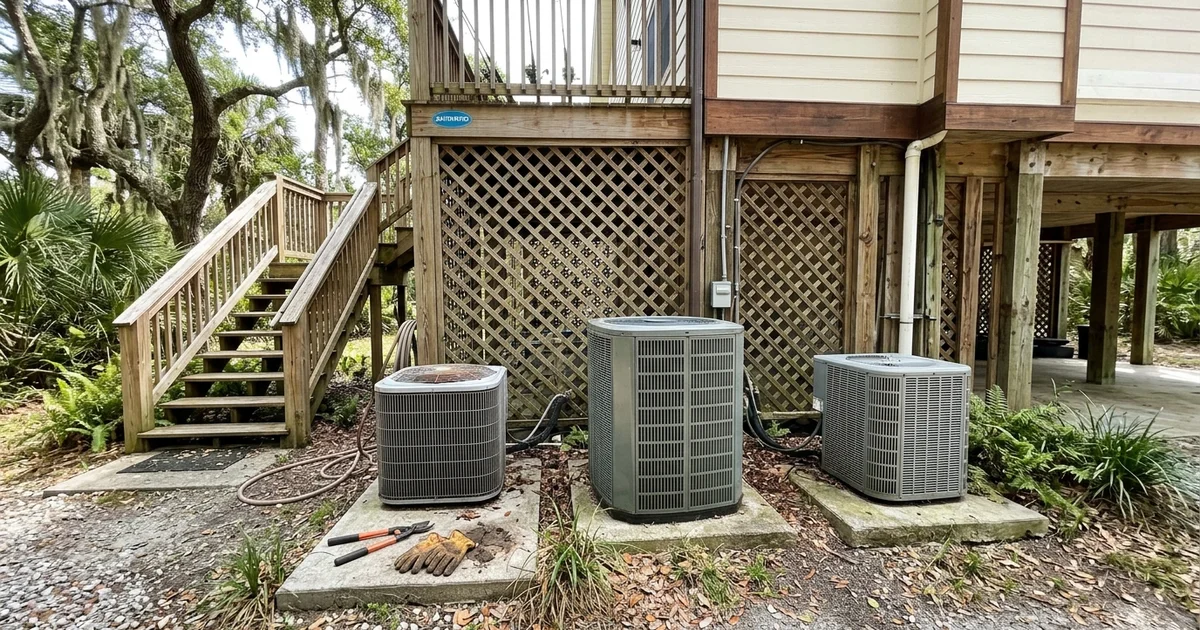
What Size AC Do I Need? Why Sizing Matters More on the Gulf Coast
We see the same confusing scenario play out constantly across the Eastern Shore. People constantly ask what size ac do i need, only to get three quotes for AC replacement in Daphne listing three different tonnages. A discrepancy like that is a massive red flag.
Our goal is to help you sort through this sizing confusion before you make a costly mistake. On the Gulf Coast, the wrong AC size costs you dearly in daily comfort. An air conditioner actually performs two distinct jobs:
- Lowering the indoor air temperature.
- Removing heavy coastal moisture.
We always remind homeowners that moisture removal only happens when the indoor coil stays cold and runs steadily for several minutes. A system that is too large blasts the house down to your set temperature too fast. The oversized unit shuts off before it pulls out enough water to make a difference.
Our climate data shows an average summer dew point pushing 78 degrees in Baldwin County. You end up with a cool but clammy house, musty smells, and severe short cycling. This guide will break down why common sizing rules fail, what the actual data tells us, and how to evaluate your next quote.
Why Rules of Thumb Fail
We constantly hear the old “one ton per 500 square feet” rule thrown around during estimates. This outdated method fails because it ignores almost every structural detail that actually matters. A basic ac tonnage calculator simply cannot account for the specific thermal dynamics of your house.
Our experience confirms that using this shortcut often leads to severely oversized units. The ENERGY STAR program reports that over 25 percent of residential units are oversized due to bad estimates. A proper assessment must evaluate several specific variables:
- Insulation in the attic and walls.
- Windows: how many, which direction, and whether they are single-pane.
- Orientation: a house with big west-facing windows needs more capacity than the same house facing north.
- Air leakage and duct leaks.
- Ceiling height and open floor plans.
- Shade from live oaks and neighboring homes.
- Occupants and appliances.
We also see contractors simply matching the size of the old unit. If the old system was oversized, the new one will just inherit the exact same problems. Modern homes built under recent Alabama energy codes retain temperatures much better than houses built decades ago.
How a Manual J Load Calculation Works
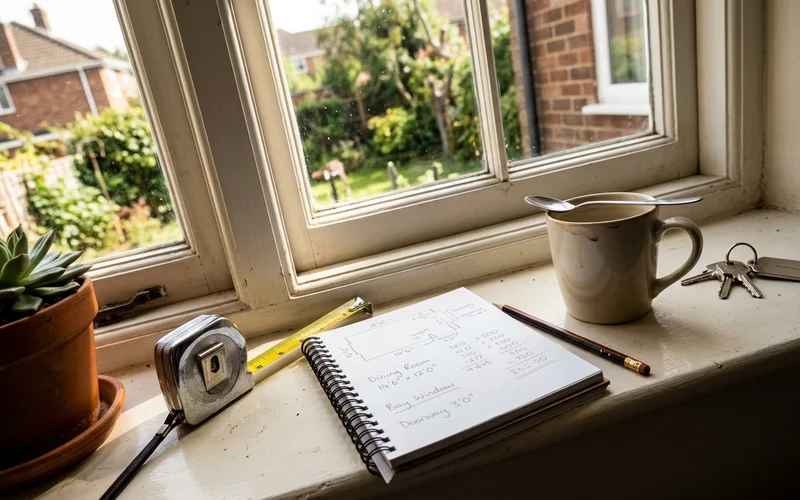
Our preferred method for accurate sizing is the ACCA manual j load calculation. This industry-standard protocol calculates the exact amount of heating and cooling your specific home requires. The licensed contractors we connect you with measure the home room by room.
We know that accurate measurements require noting window sizes, insulation levels, and construction type. The contractor enters this data into software along with local design conditions for Baldwin County. Alabama sits in Climate Zone 2A, which means the software uses a 93-degree dry-bulb and 79-degree wet-bulb cooling design temperature.
Our local climate data proves that high heat and persistent coastal humidity produce massive latent loads. The final calculation provides your cooling load in BTUs per hour, split into two categories:
- Sensible load: the heat that raises the thermometer temperature.
- Latent load: the moisture that requires removal.
We always emphasize that the latent share is exceptionally high on the Gulf Coast. This heavy moisture load dictates the specific type of equipment that will keep your home dry. Skipping this step guarantees you will pay for a system that guesses at your actual comfort needs.
Oversized vs Right-Sized: What You Feel
We want you to understand the physical and financial impact of a poorly sized system. An oversized unit creates a cold, damp environment, while a right-sized unit maintains steady comfort. The U.S. Department of Energy notes that rapid short cycling wastes 20 to 30 percent of total energy consumption.
Our review of industry data shows that this constant starting and stopping cuts equipment lifespans in half. The compressor takes massive wear and tear during every startup sequence. The differences between the two scenarios become obvious the moment you step inside the house.
We use this direct comparison to show the stark contrast:
| Metric | Oversized System | Right-Sized System |
|---|---|---|
| Cycle length | Shuts off in a few minutes | Long, steady runs on hot days |
| Indoor humidity | Lingers at 60 percent or higher | Stays comfortably at 45 to 55 percent |
| Comfort | Cold blasts, clammy between cycles | Even temperatures and dry air |
| Wear and Tear | Constant starts, heavy compressor stress | Fewer starts, extended lifespan |
| Monthly Bills | 20 to 30 percent higher than expected | Performs efficiently as rated |
A right-sized system might run almost continuously on a 95-degree afternoon, and that is exactly what it is designed to do. You get a comfortable house because the long runtime actively pulls moisture out of the air.
Equipment That Helps With Humidity
Our standard recommendation for coastal humidity involves upgrading your compressor technology. Two-stage and variable-speed systems run at low capacity most of the time, allowing them to pull out significantly more moisture. A traditional single-stage compressor only operates at 100 percent capacity or completely off.
We advise homeowners that this “all or nothing” approach struggles against Alabama weather. The advanced options break down into two main categories:
- Two-Stage Systems: Run at roughly 65 percent capacity on mild days and only hit full power during extreme heat.
- Variable-Speed Systems: Adjust output anywhere from 25 to 100 percent in tiny increments to precisely match the cooling demand.
According to recent Carrier performance data, variable-speed units can remove up to 400 percent more moisture than standard models.
Our favorite benefit of variable-speed equipment is the continuous, whisper-quiet operation. These advanced systems are absolutely crucial for homes dealing with massive latent heat loads. The upfront cost is higher, but the long-term energy savings remain undeniable.
We always suggest asking your local HVAC contractor if one of these systems fits your budget. Your monthly utility bills will reflect the efficiency of those long, slow cooling cycles. The investment pays off every time you walk into a perfectly dry house in July.
Questions to Ask on Every Quote
We encourage you to interview contractors thoroughly before signing any paperwork. Asking the right questions ensures you receive a properly sized system instead of a wild guess. The licensed contractors we connect you with expect and welcome these inquiries.
Our recommended checklist will help you compare different bids accurately:
- Did you perform a complete Manual J load calculation, and can I see the printed result?
- How does your recommended size compare to my current unit, and what data justifies the change?
- Are my existing ducts sized properly to handle the new system’s airflow requirements?
- Is the new outdoor unit strictly matched to the indoor coil as an AHRI-certified system?
- Would a two-stage or variable-speed compressor solve the specific humidity issues in this house?
A contractor who hesitates to answer these questions is likely cutting corners. You deserve transparent answers backed by hard numbers.
Ductwork Has to Match the System
We remind every caller that the best air conditioner in the world fails if the ductwork cannot support it. A perfectly sized AC will still underperform if the ducts are too small to move the required air. Many older Eastern Shore homes feature undersized returns and long, flexible runs stretched across 130-degree attics.
Our research shows that pushing a new, high-efficiency system through bad ductwork leads to noisy vents and weak airflow.
The U.S. Department of Energy reports that leaky, poorly connected residential ducts lose 20 to 30 percent of the conditioned air moving through them.
A thorough contractor checks the ductwork condition as part of the initial sizing visit. We advise asking the contractor to measure the static pressure of your current setup. They need to look closely at the return grille size and inspect all attic connections for obvious leaks.
Sometimes the right move involves adding a return air pathway or replacing a few collapsed runs. Our experience proves it is much easier to fix these airflow restrictions during a replacement rather than after the fact. Sealing those leaks ensures the cold air actually reaches your farthest bedrooms.
Your investment in a right-sized system only pays off when the delivery method is equally sound.
Special Cases
Contractors often run into unique architectural features in South Alabama that completely change the cooling math. Standard sizing rules break down entirely when a house has exposed floors, massive windows, or recent square footage added. A proper load calculation handles these anomalies effortlessly.
Our structural checklist highlights three specific situations that require extra attention:
- Raised coastal homes: Houses built on pilings expose the entire floor system to outdoor humidity and heat. The thickness and quality of the insulation under that floor drastically impact the load calculation.
- Homes with big sunrooms: A glass-enclosed space traps solar heat and throws off whole-house sizing. The smartest answer often involves sizing the central system for the main house and installing a separate mini-split for the sunroom.
- Recent home additions: If the house has grown since the last AC unit was installed, the cooling load has permanently changed. You cannot simply copy the old tonnage and expect the new space to remain cool.
We warn homeowners that these unique layouts prove exactly why every replacement job requires a fresh mathematical approach. Guessing the size based on the old label will guarantee hot spots in the new rooms.
Getting a Properly Sized Quote
We make finding a reliable professional completely hassle-free when you are wondering what size ac do i need. Call (251) 850-5502 today and ask for a replacement quote. The licensed contractors we connect you with install systems properly across the Eastern Shore.
Our service ensures you get an honest assessment from an insured local expert. The initial estimate is absolutely free. You never pay a referral fee to use this connection service.