
We know how frustrating a failing AC system feels during a humid Gulf Coast summer.
Finding an accurate ac replacement cost alabama average requires looking past the initial sticker price.
This guide breaks down the exact numbers and hidden line items that influence local quotes.
Our goal is to equip you with the knowledge needed to evaluate proposals with complete confidence.
When you are ready for actual numbers, our free AC replacement quotes come from licensed contractors on the Eastern Shore.
About these numbers
The ranges below are general Alabama figures for context. They are not our prices. Daphne AC Repair doesn’t set prices; your contractor gives you a free, written estimate.
General Price Ranges
Expect to pay anywhere from $5,500 to $9,500 for a standard central air replacement cost in a typical single-family home.
Full systems with a new air handler or a heat pump will push that range up to $14,000.
Our review of recent regional pricing shows that the transition to modern refrigerants like R-454B has slightly increased baseline equipment costs for 2026.
A local contractor will provide an exact figure after inspecting your specific property.
Here is a breakdown of typical installed costs across the Eastern Shore:
| System Configuration | Estimated Cost Range |
|---|---|
| Standard Central AC (Outdoor unit and coil) | $5,500 to $9,500 |
| Complete System (Includes air handler or furnace) | $8,000 to $13,000 |
| Heat Pump System Replacement | $7,500 to $14,000 |
| High-Efficiency (Two-stage or variable-speed, 18+ SEER2) | $11,000 to $18,000+ |
Very large homes often require multiple systems or extensive ductwork modifications.
These complex installations will naturally push the total cost above these standard ranges.
What Drives the Price
The final price of your project is driven primarily by the physical size of your home and the efficiency rating of the new equipment.
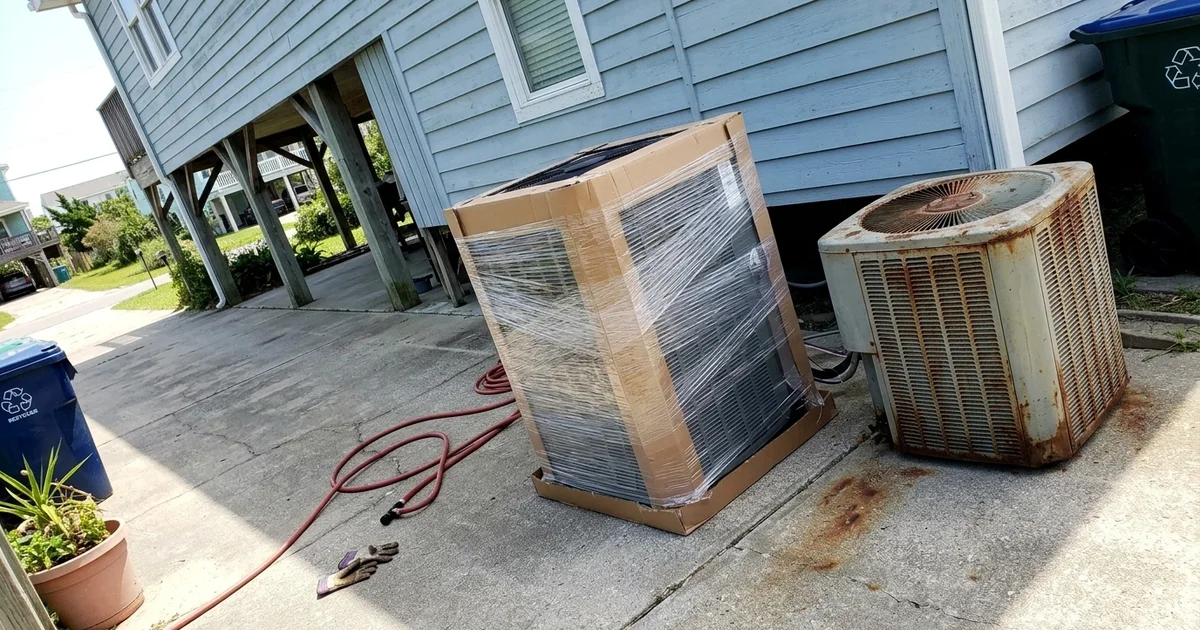
Replacing just the outdoor unit costs significantly less than swapping out the entire indoor and outdoor system.
We recommend securing a proper Manual J load calculation to ensure you do not pay for excess capacity you do not need.
Accurate sizing keeps both your upfront costs and long-term power bills in check.
Capacity and Efficiency Standards
Bigger homes simply require larger equipment with a higher tonnage capacity.
A tiny cottage in Montrose needs a fraction of the cooling power required by a sprawling two-story home in Spanish Fort.
Higher efficiency ratings also command a premium price tag.
Federal rules require new split-system air conditioners in Alabama to meet a minimum of 14.3 SEER2 for units under 45,000 BTU, and 13.8 SEER2 for larger systems.
Our guide to SEER2 ratings explains these efficiency tiers in detail.
Investing in a 16 or 18 SEER2 unit costs more upfront but uses less electricity over its lifespan.
Equipment and Component Choices
Single-stage compressors are the most affordable option on the market.
Two-stage and variable-speed compressors cost thousands more, but they provide vastly superior humidity control during muggy July afternoons.
The new ac unit cost is heavily influenced by the scope of the replacement itself.
Swapping just the outdoor condenser and the indoor coil is cheaper than installing a complete system with a brand new air handler.
Installation and Environmental Factors
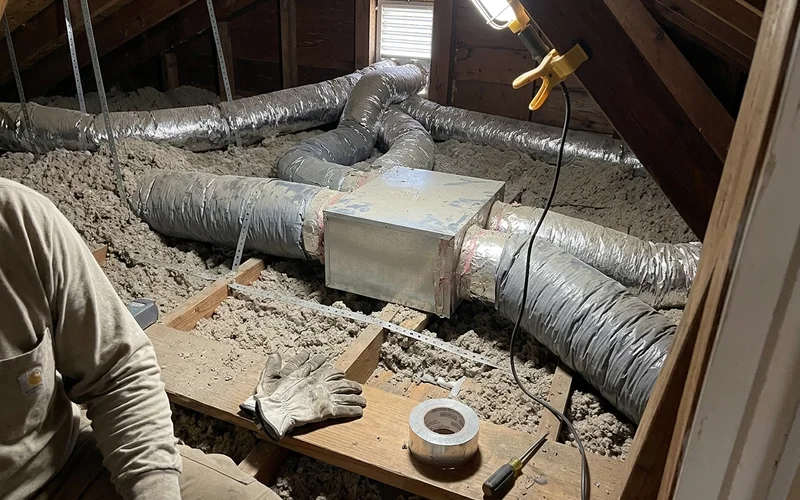
Reusing sound, existing ductwork saves a substantial amount of money.
Sealing minor leaks adds a small fee to the project, while a complete duct network replacement adds several thousand dollars.
Coastal proximity is another major pricing factor for residents near Mobile Bay.
Applying special protective coatings to coils or buying coastal-rated units adds to the initial price but prevents premature saltwater corrosion.
Installation logistics play a huge role in labor costs.
Complex jobs requiring new electrical whips, heavy disposal efforts, or cramped attic access in summer heat will result in higher labor charges.
Rebates and Credits
Local utility incentives and government tax programs can reduce your total out-of-pocket expense by $500 to over $2,000 for qualifying high-efficiency equipment.
You must verify current program availability and funding rules before you sign a purchase agreement.
Our research highlights several key programs you should ask your local HVAC contractor about:
- Alabama Power Programs: They currently offer up to a $1,000 rebate if you switch from a gas furnace to a qualifying all-electric heat pump meeting a minimum of 18 SEER2.
- Riviera Utilities: While they serve areas like Foley and Spanish Fort, they typically do not offer dedicated cash rebates for HVAC equipment, though they do provide energy efficiency consultations.
- Federal Tax Credits: The Section 25C Energy Efficient Home Improvement Credit ended on December 31, 2025, so 2026 installations no longer qualify. Ask your tax preparer if an install finished in 2025 still counts.
- Manufacturer Promotions: Brands like Trane, Carrier, and Lennox frequently offer seasonal rebates in the spring and fall ranging from $50 to $1,000.
These programs change frequently and without warning.
The licensed contractors we connect you with are the best resource for handling the current paperwork and eligibility requirements.
Reading and Comparing Quotes
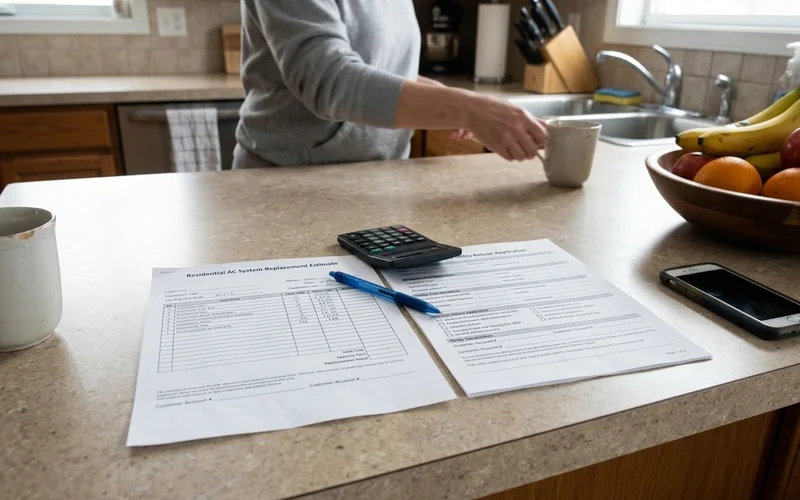
A thorough quote must clearly list the exact equipment models, the AHRI matched-system number, and the full scope of labor.
Comparing estimates is impossible if one contractor itemizes every part while another just gives you a single flat rate.
We suggest requesting at least two or three written estimates to establish a fair market baseline for your specific property.
A significantly cheaper quote usually means something important was left out.
Every valid proposal should include these details:
- Specific brand names and exact model numbers for both indoor and outdoor units.
- The system tonnage and the calculation method used to determine it.
- The verified SEER2 rating of the matched system.
- An itemized list of included components, such as the coil, air handler, line set, equipment pad, and thermostat.
- Clear terms for both the manufacturer’s parts warranty and the contractor’s labor warranty.
Always evaluate the complete scope of work rather than just looking at the bottom line.
Timing Can Help
Scheduling your replacement during the mild weather of fall and early spring often results in better pricing and more flexible installation dates.
Installers have lighter schedules during these shoulder seasons, giving you ample time to weigh your options.
Our experience shows that replacing a dead unit during a July heat wave severely limits your bargaining power.
Emergency situations force you to accept whatever equipment is currently sitting in the local warehouse.
Planning ahead allows you to special-order the exact high-efficiency model you want.
It also positions you to take advantage of seasonal manufacturer promotions that typically launch in March and September.
Hidden Line Items to Watch For
Several mandatory updates and municipal fees are frequently left off initial estimates to make the bottom line look more appealing.
You must verify that permits, electrical updates, and disposal fees are explicitly written into your final contract.
We always advise homeowners to ask clarifying questions before signing anything.
A quote that appears unusually cheap is often missing essential installation steps.
Watch closely for these commonly omitted charges:
- Permit and inspection fees: Local mechanical permits in Alabama municipalities can easily range from $50 to $200.
- Line set replacement or flush: This is absolutely critical when upgrading from an old R-22 system to modern R-454B or R-32 refrigerants to prevent cross-contamination.
- New condenser pad: You may need a raised composite stand or hurricane tie-downs to meet local wind codes.
- Electrical work: Upgrades like a new disconnect box, electrical whip, or breaker are often required for newer equipment.
- Condensate management: Modern indoor units need updated drain lines, float switches, and secondary drain pans to prevent water damage.
- Thermostat upgrades: Some contractors include a compatible smart thermostat, while others plan to reuse your outdated model.
- Old equipment removal: Proper refrigerant recovery and heavy equipment disposal require specialized labor.
- Duct modifications: Minor sheet metal transitions are usually necessary to connect a new air handler to your existing plenum.
Financing and Budgeting
Many HVAC installers partner with third-party lenders to offer monthly payment plans, which can make a $9,000 replacement much more manageable.
You must read the financing terms carefully, paying special attention to the fine print on deferred-interest offers.
We suggest setting aside a dedicated replacement fund once your current system passes its tenth birthday.
The intense heat and salt air along the Gulf Coast take a heavy toll on mechanical equipment.
Having cash ready means you will be making a proactive choice on your own terms.
You will avoid the stress of financing a massive project in the middle of a sweltering heat wave.
Get Your Number
Contacting a local professional is the only way to get a precise, binding price for your specific home.
Call (251) 850-5502 or request a free estimate to get started.
A licensed, insured HVAC contractor serving your Eastern Shore town will visit your property, size the system properly, and give you a written price.
There is no referral fee and absolutely no obligation to buy.