
Repair or Replace AC? The Decision Most Homeowners Face Eventually
We know how frustrating it is when the air conditioning dies in the middle of summer and the repair quote is a shockingly large number.
Deciding whether to repair or replace ac is one of the toughest financial calls a homeowner has to make.
There is no single correct path, but the math behind the choice is surprisingly straightforward.
Our guide breaks down the exact financial thresholds that separate a smart repair from a wasted expense.
Reviewing the hard data is the best way to regain control of the situation.
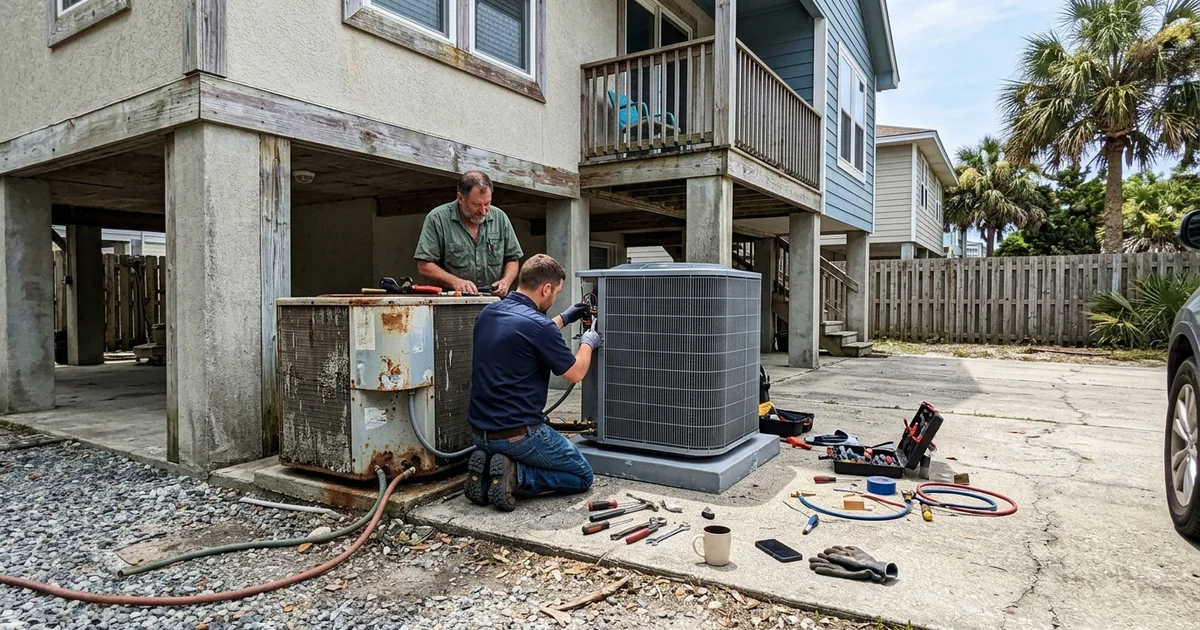
If you want concrete numbers for both paths, our AC replacement in Daphne line connects you with a licensed contractor who can price them side by side.
Rule of Thumb 1: The $5,000 Rule
We always recommend running a simple math equation before making any major HVAC decisions.
Multiply the system age in years by the estimated repair cost.
If the resulting number is more than $5,000, replacing the unit usually makes more financial sense.
Our network relies on this benchmark because a typical 2026 replacement in Baldwin County ranges from $6,400 to $9,800 for a standard 3-ton system.
Paying half that amount just to patch an old unit leaves you with zero warranty protection.
| System age | Repair cost | Age x cost | Leaning |
|---|---|---|---|
| 6 years | $400 | $2,400 | Repair |
| 10 years | $450 | $4,500 | Repair, but plan ahead |
| 12 years | $1,500 | $18,000 | Replace |
| 15 years | $300 | $4,500 | Repair for now, start planning |
These figures are only illustrations of the math, not actual local prices.
Consider this formula a starting point rather than a final verdict.
Rule of Thumb 2: The 50 Percent Rule
We suggest evaluating the repair quote against the total price of a brand-new installation.
The basic rule states that replacement usually wins if the fix costs more than half of a new system, provided the current unit is past its halfway mark.
Defining that halfway mark requires looking at your specific coastal location.
- National Average: Inland systems typically last 15 to 20 years.
- Coastal Reality: Salt air in Daphne and Fairhope often cuts that lifespan down to 8 to 12 years.
- The Midpoint: A Gulf Coast unit is frequently halfway through its useful life by year six.
Our local climate changes the math, making an early replacement much more logical.
Salt air acts as a massive accelerant for wear and tear.
Factoring in this environmental penalty keeps you from throwing money at a dying machine.
Factors That Tip Toward Replacing
We constantly review the technical factors that make an old air conditioner a bad investment.
Specific component failures and outdated technology clearly signal that a unit has reached the end of the road.
The following issues almost always justify a complete upgrade.
The R-22 Refrigerant Phase-Out
Our research points to the type of cooling gas in your system as a massive deciding factor.
Systems installed before 2010 often use R-22, a chemical that the EPA completely stopped producing in 2020.
Reclaiming and recycling this gas is the only way suppliers legally acquire it today.
We found that 2026 prices for reclaimed R-22 range from $90 to $250 per pound.
A standard four-pound recharge easily tops $600 just for the gas.
Paying that much for obsolete refrigerant is a strong reason to replace the entire setup.
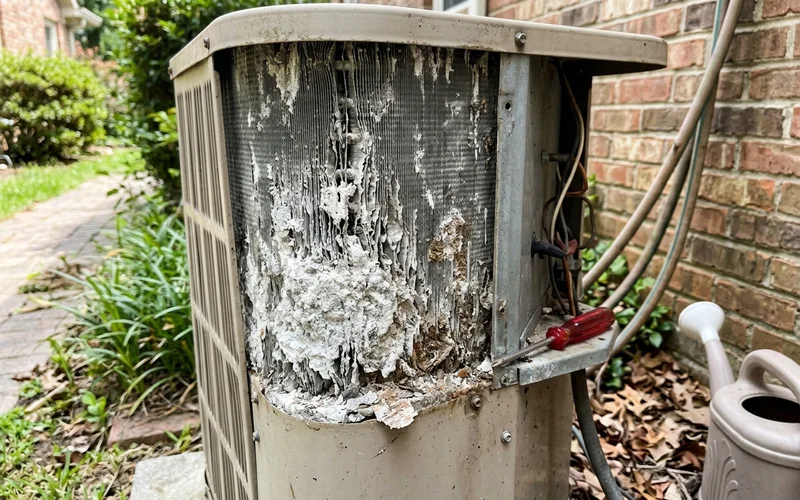
Coastal Coil Corrosion
Our coastal environment is exceptionally punishing on outdoor metal components.
Salt air constantly eats away at the thin aluminum fins on the outdoor condenser coil.
If the coil is heavily pitted, flaking, or leaking, minor repairs will quickly turn into an endless cycle of breakdowns.
Compressor Failure
We highlight the compressor because it is the engine of the entire cooling process.
Replacing a burned-out compressor is the most expensive single repair you can face.
When this component dies on an older system, it is almost always the definitive tipping point for a full replacement.
Our guide on compressor failure explains the severe impact of this specific breakdown and your available options.
Reading through that breakdown will clarify exactly why contractors hesitate to fix it.
Investing thousands into a compromised system rarely yields good long-term results.
Upgrading to SEER2 Efficiency
We recommend checking your current energy bills to see how much money an old unit is wasting.
A 15-year-old 10 SEER system uses significantly more electricity than a modern unit meeting the 2026 Alabama minimum of 14.3 SEER2.
Upgrading an outdated unit can reduce your cooling costs by roughly 40 percent.
Our hot Gulf Coast weather requires the air conditioning to run for nine months out of the year, so those monthly energy savings add up rapidly.
Better efficiency also delivers superior comfort and precise humidity control.
If the house has always felt clammy, a correctly sized, variable-speed replacement will solve a problem that a basic repair never will.
Factors That Tip Toward Repairing
We do not always advocate for buying brand-new equipment.
A simple, inexpensive fix is often the smartest financial move you can make.
The local HVAC contractor should point out when saving your current unit is the logical choice.
- The system is under 10 years old.
- It uses R-410A or the newer R-454B refrigerant.
- The broken part is still covered under the manufacturer warranty.
- The repair is a common, moderate issue like a $150 capacitor, a contactor, or a fan motor.
- The rest of the system is in excellent shape, including a solid, intact coil.
- You plan to sell the house soon, and the system easily passes a home inspection.
Get Both Options on One Estimate
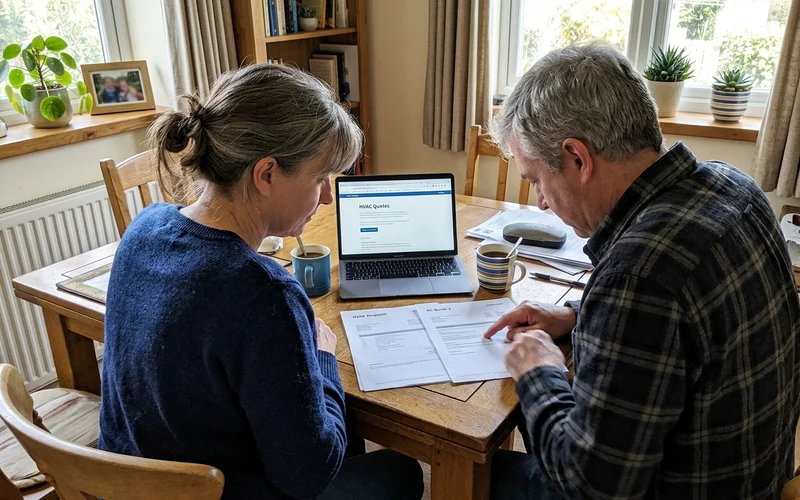
Our best advice for tackling the ac repair vs replacement debate is to demand a clear, side-by-side comparison on paper.
Seeing the numbers next to each other removes the emotion and guesswork from the choice.
When the licensed contractor diagnoses your broken unit, ask them to price out three specific things.
- The immediate repair, including any warranty provided on the new parts and labor.
- A complete replacement, precisely sized using a modern load calculation to prevent short-cycling.
- A higher-efficiency replacement option if you want to lower your monthly power bills.
We provide an AC repair cost guide that explains general repair price ranges across the state, while our replacement cost guide covers new systems.
Those published numbers provide general Alabama context rather than our specific service quotes.
Having this baseline knowledge protects you from overpaying for standard labor.
Questions to Ask the Contractor
We highly recommend asking direct, specific questions before signing any work order.
A trustworthy technician will gladly explain their reasoning and physically show you the damaged parts.
Use this checklist to guide the conversation.
- How many more years do you realistically think this system has if I approve the repair?
- What other internal parts are currently showing heavy wear?
- Is the outdoor coil severely corroded by the salt air, or is it already leaking?
- What specific type of refrigerant does this equipment use?
- If this were your own house, what exact path would you choose?
Don’t Forget the Hidden Costs of Keeping an Old System
We want to highlight that the initial repair bill is only a fraction of the total expense.
Keeping an aging, struggling system running drains your wallet in other sneaky, indirect ways.
You have to factor these ongoing financial penalties into your final decision.
- Higher monthly power bills across a long, nine-month Alabama cooling season.
- Constant comfort problems, especially high indoor humidity, that a correctly sized new system would instantly fix.
- The looming risk of another breakdown during a July heatwave, forcing you to pay premium after-hours emergency rates.
- A cascading chain of repairs. On a system past 12 years old, fixing one major part often puts stress on the next weakest link.
We also acknowledge that a brand-new installation carries its own hidden costs.
You will spend valuable time gathering quotes, and you might need electrical upgrades or minor ductwork modifications.
Looking at both sets of numbers on paper helps you weigh these realities accurately.
Timing a Replacement
Strategic timing provides massive leverage during the buying process.
Fall and early spring are the ideal seasons to plan an upgrade if you are wondering, “should I replace my ac soon?”
Installers have highly flexible schedules in October and March, allowing you to carefully compare quotes without a sweltering house forcing a rushed choice.
The Bridging Strategy: Some homeowners pay for a minor, inexpensive repair in July just to survive the summer heat, then schedule a full, cost-effective replacement for October when the seasonal emergency rush completely disappears.
Our advice is to ask the local HVAC contractor whether this delay tactic is safe for your specific equipment.
Rushing a purchase in August almost always guarantees you will pay premium seasonal rates.
Planning ahead puts the financial control firmly back in your hands.
Next Step
Call (251) 850-5502 to get the process started and find the right solution for your home.
We will connect you with a licensed, insured contractor serving your specific Eastern Shore town who can thoroughly diagnose the system and price both options.
The detailed estimate is entirely free, and there is never a referral fee to use this local service.
Making the right choice protects your budget and your comfort.
Our primary goal is to ensure you have all the facts before you spend a dime.
Taking action today brings you one step closer to a reliably cool house.