
What Is Short Cycling?
From what we see in the field, an AC that refuses to stay running is a system that cannot properly cool a home. AC short cycling happens when your air conditioner runs for just a few minutes, shuts down, and then turns right back on. A healthy AC on a hot Eastern Shore afternoon should run steady cycles of 15 to 20 minutes before resting.
Our AC repair in Daphne line connects you with a licensed contractor who can diagnose this exact issue.
Constant starting and stopping places massive stress on the compressor while failing to remove indoor humidity. The following guide breaks down the usual causes and outlines practical solutions you can check today.
We want you to understand what the data actually tells us about your equipment before making a decision. These practical steps will help you decide if it is time to call for backup.
The Usual Causes
The most common reasons for short cycling include an oversized system, poor thermostat placement, low refrigerant, or dirty coils. We always recommend checking these basic symptoms before assuming the worst. Finding the exact reason requires looking at the specific patterns your system is showing. According to the Department of Energy, proper sizing and routine maintenance can significantly improve cooling performance. Our network of professionals frequently encounters oversizing in newer Gulf Coast homes.
Oversized system. A unit that is too big for the house hits the thermostat setting in minutes and shuts off. Correct AC sizing with an ACCA Manual J load calculation prevents this problem. We know this sizing issue cannot be fixed without changing the actual equipment.
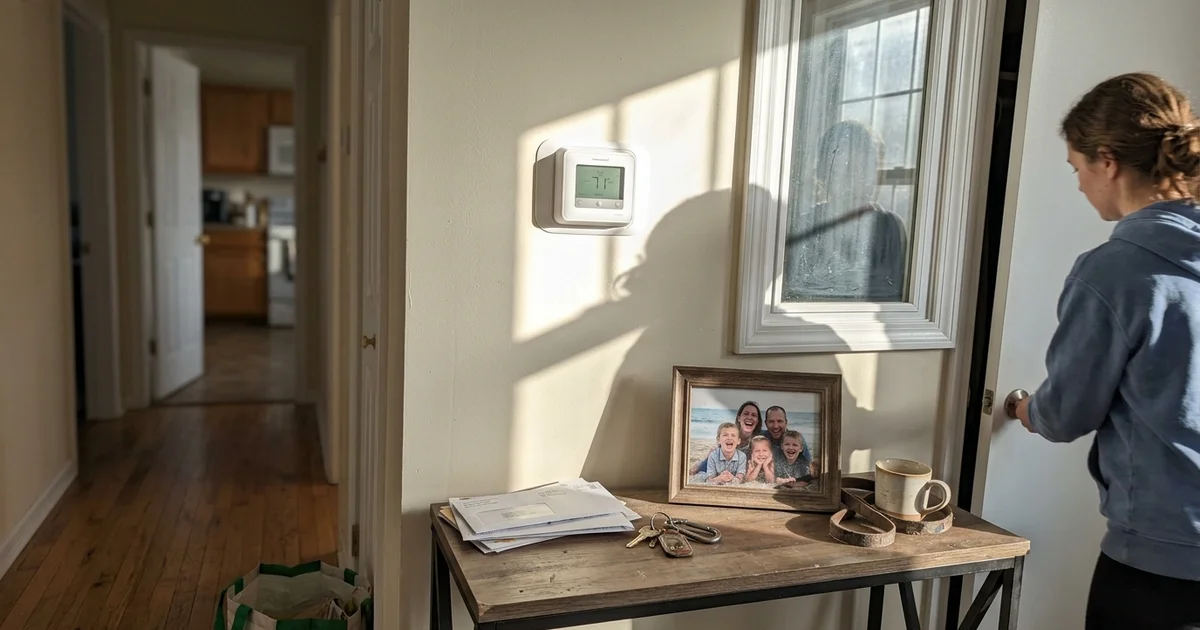
Thermostat placement. A thermostat sitting in the afternoon sun reads the wrong temperature. Heat from a nearby supply vent or a sunny window forces a false reading. We suggest keeping the thermostat away from these localized heat sources. A bad location tells the system to stop before the rest of the house actually cools down. Shifting the thermostat to a central, shaded hallway is a standard professional fix.
Low refrigerant. We receive many calls where a low charge trips the low-pressure safety switch. The system shuts down until pressure recovers and then starts again in a repeating loop. Refrigerant does not simply evaporate over time. We remind homeowners that the licensed contractors we connect you with must locate and patch the leak before adding coolant.
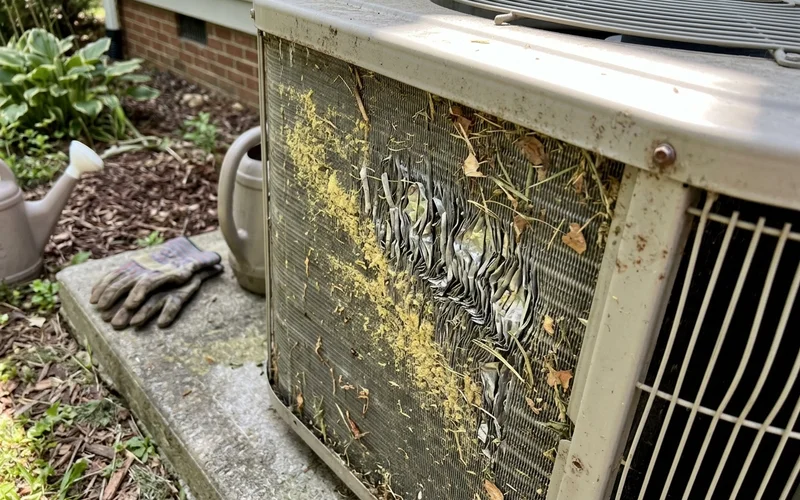
Dirty coils and filters. A clogged outdoor coil can push refrigerant pressures high enough to trip the high-pressure switch. A clogged indoor filter can cause the indoor evaporator coil to freeze entirely. We remind you that both scenarios force the system to shut down prematurely.
Electrical and control faults. A failing run capacitor or an overheating compressor can shut things down early. Bad control boards also send erratic signals that mimic short cycling. We track these electrical issues because they cause frequent shutdowns under heavy summer strain.
| Pattern | Points toward |
|---|---|
| Runs 3 to 5 minutes, house cools but feels clammy | Oversizing |
| Cycles more on sunny afternoons | Thermostat in sun |
| Runs, stops, won’t cool well | Low refrigerant or dirty coil |
| Outdoor unit stops but indoor fan keeps going | Safety switch or overheating |
The Humidity Cost
Short cycling fails to dehumidify your home because the AC coil never gets cold enough to pull moisture from the air. This explains why rapid cycling hurts much more on the humid Gulf Coast than in dry climates. We know that an air conditioner removes moisture only after the evaporator coil gets extremely cold. Water must start dripping off the metal fins for dehumidification to work. This process takes several minutes of continuous running to actually begin.
We want you to realize that short cycles stop right as the dehumidifying action gets going. The result is a cool but sticky house with musty smells.
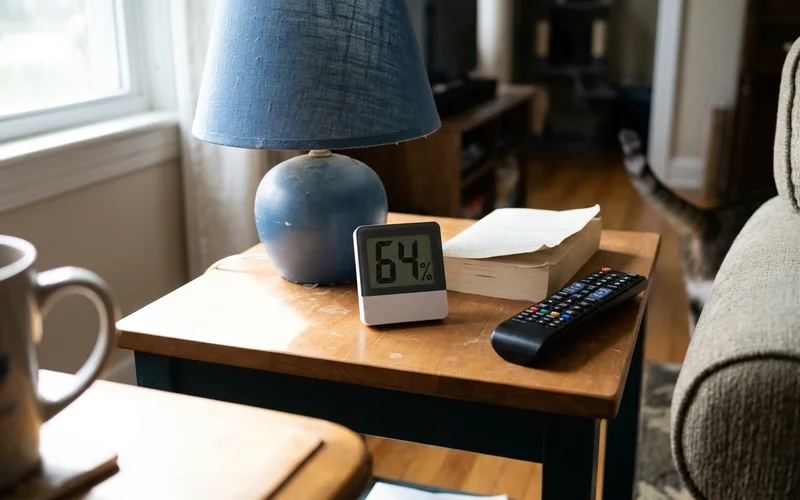
High moisture levels create a much higher risk for mold growth. We base our advice on the Environmental Protection Agency guidelines. The EPA recommends keeping indoor humidity strictly between 30 and 50 percent for optimal health. A short-cycling system often leaves homes sitting well above that 60 percent danger zone. Our guide on a humid house with the AC on explains the fixes in detail.
The Energy and Wear Cost
A compressor uses the majority of its daily electricity and takes the most physical wear during the startup phase. The massive surge required to get the heavy motor spinning pulls tremendous power. We want to highlight a specification called Locked Rotor Amps to explain this electrical surge.
Locked Rotor Amps represent the current an AC compressor draws at the exact moment it starts up. This initial surge is typically five to seven times higher than the unit’s normal running current.
We understand how doubling the number of starts adds immense wear over a nine-month cooling season. This constant surging shows up quickly on your monthly power bill. The repetitive electrical stress also severely reduces the equipment’s expected lifespan.
What You Can Check
We suggest checking for a dirty air filter before calling a professional. Poor thermostat placement or a clogged outdoor coil can also be checked easily. These simple maintenance steps often resolve rapid cycling without needing professional tools.
- We recommend starting your troubleshooting by checking the indoor air filter. Standard 1-inch filters should be swapped every 30 to 90 days. Using a basic MERV 8 filter provides good airflow without suffocating the blower motor.
- We urge you to inspect the thermostat’s location in the room next. Ensure the thermostat is not sitting in direct sunlight or getting blasted by a cold supply vent. You can also rinse the outdoor coil gently with a garden hose.
- We stress the importance of shutting off the power completely before washing the unit. Check the electrical panel to verify the breaker is flipped. If the rapid on-and-off pattern continues, it is time to have your local HVAC contractor take a look.
Short Cycling After a New Install
If your AC started short cycling right after a replacement, the most likely cause is incorrect system sizing. An oversized unit cools the air too fast and shuts off before dehumidifying the space. Some installers mistakenly just match the old unit’s tonnage.
We know they might also size the new equipment based solely on square footage instead of a true load calculation. Always ask the installing contractor for their ACCA Manual J calculation results.
- Sometimes the fix is a simple configuration setting on the digital control board. We recommend asking the contractor to adjust the blower speed if possible. Tweaking the dehumidification mode or altering the staging sequence helps the system run longer.
- A whole-home dehumidifier is another option if the unit is truly oversized for the ductwork. We suggest this addition to help control the sticky humidity until a proper replacement makes sense.
Thermostat Fixes That Help
Adjusting the cycle rate setting, moving the thermostat out of direct sunlight, and keeping the fan on Auto can immediately reduce short cycling. A few simple thermostat changes can ease the strain on your system right away. We often point homeowners to these quick settings before they book a repair.
- Move it or shade it. Relocating a thermostat away from a sunny window or a supply vent prevents false readings. Adding a small shade to block the glare is an easy temporary fix. We always ensure the thermostat is not reading the temperature of a hot television screen.
- Check the cycle rate setting. Many modern units have a Cycles Per Hour configuration that controls rapid starts. The standard Cycles Per Hour setting for a central air conditioner is 3. We see many systems short cycle simply because this digital setting is configured incorrectly.
- Use Auto for the fan. Setting the fan to Auto lets water drain off the evaporator coil between cooling cycles. This single step helps lower indoor humidity significantly. We highly recommend this setting for homes dealing with sticky summer air.
- Avoid big setpoint swings. Letting the house get very warm, then dropping the target temperature 8 degrees at once, causes problems. This can confuse two-stage systems and cause very odd cycling patterns. We know these adjustments will not fix a low refrigerant charge or a failing electrical component.
They do effectively rule out the most simple causes before you schedule a contractor visit. Addressing these basics gives your contractor a clearer picture of the real issue.
What a Contractor Checks
We connect you with professionals who measure refrigerant pressures, test the electrical capacitors, and inspect both sets of coils. A licensed contractor will also verify the system’s size against the home’s heating and cooling load. Professionals use digital manifold gauges to get precise readings of your system’s superheat and subcooling levels.
We ensure they also test the thermostat placement and inspect the low-voltage wiring for any hidden shorts. Call (251) 850-5502 to get connected with a professional serving your Eastern Shore town. You receive a free estimate before any work begins.
We believe this ensures you know exactly what the repair entails before making a decision. This transparency helps you plan for the necessary fixes without any surprises. Getting your system back to normal operation is the main goal.