
The Short Answer
We talk to homeowners every week who are surprised when their cooling system starts failing early. When people ask how long does an ac last gulf coast weather often forces a shorter answer than they expect. Across the US, a central AC typically lasts about 12 to 17 years.
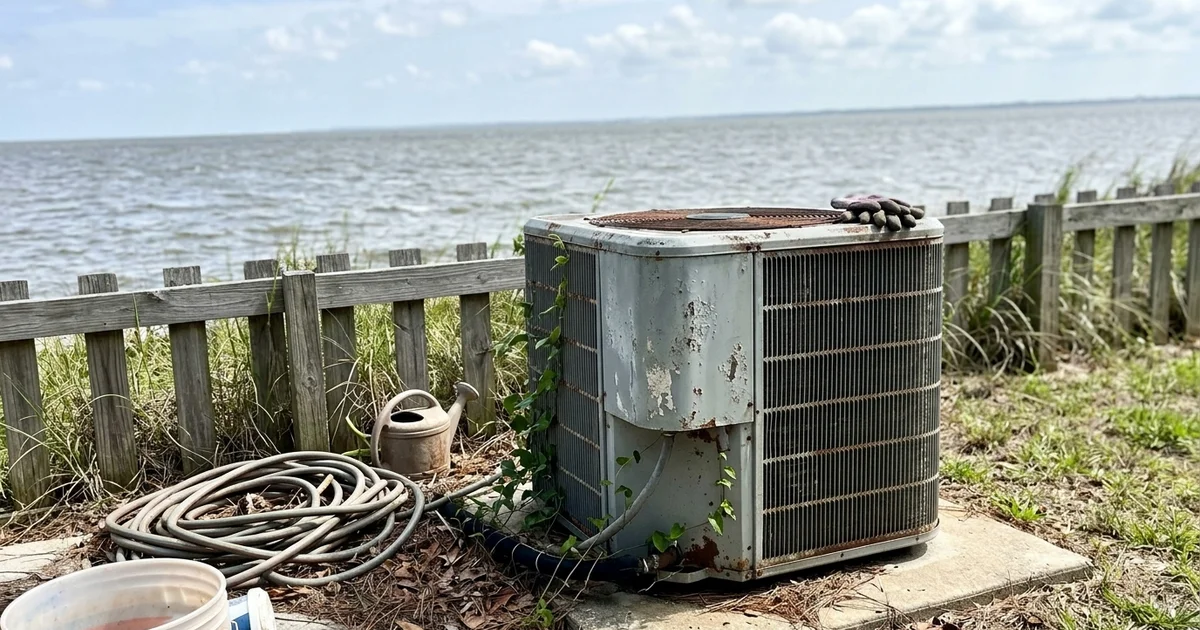
We know that many systems on the Eastern Shore land at the lower end of that range. Units located very close to salt water can wear out even sooner.
Two main factors drive this timeline: how many hours the system runs, and what the local air is doing to the metal. We recommend planning your AC replacement before a major breakdown forces the decision.
Why Gulf Coast Systems Age Faster
High runtimes and harsh environmental conditions break down components significantly faster here than in mild climates. A system in Daphne runs steadily from about March through November. Our local climate demands far more compressor hours per year than a northern setup.
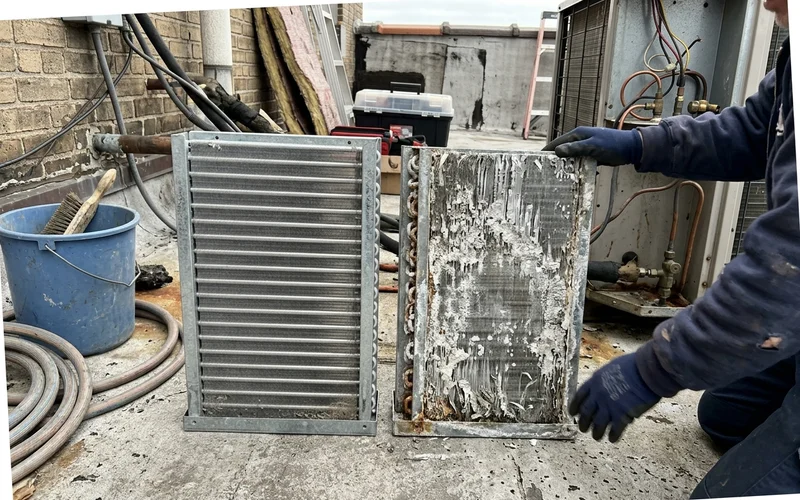
Salt air is a brutal factor for coastal homes. Within a few miles of Mobile Bay, corrosive salt fog settles directly on the outdoor coil. Our guide on salt air corrosion explains exactly how this chemical reaction happens.
Let’s look at the other major stressors on local equipment:
- Relentless humidity: Heavy condensate means drain pans and metal cabinets stay wet constantly. Attic air handlers in older homes often rust out from the bottom up due to this trapped moisture.
- Severe storms: Power surges from frequent lightning storms add heavy wear to sensitive electrical parts. Flying debris can also crush the delicate aluminum fins on the outdoor unit.
- High demand: Extended summer heatwaves force the equipment to run continuously, accelerating wear on vital blower motors.
Typical Lifespans on the Eastern Shore
If you are asking how long does an ac last gulf coast homeowners can expect lifespans to range from 8 years on the bayfront to roughly 15 years inland. The average ac life expectancy alabama residents experience is heavily tied to routine maintenance and proper sizing. We use these baselines to help homeowners know what to expect.
| Location and care | Rough expectation |
|---|---|
| Inland (Loxley, Malbis, Fairhope), maintained | Around 12 to 15 years |
| Mid-shore (Daphne, Spanish Fort, Montrose), maintained | Around 12 to 15 years |
| Bayfront or bluff, standard coil | Often 8 to 12 years |
| Bayfront, coastal-rated coil, maintained | Longer than standard coastal units |
| Any location, no maintenance | Shorter, sometimes much shorter |
These numbers are general expectations rather than guarantees. A well-kept unit can easily outlast these estimates. Our advice is to keep in mind that a neglected system will almost certainly fail early.
How to Tell How Old Yours Is
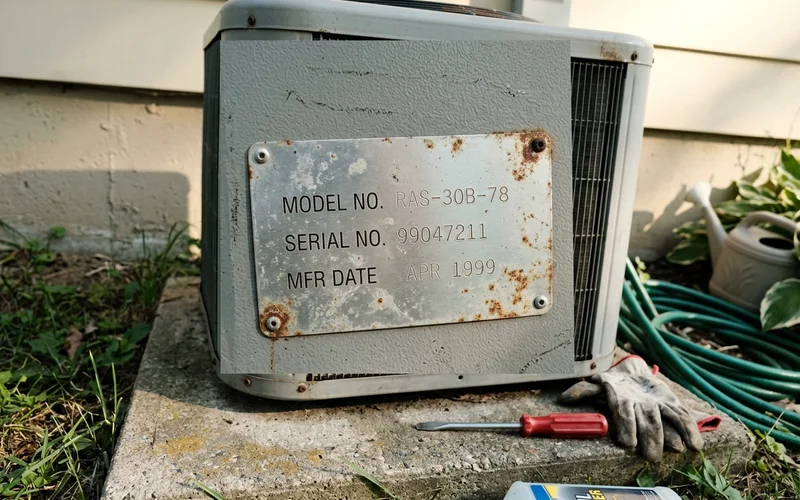
The easiest way to check your system age is by reading the manufacturer data plate located on the side of the outdoor unit. You will usually find this sticker situated directly above the refrigerant valve connections. We suggest looking closely because some labels clearly print the exact manufacture date.
Other manufacturers encode the date directly into the serial number. For many popular brands, the first four digits represent the week and year of production. Our local homeowners can assume a serial number starting with “2218” means the unit was built in the 22nd week of 2018.
If the label is faded or you cannot read it, take a clear photo with your phone. You can then ask your local HVAC contractor to look it up during your next service visit.
Signs Your AC Is Near the End
We know that frequent breakdowns, rising power bills, and outdated refrigerant types are clear indicators your system is failing. You should start weighing your options if you notice multiple warning signs from this list.
Pay close attention to these specific red flags:
- The unit is 12 or more years old. Age is the simplest baseline for planning a replacement.
- It uses R-22 refrigerant. This older freon was completely phased out by the EPA in 2020. Even newer R-410A systems are facing strict phase-downs now in 2026 under the AIM Act, making older leaks very expensive to refill.
- Repairs are escalating. Applying the “$5,000 rule” helps here. Multiply the age of the equipment by the cost of the quoted repair. If the total exceeds $5,000, replacement is usually the smarter financial move.
- Bills keep rising despite maintenance. This indicates the compressor is losing efficiency and drawing more amps to do the same amount of cooling.
- The outdoor coil is visibly deteriorating. Look for flaking metal, deep pitting, or oily spots that indicate slow refrigerant leaks.
- The house will not stay comfortable. Struggling to remove humidity on hot August afternoons is a classic sign of a dying compressor.
How to Get More Years From Your System
Our preferred strategy for extending the typical ac lifespan coastal residents hope for involves regular cleaning and professional tune-ups. You cannot change the climate, but you can definitely slow down the wear and tear.
Take these specific steps to protect your investment:
- Rinse the outdoor coil. Use a standard hose with fresh water every few weeks in summer if you live near the bay. Always rinse it down after heavy storms, but never use a high-pressure washer.
- Book a yearly tune-up. Schedule this with a licensed professional before April. A clean coil and a precise refrigerant charge significantly reduce stress on the compressor.
- Change filters on schedule. Restricted airflow is incredibly hard on blower motors and indoor coils. Use a standard MERV 8 filter to catch dust without choking the system.
- Flush the condensate drain monthly. Pouring a cup of white vinegar down the access pipe during cooling season protects the pan and prevents water backups.
- Add a surge protector. Storm-season power surges quietly shorten the life of capacitors, control boards, and expensive compressors.
- Keep plants and pine straw back. Maintain at least two feet of clear space around the outdoor unit so it can breathe properly.
- Fix small problems quickly. A weak capacitor left alone puts years of unnecessary wear on the compressor in a single summer.
Repair Records Tell the Story
We always highlight how tracking your repair history helps you objectively decide when a new installation makes the most financial sense. Keep a simple, running log of every service visit, noting specific dates and total costs.
When you are stuck deciding whether to repair or replace, that documented history is one of the best tools you have. Our favorite example is comparing a system that needed just one capacitor in ten years to one that required extra refrigerant three summers in a row.
“A documented repair history turns an emotional decision during a breakdown into a clear financial choice.”
You should keep these paper records in a designated folder near your indoor air handler for easy access. This makes it simple for your local HVAC contractor to review the system’s past issues.
Plan Before It Fails
We advise scheduling a replacement during the milder months of October or March to give yourself time to compare options and secure better pricing. Replacing a dead system during a July heatwave means fewer choices, higher stress, and a rushed decision process.
Planning ahead allows you to carefully compare quotes from different companies. Our approach encourages taking the time to review current SEER2 efficiency ratings and research specialized coastal-rated options. This proactive step lets you schedule the installation around your own life, rather than dropping everything for an emergency.
Call (251) 850-5502 for a free replacement estimate from the licensed contractors we connect you with on the Eastern Shore. We encourage you to ask the visiting technician to explain both repair and replacement options. Understanding the full answer to “how long does an ac last gulf coast?” helps you make the smartest choice for your home.