
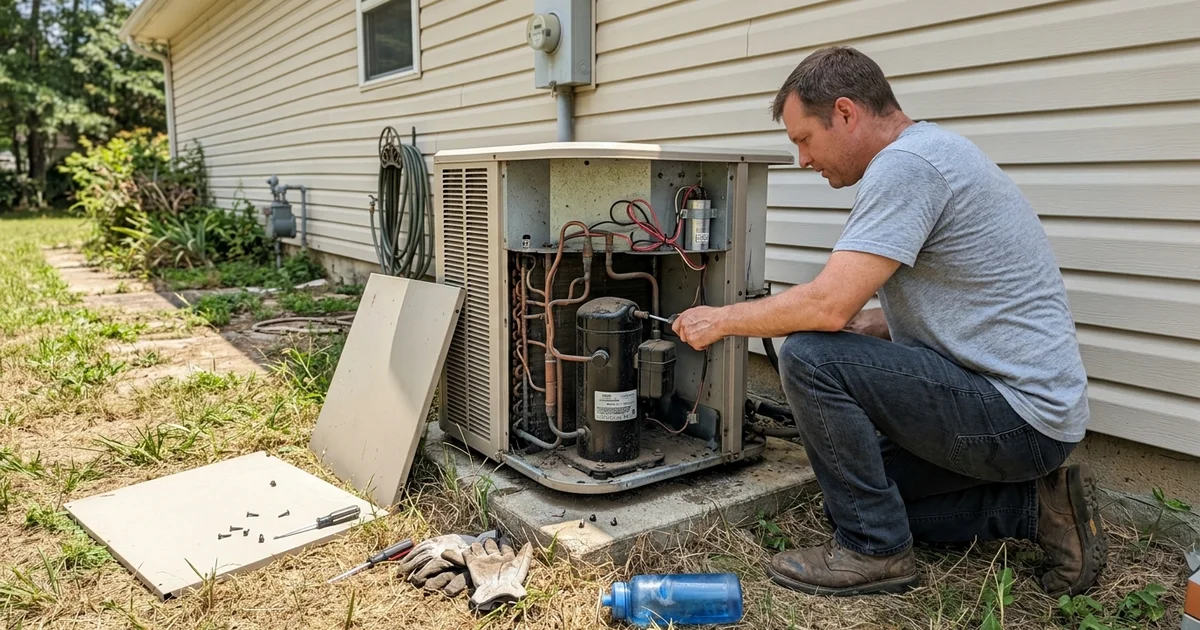
Why the Compressor Matters
We know the sinking feeling of a hot house when the AC suddenly quits. The compressor acts as the literal heart of your cooling system. Proper diagnosis of ac compressor failure signs matters immensely.
Our emergency AC repair line connects you with a licensed contractor 24/7 if your system is already down. A replacement typically costs between $1,500 and $2,500 depending on the tonnage.
We will break down the exact symptoms and explain how to verify the problem. If you are unsure whether it can wait until morning, our guide on when a broken AC is an emergency helps you decide.
Signs Your Compressor May Be Failing
Many homeowners confuse simple electrical issues with a complete mechanical breakdown. The most common bad ac compressor symptoms include warm air from the vents, a tripping breaker, and harsh grinding sounds from the outdoor cabinet.
You should listen carefully for a loud clunking noise when the system attempts to start. Our recommended local contractors frequently report that these exact sounds indicate internal wear. Pay close attention to these specific warning signs before making a decision:
- Warm air blowing from the vents while the outdoor fan continues to spin normally.
- A loud hum or click coming from the outdoor unit while the compressor never actually turns on.
- A violent clunk or bang that occurs the exact moment the cooling cycle starts or stops.
- Tripping breakers that shut the system down within seconds of the AC kicking on.
- Hard starting behavior where the house lights dim, the unit struggles heavily, and then it shuts off.
- Rattling or metal-on-metal grinding noises coming from inside the sealed outdoor cabinet.
- Weak cooling performance that drops over several weeks while your monthly energy bills spike.
These exact symptoms can also point to much cheaper electrical components failing. We highly recommend ruling out minor part failures before assuming the worst. A licensed professional can pinpoint the exact cause quickly.
Capacitor vs Compressor: Don’t Skip This Step
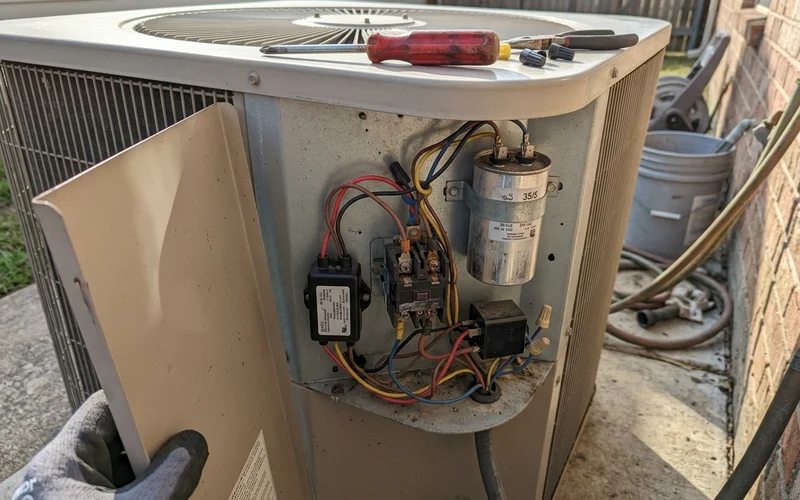
We strongly advise asking the technician to test the dual run capacitor first. A blown capacitor vs compressor scenario is the most common diagnostic mix-up in the industry.
This small electrical cylinder provides the initial surge of power needed to start the motor. Our research shows that replacing a capacitor usually costs between $150 and $300 professionally. The specific checks a licensed contractor should perform include the following steps:
- Test the dual run capacitor with a specialized multimeter to verify the microfarad readings.
- Inspect the contactor for pitted or burnt electrical connections.
- Measure the resistance in the compressor windings to locate any electrical shorts.
- Confirm if the motor is just overheated and resting on its internal overload switch.
An aging unit sometimes just needs a temporary boost to get going. A hard-start kit acts like a jumpstart for a struggling motor. We remind homeowners that this kit only treats the symptom of wear and not the root cause.
What Causes Compressors to Fail
Poor maintenance, severe electrical surges, and simple old age are the primary reasons these motors burn out. The humid local climate accelerates this wear significantly over the years.
We see these five specific issues leading to early breakdowns most frequently:
- Low refrigerant levels: A slow leak forces the motor to run hot and deprives it of necessary cooling oil.
- Liquid floodback: A frozen indoor coil sends raw liquid refrigerant back down the line to destroy the internal valves.
- Dirty outdoor coils: Salt corrosion and yard debris drive the head pressure dangerously high on 95-degree afternoons.
- Electrical problems: Lightning strikes and local grid surges damage the delicate internal windings.
- Old age: Even the best equipment wears out after 10 to 15 long cooling seasons.
Routine maintenance prevents the vast majority of these fatal issues. A clean system simply runs cooler and lasts longer. We advise booking a spring checkup to catch small problems early.
Your Options When It’s the Compressor
The decision depends heavily on the condition of your existing indoor and outdoor coils. A direct replacement makes financial sense only for newer units with valid warranties.
We recommend replacing the entire AC system if your unit uses obsolete R-22 refrigerant or is over 12 years old. Modern systems installed in the South today must meet the new 14.3 SEER2 minimum efficiency standard. Our repair-or-replace guide offers a detailed breakdown of these choices.
| Option | Makes sense when |
|---|---|
| Replace the compressor | System is under 10 years old, parts remain under warranty, and the coils are clean. |
| Replace the outdoor unit | Both the compressor and outdoor coil are failing, but the indoor coil is a compatible modern match. |
| Replace the whole system | The system exceeds 12 years of age, runs on R-22, or the total repair estimate exceeds $3,000. |
Installing a new compressor is a highly labor-intensive process. The technician must recover the old refrigerant, cut out the broken part, braze the new one in place, and recharge the system. We always suggest getting quotes for both a repair and a full system upgrade to compare the value.
Warranty Questions to Ask
A valid warranty can save you over a thousand dollars on the replacement part itself. You must verify your coverage status before approving any major repair work.
We suggest gathering your installation paperwork and asking the contractor these specific questions:
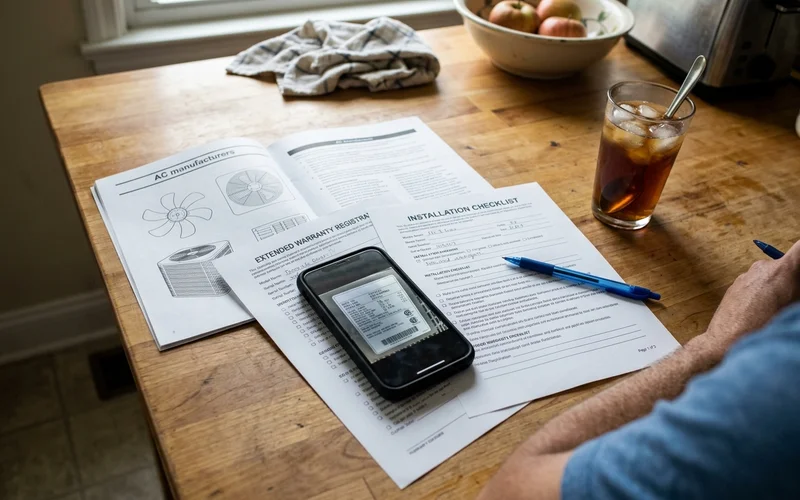
- Was the original equipment registered with the manufacturer upon installation?
- Is the compressor itself still covered under the standard 10-year parts agreement?
- Does the installing company cover the labor costs, or do you have a separate extended labor warranty?
- Will the manufacturer require proof of annual maintenance to honor the parts claim?
Most major brands like Trane and Carrier offer 10-year compressor warranties for registered products. Unregistered units typically default to a much shorter 5-year coverage period.
We want you to keep in mind that parts warranties rarely cover the cost of labor or the new refrigerant. Expect to pay several hundred dollars in labor fees even with a fully covered part.
Why Compressors Fail Early on the Gulf Coast
We know that coastal systems face extreme humidity, intense heat, and corrosive salt air. Units installed within a few miles of the coast often fail after just 7 to 10 years.
Inland systems usually survive for 12 to 15 years under similar workloads. Our understanding of the local climate points to a few specific, preventable causes for early deaths:
- Ignored slow leaks: Running a system low on Freon or Puron starves the motor of oil for months.
- Weak capacitors: A failing electrical part forces the primary motor to struggle during every single start cycle.
- Salt-crusted coils: Coastal air coats the aluminum fins in salt, trapping heat inside the unit and spiking the operating pressure.
- Grid instability: Frequent power flickers and severe thunderstorm surges degrade the internal electrical insulation over time.
A licensed technician catches the vast majority of these threats during a spring tune-up. Measuring the head pressure and washing the salt off the coils protects the equipment for the long, hot summer. We recommend scheduling this vital maintenance every single year without fail.
If You’re Told It’s the Compressor
A professional contractor should always provide concrete proof before condemning this expensive component. You have every right to ask exactly how they reached their final diagnosis.
We encourage homeowners to ask for photos of the multimeter readings. A thorough technician will use a megohmmeter tool to check the internal motor windings for grounded circuits.
A megohmmeter test is the industry standard for proving internal insulation failure.
Our phone line is always open if you feel unsure and want to speak with a different licensed contractor. Getting a second opinion makes perfect sense when facing a repair bill in the thousands.
Next Steps
Call (251) 850-5502 to describe your specific ac compressor failure signs. The licensed, insured contractors we connect you with serve Daphne, Fairhope, Spanish Fort, Montrose, Malbis, and Loxley.
We will get you in touch with a local expert who can properly diagnose the equipment. You receive a free estimate before any work begins.
Ask the technician to provide side-by-side pricing for a repair versus a complete replacement. Our goal is to help you restore your home cooling as quickly and reliably as possible.