
Living on the Eastern Shore means enjoying incredible bay views alongside a punishing climate for outdoor equipment. You know how quickly things rust near the water.
Our local environment takes a heavy toll on standard cooling systems. A national average air conditioner lifespan is 15 to 20 years. Here on the coast, that number drops to between seven and 10 years.
Salt air ac corrosion is the primary culprit. Let’s look at the data on how this environment degrades your equipment and explore a few practical ways to respond.
How Salt Air Attacks Your AC
Your outdoor unit pulls thousands of cubic feet of air through its coil every hour. Near Mobile Bay, that constant breeze carries microscopic salt particles that stick to the metal and form a highly corrosive film.
Our coastal environment turns your air conditioner into a giant battery. Most standard coils feature aluminum fins wrapped around copper tubes. When salty moisture bridges the gap between these two dissimilar metals, it triggers galvanic corrosion.
The aluminum acts as a sacrificial metal and begins to rot away.
This destructive process is commonly called fin rot.
“Once you lose 30 percent of your fins to galvanic corrosion, your system can drop up to 25 percent of its cooling capacity.”
We highly recommend scheduling a regular AC tune-up in Daphne with a specific focus on salt-air exposure. Routine cleaning washes away that conductive film. It slows down the pitting before those copper tubes spring a refrigerant leak.
Warning Signs
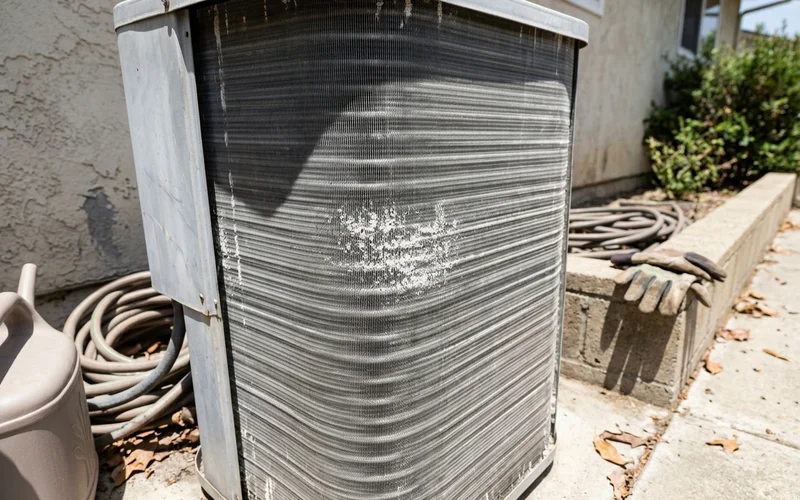
Catching the early signs of a corroded condenser coil can save you from a complete system failure. Salt damage leaves clear physical clues, like white flaking crust on the fins, long before the system completely stops cooling.
We suggest checking your outdoor cabinet for these specific indicators every few months. Look closely at the metal components for these issues.
- White or gray crust on the fins, which is early aluminum oxide buildup.
- Flaking or crumbling fins that turn to chalk and break when touched.
- Pitting or green spots on the copper lines and brass fittings.
- Rust on the outer cabinet, base pan, or steel fasteners.
- Weaker cooling and higher bills as the system loses crucial heat-transfer surface area.
- Refrigerant leaks found during a professional service call.
Who’s Most at Risk
Your exact distance from Mobile Bay dictates your timeline for potential coil failure. Airborne chloride travels surprisingly far inland, but waterfront properties face the heaviest daily exposure.
We always warn residents that properties directly on the bay take the hardest hit. A sharp drop in coastal ac lifespan occurs the closer you get to the water.
| Location | Salt Exposure Level | Expected AC Lifespan Impact |
|---|---|---|
| Point Clear waterfront, Battles Wharf | Heaviest (Severe Galvanic Corrosion) | Can fail in 5 to 7 years |
| Fairhope bluff, Montrose bayside | High (Constant Salty Moisture) | Often fails in 7 to 10 years |
| Within about a mile of the bay | Moderate (Wind-Driven Salt) | Lasts 10 to 12 years |
| Daphne and Spanish Fort away from water | Lower (Standard Wear) | Closer to the 15-year national average |
| Malbis, Loxley | Low, but pine pollen clogs coils | Standard lifespan |
Wind direction and protective landscaping also play a major role in your actual exposure. A home shielded by dense trees will experience less direct salt spray than an open lot.
What You Can Do: Safe Rinsing
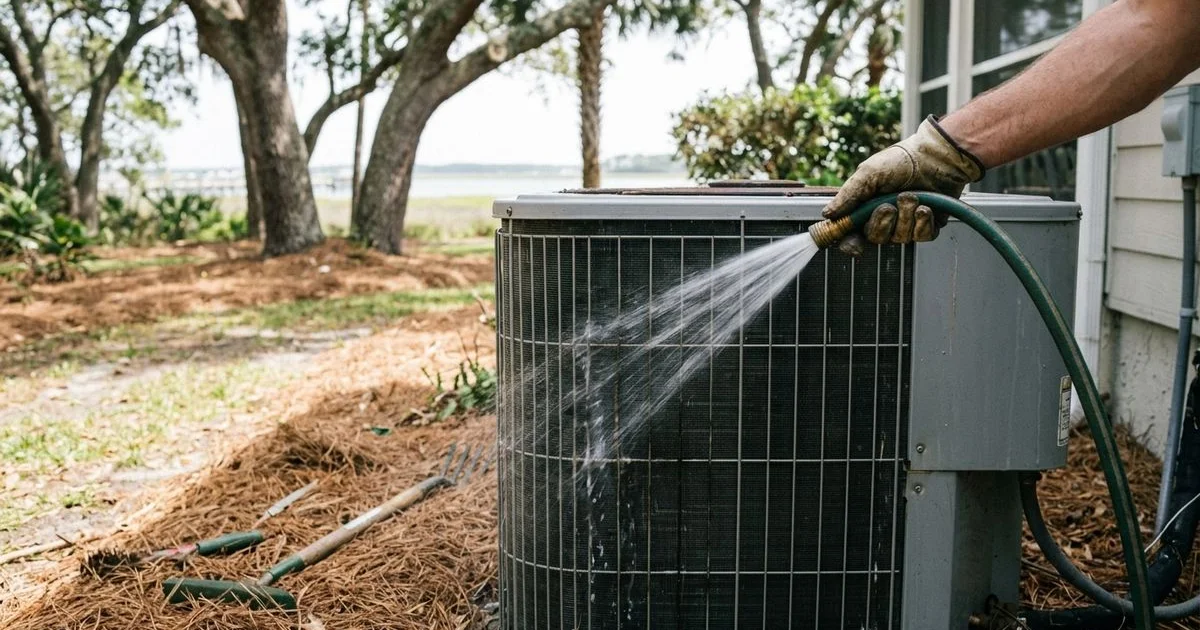
You can actively fight fin rot by washing the salt off your outdoor condenser. This simple step disrupts the galvanic couple and stops the metal from degrading.
We advise homeowners near the water to perform this rinse every two to four weeks during the hot summer months. Always follow these safety steps.
- Turn the power completely off at the outdoor disconnect box or the main breaker.
- Clear away leaves, pine straw, and organic debris from around the base and top of the unit.
- Use a standard garden hose on a gentle shower setting.
- Rinse the coil from top to bottom, spraying straight in so you do not bend the delicate fins.
- Let the cabinet air dry for a few minutes before restoring the power.
Never use a high-pressure washer to clean the cabinet. The intense pressure easily folds the paper-thin aluminum fins completely flat.
Crushed fins block the airflow and choke the compressor. Avoid harsh household surface cleaners or stiff bristle brushes.
What a Contractor Does
Professional maintenance goes beyond a simple water rinse to halt active decay. The licensed contractors we connect you with use specialized chemicals and fin combs to restore airflow and protect the metal.
Our network of pros targets the hidden areas where salt and moisture hide. A standard coastal tune-up includes several critical steps.
- Applying a commercial-grade, non-acidic coil cleaner to dissolve hardened salt without stripping the metal.
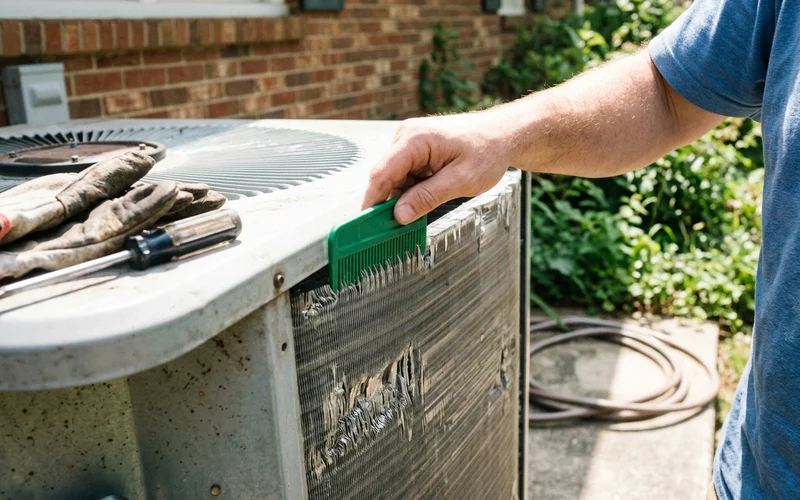
- Straightening bent fins with a specialized fin comb to restore proper airflow.
- Inspecting the copper suction lines and fittings for microscopic pitting.
- Checking exact refrigerant pressures to reveal slow leaks before the unit freezes.
- Recommending a field-applied protective coating for newer, undamaged coils.
- Tightening or replacing corroded steel fasteners and inspecting the electrical contactors.
Catching a 10 percent drop in refrigerant early prevents the compressor from overheating. This proactive approach adds years of reliable cooling to your system.
Coatings and Coastal-Rated Units
Protective coil coatings drastically slow down the chemical reaction between salt and metal. If you live within a mile of the bay, choosing a factory-applied epoxy coating or an all-aluminum unit is a smart investment.
We always explain that preventing the copper and aluminum from reacting is the main goal. You have three primary ways to achieve this.
- Factory-Applied Epoxy Coatings: Manufacturers dip the entire coil in a protective barrier, such as Modine Coatings, before assembling the unit.
- All-Aluminum Coils: Brands like Lennox and Carrier offer welded aluminum coils that completely eliminate the dissimilar metal problem.
- Field-Applied Sprays: A local HVAC contractor can apply a specialized aerosol coating to an existing coil, provided it is not already corroding.
If you are replacing a unit near the water, review our complete guide to coastal-rated condensers. Choosing the correct materials on day one saves you from a premature replacement down the road.
Corrosion Isn’t Only Outside
Salt air gets indoors, but your indoor evaporator coil faces a different threat called formicary corrosion. Volatile organic compounds from everyday household products cause this specific chemical decay.
We always remind homeowners that these common items continuously release VOCs into your indoor air. These gases mix with the normal condensation on your indoor coil to form highly destructive formic and acetic acids.
Common sources of these indoor organic acids include:
- Fresh paints and oil-based wood stains.
- Formaldehyde adhesives used in new cabinets or particleboard.
- Household cleaning solvents and spray disinfectants.
- Synthetic carpets, vinyl flooring, and foam insulation.
- Hairsprays, cosmetics, and room deodorizers.
Formicary corrosion creates tiny pinhole leaks that are notoriously difficult to find.
You might notice a slow loss of cooling power or a system that requires a fresh refrigerant charge every single summer.
If your local HVAC contractor finds repeated indoor coil leaks, ask about upgrading to an all-aluminum indoor coil. Aluminum simply does not react to organic acids the way copper does.
After a Storm With Salt Spray
Tropical storms and hurricanes push thick, salty sea spray much farther inland than standard daily breezes. You must give your outdoor coil a thorough freshwater rinse as soon as the storm passes and it is safe to go outside.
We strongly advise following a strict safety checklist before inspecting your equipment. Never rush this process after a major weather event.
- Verify the power is off: Shut down the main breaker before touching the cabinet.
- Check the surroundings: Ensure the yard is free of downed power lines and dangerous debris.
- Inspect for flood lines: Look for mud or water marks on the base of the condenser.
If a storm surge or flash flood reached the base of your unit, do not attempt to turn it on. Saltwater instantly ruins the sensitive electrical contactors, capacitors, and fan motors.
Running a flooded system can cause a catastrophic electrical short or a fire.
You need a professional inspection to clear the electrical compartment before restarting the equipment.
How Often to Inspect
You should have a professional inspect your cooling system at least once a year, ideally right before the peak summer heat arrives. Waterfront homes require a bi-annual schedule to keep the internal components perfectly clean.
We suggest booking a spring and a fall visit to catch small issues early.
This proactive step is always cheaper than a major emergency repair.
Call (251) 850-5502 to book your next service visit. We will connect you with a licensed, insured contractor who truly understands coastal systems. Any necessary repair always comes with a free, transparent estimate first.