
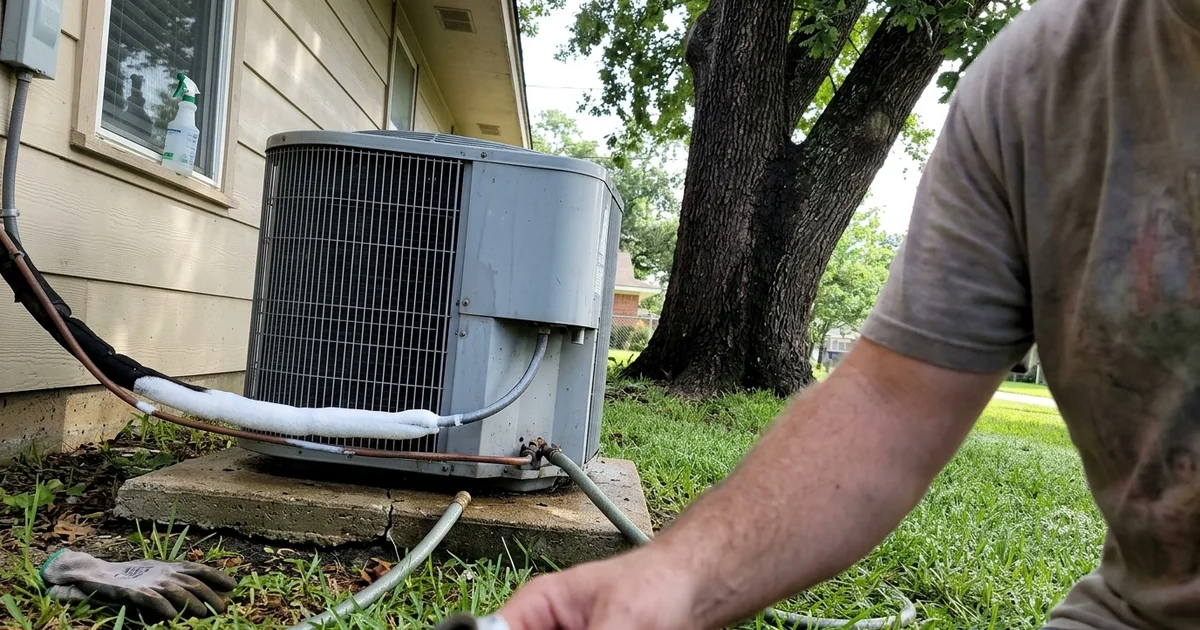
Why Does an AC Freeze in Summer?
It seems entirely backward to find ice on an ac unit in the middle of summer, but the root cause always comes down to a lack of airflow or low refrigerant dropping the temperature below 32°F. The moisture that should drip off as water freezes into a solid block instead.
Our climate on the Gulf Coast provides plenty of thick humidity to build this ice very quickly.
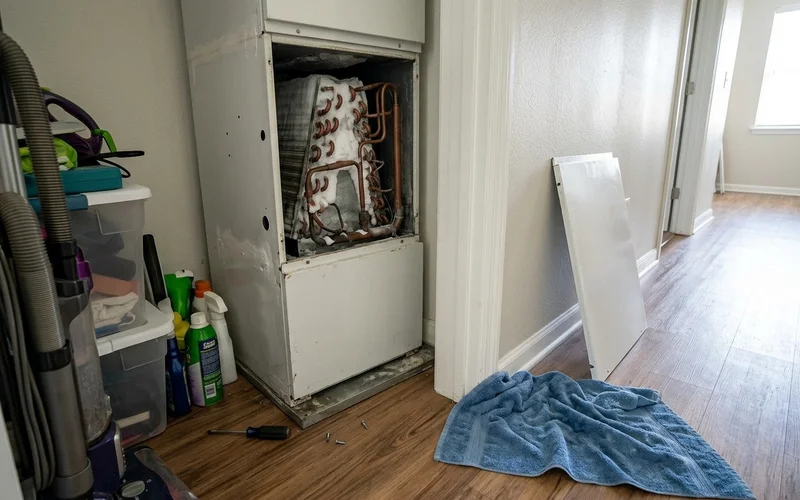
You might see an ac line frozen at the outdoor unit, an ac frozen coil indoors, or water pooling around the air handler as ice melts. Fixing this issue starts with turning the cooling function off immediately.
We offer a local AC repair in Daphne line that connects you with a licensed contractor 24/7 if you need help right away. Let’s look at the three main reasons this happens and explore the exact steps to thaw the system safely.
Right now: stop the freeze
Set the thermostat to Off for cooling, and set the fan to On. Warm indoor air will melt the ice faster. Lay towels near the indoor unit to catch meltwater.
The Three Usual Causes
Restricted airflow, low refrigerant, and mechanical blower problems are the three most common reasons an AC unit freezes. The cooling process requires a precise balance of warm indoor air moving across cold coils. We always suggest checking the physical air path first before assuming the equipment is broken.
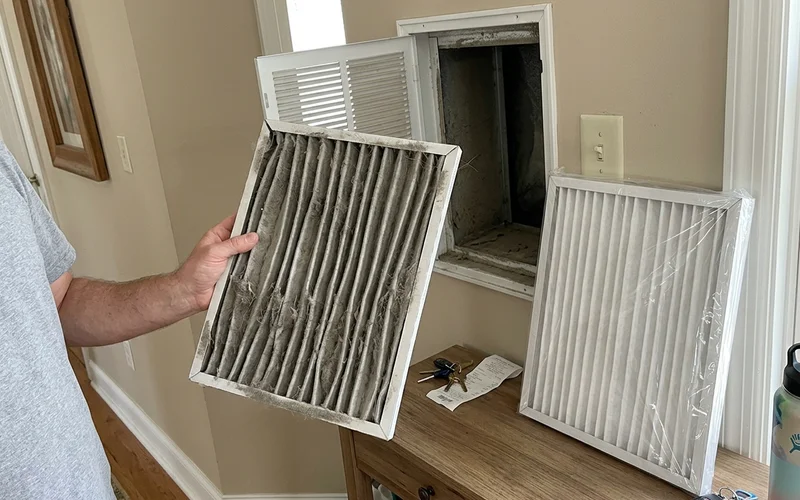
1. Restricted airflow. A clogged filter is the top cause of restricted air movement. Closed supply vents, a blocked return grille, a dirty blower wheel, or crushed ductwork will do the exact same thing.
We notice many Eastern Shore homeowners accidentally restrict airflow by installing high-density filters. A standard HVAC system often struggles to pull air through a filter rated MERV 13 or higher. A 2026 industry review shows that a pleated filter rated MERV 8 to MERV 11 provides the best balance for trapping Gulf Coast pollen without suffocating the blower motor.
2. Low refrigerant. Low refrigerant always points to a physical leak in your copper lines or coils. The internal pressure inside the coil drops when the chemical charge is low, causing the temperature to plummet below freezing.
Locating and repairing the leak is critical right now because of the 2026 Environmental Protection Agency phase-out of R-410A refrigerant. We want to highlight that recharging an older system with R-410A currently averages $50 to $80 per pound. A licensed professional needs to pinpoint the leak and braze the copper before adding any expensive new chemicals. The system will simply leak the new refrigerant and freeze again if you skip the repair.
3. Blower or fan problems. Systems often freeze when the indoor blower motor becomes weak or fails to spin at the correct speed. The airflow drops significantly under these conditions, even if you have a perfectly clean air filter installed.
A failing dual run capacitor on the blower motor is a common culprit for this exact symptom. We recommend having a technician test the capacitor’s microfarad readings to ensure the motor receives enough starting torque. The coil will turn into a block of ice within hours if the motor stops pushing warm air. The table below helps identify which problem you might be facing.
| Clue | More likely cause |
|---|---|
| Filter gray and caked | Restricted airflow |
| Filter clean, ice returns within a day | Low refrigerant or blower problem |
| Weak airflow from every vent | Blower motor or duct issue |
| Hissing or oily spots on copper lines | Refrigerant leak |
Why You Shouldn’t Keep Running It Frozen
We strongly advise against running your system while it is covered in ice because it can destroy the outdoor unit. A frozen coil can send liquid refrigerant directly back to the outdoor compressor. The compressor is strictly built to pump vapor, so this liquid floodback can completely wreck the internal compressor valves.
A simple $20 clogged filter problem can escalate into the most expensive repair an air conditioner can have. Current 2026 pricing data shows that an out-of-warranty AC compressor replacement averages around $1,550 across the United States. The detailed guide to compressor failure explains exactly what is at stake when floodback occurs.
After It Thaws
We suggest giving the system at least three to four hours to naturally thaw before attempting any fixes. You should never use a hairdryer, heat gun, or sharp object to speed up the process. Applying artificial heat or scraping the delicate aluminum fins will puncture the pressurized coil and cause an expensive refrigerant leak.
We recommend replacing the air filter and ensuring the condensate drain pan is empty once the ice is completely gone. Make sure all supply vents and the return grille are open, then switch the thermostat back to cooling. Watch the copper line at the outdoor unit over the next few hours, and turn the system off if frost returns.
How to Keep It From Freezing Again
We recommend adopting a few basic maintenance habits to keep the ice away once the main cause is fixed. Taking a proactive approach protects the system from future airflow restrictions. The following checklist outlines the most effective daily and monthly habits.
- Change or check the filter monthly in summer. On the Gulf Coast, spring pollen and summer dust load filters quickly, so write the date on the frame as a reminder.
- Keep supply vents open. Closing vents in unused rooms reduces airflow across the coil instead of saving money on a central system.
- Keep the return grille clear. Furniture, curtains, or boxes placed in front of it starve the system of air.
- Don’t run the thermostat very low. The Department of Energy suggests setting your AC to 78°F during the summer, as setting it lower on a humid night keeps the coil dangerously cold.
- Schedule yearly maintenance. A contractor will clean the blower wheel and check the charge with superheat and subcooling readings to catch a slow leak early.
We advise setting up calendar reminders on your phone for these simple tasks. A clean system runs more efficiently and costs less to operate. Routine care is the best insurance policy against a mid-summer breakdown.
A Note on Humid Nights
We often hear from Eastern Shore homeowners who notice their air conditioner only freezes after the sun goes down. Nighttime freezing happens when a marginal airflow or refrigerant issue collides with shifting weather patterns. The Gulf Coast keeps outdoor dew points above 70°F from May through September, meaning the indoor air remains heavily saturated with moisture.
We see that when outdoor temperatures finally drop into the 70s at night, the system runs with a much lower heat load to absorb. A thermostat set very low, combined with this lower outdoor heat load, forces the coil temperature down until the heavy indoor humidity simply freezes onto the fins.
Mention this specific nighttime symptom when you call for service. We know this is a highly useful clue that helps your local HVAC contractor narrow the problem down to airflow or refrigerant charge much faster. Fixing it quickly prevents a small leak from turning into a burned-out compressor.
When to Call
We recommend calling for professional help if the coil re-freezes after you have replaced the filter and let it thaw. You should also call immediately if you see oil spots on the copper lines, which is a clear sign of a refrigerant leak. Refrigerant work requires a licensed contractor with specialized recovery equipment.
We are ready to get a contractor out to your home when you dial (251) 850-5502. This dedicated line connects you with a licensed, insured HVAC contractor serving your specific Eastern Shore town. Same-day service is available in most of the area, and the estimate is always free.