
Listen Before You Worry
We know the exact feeling of panic that hits when your cooling system starts sounding like a rock tumbler. An ac making loud noise usually means a mechanical component needs immediate attention. This sudden change is a very frequent issue during the hot summer months across the Gulf Coast.
Strange noises are one of the most common reasons homeowners call about their AC. Every AC makes some background noise, like a click when the thermostat calls or the whoosh of air through the vents. What truly matters is a new sound, or a normal sound that suddenly got much louder.
If you would rather skip the troubleshooting and have someone listen in person, our AC repair in Daphne line connects you with a licensed contractor immediately.
Noise by Noise
| Noise | Usual cause | How urgent |
|---|---|---|
| Constant buzzing outside | Failed capacitor, contactor, or motor that can’t start | Shut off, call today |
| Humming with fan still | Capacitor or fan motor | Shut off, call today |
| Squealing or screeching | Worn motor bearing, blower wheel rubbing | Schedule soon |
| Grinding or scraping | Motor bearings failing, fan blade striking | Shut off, call |
| Banging or clunking | Loose part, or compressor hard-starting | Call promptly |
| Rattling | Loose panel, debris, fan blade loose | Check, then schedule |
| Hissing | Refrigerant leak or duct air leak | Call |
| Clicking that repeats | Relay or control issue, short cycling | Schedule soon |
| Gurgling or dripping | Drain line partly clogged | Flush the drain |
Buzzing and Humming
We often hear from homeowners dealing with an electrical buzz from the outdoor unit. This sound, especially with the fan not turning, usually means a motor is trying to start and cannot. That is a classic humming unit with a stopped fan, which frequently points to a failed run capacitor.
Leaving the system running in this state can overheat the compressor very quickly. An ac buzzing noise can also indicate a failing contactor relay switch experiencing electrical arcing. The U.S. Consumer Product Safety Commission notes that electrical appliance failures are a leading risk factor for home fires, so you should never ignore a strong electrical buzz.
Squealing and Screeching
High-pitched squeals usually come from motor bearings inside either the outdoor fan motor or the indoor blower. The motor still works for now, but it is definitely on its way out.
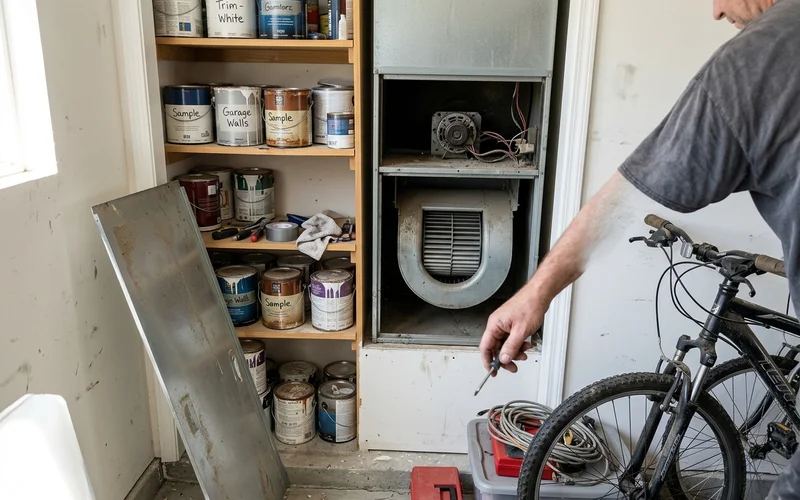
Older belt-driven blowers are notorious for this issue, but modern direct-drive units will also squeal when internal bearings dry out. The blower motor spins thousands of times every minute to move conditioned air. Once the factory lubrication vanishes, those raw metal bearings create friction and produce a loud screaming sound.
Grinding and Scraping
An ac grinding noise is one of the most serious sounds your system can make. Metal-on-metal grinding happens when bearings have gone completely dry or a fan blade is physically hitting something inside the casing.
Turn the system off immediately if you hear this specific racket. A seized motor can tear up other components and lead to a total system failure. Inside the compressor, moving parts like piston pins can also break and scrape, which requires a licensed professional to accurately diagnose.
Banging and Clunking
A single thump at startup can be a loose internal part. A loud, repeating bang followed by warm air often points directly to a severe compressor problem.
We always recommend shutting the unit down if banging occurs. A connecting rod or crankshaft inside the compressor might be loose, and these sounds only get louder over time. Shutting the system down prevents a loose component from destroying the surrounding coils.
Rattling
Rattles often point to a loose access panel or a screw that vibrated out. Pine cones, sticks, and small rocks also get trapped inside the outdoor unit.
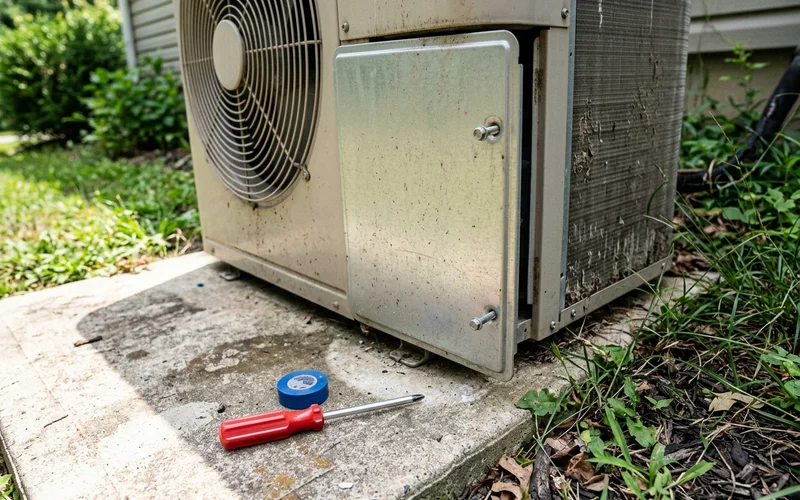
Gulf Coast storms blow debris into these metal cabinets more often than you might expect. Removing this debris early prevents it from pressing against the spinning fan blades and causing a much more expensive repair.
Hissing
A hiss near the copper lines can be escaping R-410A refrigerant. This type of leak forces your system to struggle to maintain pressure, which drastically reduces cooling efficiency.
A hiss at a vent or return is usually just a simple air leak around a grille. You can often feel the cold air escaping with your bare hand to easily confirm a duct leak.
Which Noises Mean Shut It Off Now
Turn the AC off at the thermostat immediately for constant buzzing, grinding, a burning smell, or any noise that comes with warm air. These specific sounds point to a motor or electrical problem that gets worse with every minute it runs.
Our advice is to take the situation seriously if the system repeatedly trips the circuit breaker. A tripped breaker indicates an electrical overload, and forcing the system back on can completely fry the compressor. A full compressor replacement is one of the most expensive fixes in the HVAC industry.
Always shut the power down if you hear:
- Metal-on-metal grinding
- Loud, constant electrical buzzing
- Heavy banging accompanied by warm air
- A screeching noise that suddenly stops
Rattles, faint squeals, and gurgles can usually wait for a scheduled visit. Just ensure the system is still blowing cold air before letting it run with a minor rattle.
What You Can Safely Check
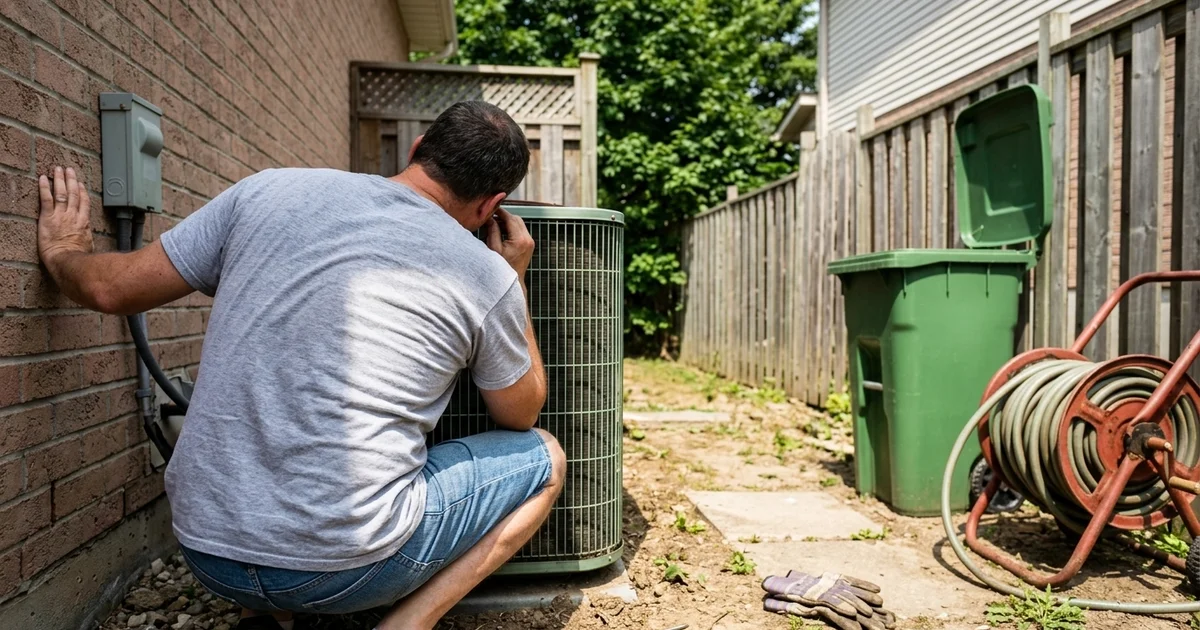
With the power off at the main disconnect switch, look for debris on top of or around the outdoor condenser unit. You can safely clear away leaves, twigs, and small rocks by hand. Make sure all the exterior access panels are securely fastened.
You can also peek through the top grill to inspect the fan blades. A broken fan blade will wobble and grind against the metal housing.
Our safety guidelines strongly prohibit opening any electrical panels. You must never touch the capacitor yourself, as this component stores a dangerous, high-voltage electrical charge long after the power is completely disconnected.
Noises From the Indoor Unit
Not every troubling sound comes from the outdoor condenser. Inside the house, you should actively listen for these specific warning signs:
- Whistling at vents or returns: This is often caused by a dirty air filter, closed vents, or undersized return ductwork. A severely clogged MERV 13 filter can choke the airflow so badly that the air literally whistles as it squeezes past the blockage.
- Banging in the ductwork: Metal ducts naturally expand and contract as air starts and stops. An occasional soft pop is completely normal, but loud, repeated banging can mean your ducts are poorly sized or coming loose at the seams.
- Rattling in the air handler: This usually points to a loose front panel or a failing “squirrel cage” blower wheel.
- Dripping or gurgling: You are likely hearing water moving through a partly clogged condensate drain line.
- Clicking at the thermostat that repeats: A continuous clicking without the system actually starting indicates a failing relay switch or a disrupted control signal.
Recording the Noise Helps
Intermittent mechanical sounds have a funny habit of stopping the exact moment a professional arrives. If you can, record a short video on your smartphone when the noise happens.
Make sure the audio is clear and the affected part of the system is visible in the frame. Hold your phone about three feet away from the unit to prevent the microphone from distorting the loud audio.
Note the time of day and whether the system was starting, running, or shutting down. That brief clip can significantly reduce billable diagnostic time and help the technician locate the right replacement part faster. We recommend mentioning this recording when you call, so the local HVAC contractor can review it.
Normal Sounds You Can Ignore
Not all air conditioner sounds are a cause for concern. A soft click from the thermostat, a brief hum when the outdoor unit starts, and the steady whoosh of airflow are all completely normal.
The gentle whir from the outdoor fan usually registers around 50 to 60 decibels, which is about as loud as a normal conversation. Modern systems are designed to operate quietly in the background.
We also want to remind homeowners with heat pumps about the winter defrost cycle. These units utilize a reversing valve that makes a distinct, temporary whoosh and hiss when switching modes, which is a harmless operational sound.
Getting It Checked
Describe the specific noise in detail when you call a contractor through (251) 850-5502. Be prepared to explain when the noise happens, where it seems to originate, and whether the system is still blowing cold air.
We will connect you with a licensed, insured contractor serving your specific Eastern Shore town. Catching a strange mechanical sound early is the smartest way to avoid a complete system breakdown.
You will always receive a clear, free estimate before the local HVAC contractor begins any repair work.