
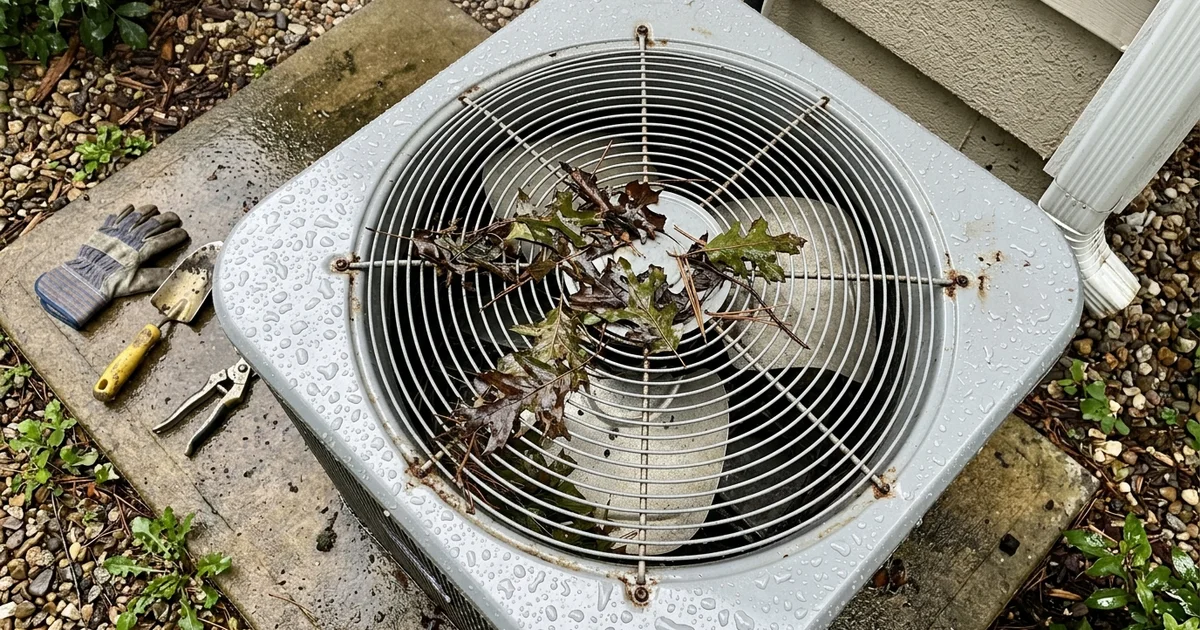
Hearing a loud buzz from your outdoor unit while the blades sit dead still is an alarming sound during a Gulf Coast summer. That specific symptom of an ac humming fan not spinning usually points to a startup failure.
We know how stressful it is when indoor temperatures start climbing. Shutting the system down at the thermostat is your best immediate move to prevent permanent damage.
Our AC repair in Daphne line reaches a licensed contractor 24/7.
Let’s look at the data, what the internal components actually do, and explore the safest ways to respond.
Why the Outdoor Fan Matters
The fan on top of your outdoor condenser plays a vital role in the refrigeration cycle. It pulls ambient air across the condenser coils to carry away the intense heat your system absorbed from inside the house.
If those blades stop turning, that heat is trapped. Pressures inside the copper refrigerant lines climb rapidly, and the compressor starts to bake. We always advise homeowners to turn the system off immediately at the thermostat if they notice this problem.
Most modern scroll compressors have an internal thermal overload switch that trips around 225 degrees Fahrenheit. Running the system until it hits this safety limit repeatedly will severely degrade the internal oil and eventually ruin the motor windings.
Safety warning
Don’t push the fan with a stick or reach through the grille. The fan can start suddenly, and the capacitor inside holds a dangerous electrical charge even with the power off.
Capacitor, Contactor or Motor?
Three specific electrical components are usually responsible for an ac fan not spinning.
The Dual Run Capacitor
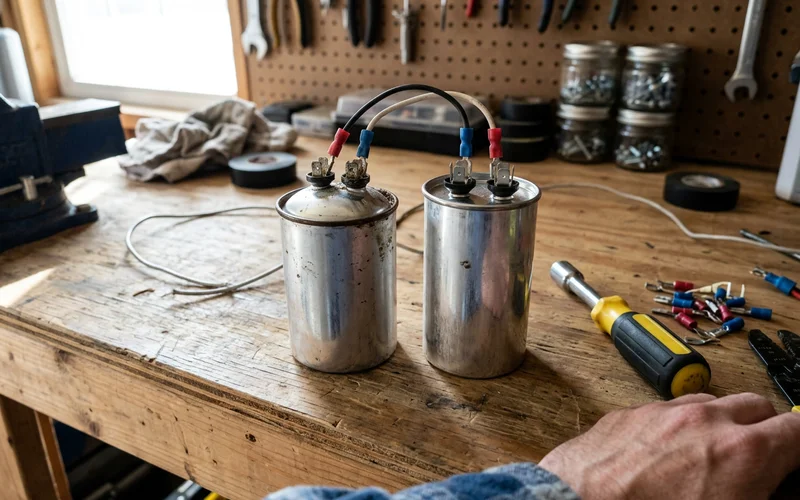
This round or oval metal cylinder stores voltage to give both the compressor and the fan motor the massive torque they need at startup. A blown ac capacitor is the absolute most common culprit for cooling failures on the Eastern Shore.
A standard dual-run capacitor is designed to operate within a specific microfarad range. When that capacity drops by more than 6 percent below its rating, the motors hum loudly but cannot break inertia to start turning. You can often spot a failed unit because the top of the metal can swells outward like a dome or leaks a greasy fluid.
The Contactor Relay
This mechanical switch receives a 24-volt signal from your indoor thermostat to close its magnetic coil. Closing that circuit sends high-voltage power straight from your household panel to the outdoor unit.
We see contactors fail when the metal connection points become severely pitted from years of electrical arcing. Ants and earwigs also crawl between the contacts looking for warmth, which blocks the voltage completely and leaves the entire unit dead.
The Condenser Fan Motor
The fan motor works incredibly hard, especially after years of battling 95-degree afternoon heat. The sealed bearings eventually dry out, creating severe friction that causes the internal copper windings to short circuit.
If your fan runs normally for about twenty minutes and then suddenly stops while the compressor keeps humming, the motor is likely hitting its thermal limit and shutting down.
| Symptom | Most likely |
|---|---|
| Hum, fan still, compressor may be running | Capacitor |
| Complete silence outside, indoor fan runs | Contactor, breaker or disconnect |
| Fan starts then stops after a while | Fan motor overheating |
| Fan spins slowly | Weak capacitor or failing motor |
The Storm Connection
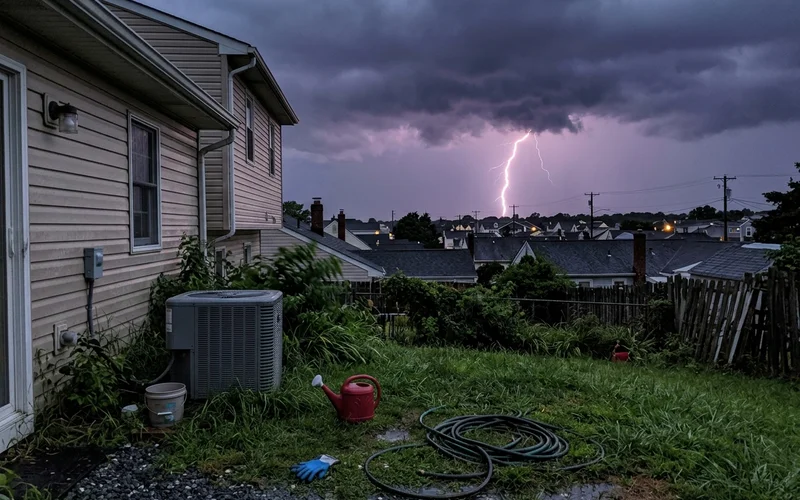
The Gulf Coast weather takes a heavy toll on outdoor electrical components. Mobile Bay experiences over 70 thunderstorm days a year, bringing intense electrical activity right over our neighborhoods.
Lightning strikes and utility grid switching send massive voltage surges directly through the local power lines. Capacitors and delicate control boards absorb the brunt of that electrical impact. Our phones ring constantly with fan and capacitor issues the morning after a heavy summer storm.
You can read our detailed guide on AC problems after a storm to learn the exact steps for a safe system restart.
High daily temperatures compound the stress on these specific parts. Most standard capacitors are rated for internal operating temperatures up to 158 degrees Fahrenheit. A metal condensing unit baking in direct afternoon sun on a hot concrete pad easily pushes those components past their breaking point.
What the Repair Involves
Fixing an outdoor fan issue requires high-voltage electrical diagnostics and specialized tools. A licensed contractor will first shut off the main power and safely discharge the capacitor, which can hold upwards of 400 volts even when completely disconnected.
They use a specific set of diagnostic steps to isolate the problem:
- Testing capacitance: Measuring the microfarad output to see if it falls below the required 6 percent tolerance.
- Checking voltage: Verifying the contactor is receiving the proper 24-volt signal from the indoor thermostat.
- Inspecting windings: Using a multimeter to check the internal copper windings of the fan motor for a direct short to ground.
We know that getting your home cool again is the top priority. Because dual-run capacitors and contactors fail so frequently, your local HVAC contractor keeps dozens of standard sizes fully stocked on their trucks.
A burned-out fan motor takes a bit more effort to resolve. The replacement motor must be precisely matched to the original specifications, including the exact RPM, horsepower, and rotational direction. Fixing these issues on the very first day prevents extreme heat strain from destroying your expensive compressor.
What You Can Safely Check
Before calling for professional help, there are a few external checks a homeowner can perform without opening the high-voltage electrical panel.
Modern thermostats often have a built-in time delay of up to five minutes to protect the compressor from short-cycling. Wait out this delay to see if the fan eventually engages.
- Is the thermostat calling for cooling? Set it to Cool and drop the temperature a few degrees below the current room reading.
- Is the outdoor breaker on? A tripped breaker in your main electrical panel leaves everything outside dead silent, which is very different from a loud hum.
- Is the disconnect seated? The gray disconnect box mounted on the exterior wall beside the unit should be firmly in the On position.
- Is anything blocking the fan? Look downward through the top grille without reaching your hands inside. Limbs, thick pine cones, and wet leaves easily wedge into the fan track during heavy winds.
- Does the fan spin freely? With the power completely off at both the disconnect and the main breaker, use a long, sturdy stick to gently push a fan blade. If the blade feels stiff, grinds, or barely moves, the motor bearings have likely seized.
If the fan pathway is clear but the blades still refuse to spin, stop your troubleshooting right there. We strongly advise against removing the metal access panel. Opening that cover exposes the capacitor and raw wire connections that pose a severe shock hazard.
Why Waiting Costs More
The outdoor fan and the compressor usually share the exact same dual run capacitor. When the fan circuit fails, the compressor often continues to draw massive amounts of electricity trying to pump refrigerant without any airflow to cool it down.
Internal pressures spike rapidly, forcing the compressor to overheat until its internal safety switch shuts it down. We constantly see systems trapped in this brutal cycle of overheating and hard resetting. Every single one of those thermal cycles degrades the refrigerant oil and adds extreme stress to the internal windings.
A capacitor replacement or a new fan motor is a standard, relatively inexpensive repair that rarely exceeds a few hundred dollars. Leaving that exact same problem running for three days in August can easily result in a catastrophic failure.
Replacing a dead compressor typically costs between $1,500 and $3,200, depending on the system size and refrigerant type.
Catching the fan failure early saves the heart of your cooling system.
Getting Help
Call (251) 850-5502 for emergency AC repair the moment you notice the outdoor fan has stopped. We will connect you directly with a licensed, fully insured contractor serving your specific Eastern Shore town.
Prompt attention prevents a minor electrical failure from turning into a major system replacement. Same-day service is available across most of the area, and your local HVAC contractor will always provide a free, clear estimate before starting any work.