
Why It Helps to Know the Steps
We know a dead air conditioner in July heat feels like a crisis. The uncertainty of who is showing up and what it will cost adds unnecessary stress.
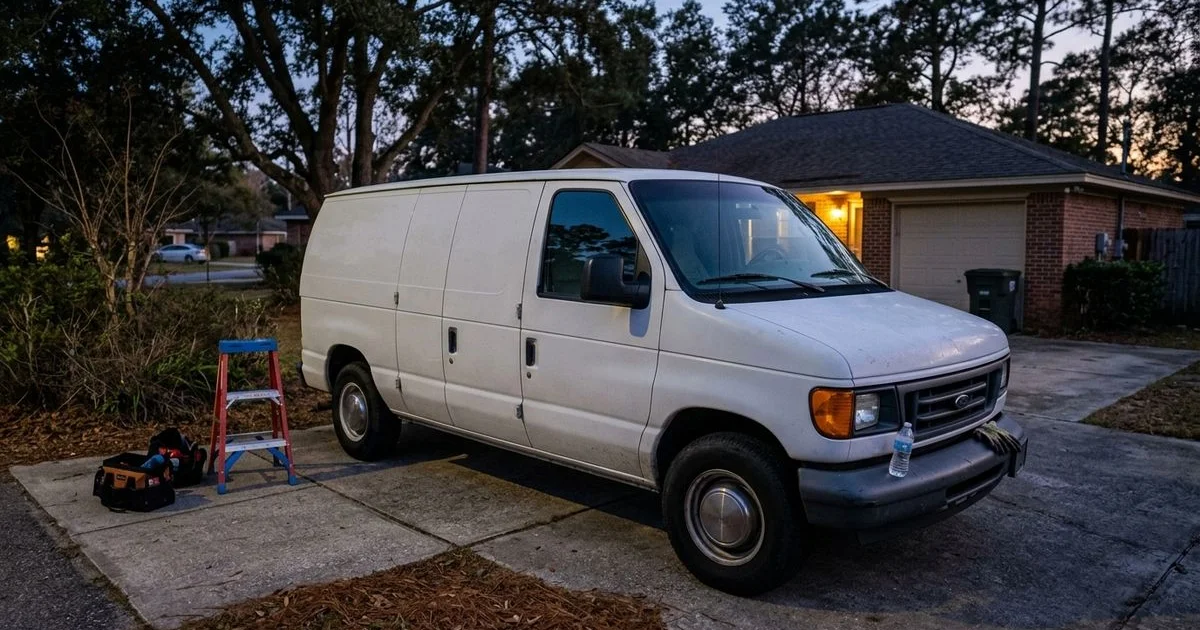
Knowing exactly what happens during an emergency ac service call makes the situation easier to manage. Our emergency AC repair process connects you with local help fast.
Here is the exact sequence of events from the first phone ring to a running system.
Step 1: The Phone Call
Calling (251) 850-5502 is the immediate first action to take. The dispatch line remains open 24 hours a day, seven days a week.
We gather specific details upfront to dispatch the right local professional. Expect the dispatcher to ask five quick questions:
- What is the system currently doing (blowing warm air, frozen lines, making strange noises)?
- When did the issue start and have you checked the breaker?
- Does anyone in the home face higher health risks from severe heat?
- What is your physical address and town?
- What is the most reliable callback number?
There is absolutely no fee for this call or the contractor referral.
Step 2: Matched With a Licensed Contractor
We immediately match your service request with an available independent HVAC contractor in your area. Every referred professional holds an active license from the Alabama Board of Heating, Air Conditioning and Refrigeration Contractors.
This state certification requires passing rigorous trade exams and maintaining verified liability insurance. The assigned contractor or their office confirms the visit window directly with you.
Our network usually sees same-day service in most of Daphne, Fairhope, Spanish Fort, Montrose, Malbis, Loxley and Point Clear. Dispatch typically runs Monday to Saturday from 7am to 7pm, with emergency after-hours availability.
We suggest reading this guide on what to do while you wait to protect your equipment and floors.
Step 3: Diagnosis
The contractor starts the visit by identifying the exact point of failure. Federal law requires the technician to hold an EPA Section 608 certification before connecting refrigerant gauges.
We require the contractors to follow a systematic diagnostic checklist for accuracy. A standard troubleshooting sequence includes these steps:
- Ask what happened and look at the thermostat.
- Check the indoor unit: filter, coil, blower, drain and float switch.
- Check the outdoor unit: power, capacitor, contactor, fan motor and coil.
- Connect gauges or digital probes to read refrigerant pressures and temperatures.
- Test electrical parts with a meter.
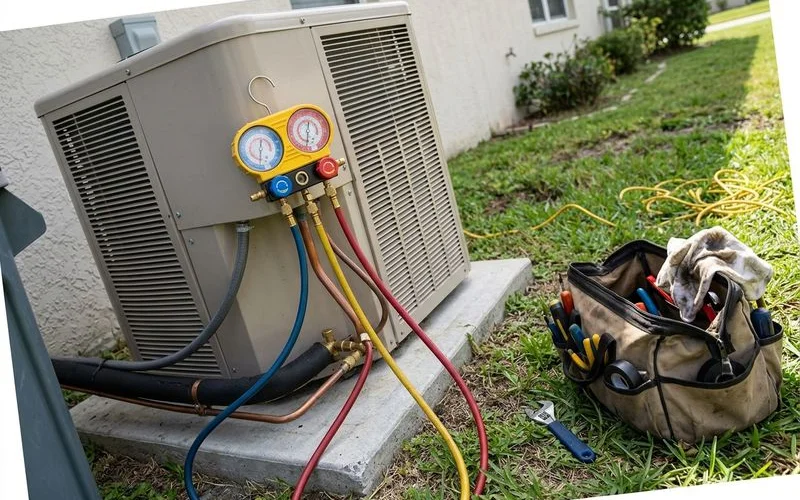
Simple component failures often take just a few minutes to pinpoint. Locating a slow refrigerant leak or an intermittent electrical short will require more diagnostic time.
Step 4: The Free Estimate
We ensure the contractor provides a complete, written price estimate before any repair work begins. This is your moment to ask detailed questions about the proposed solution.
Industry data shows that systems over 10 to 12 years old often face repeated breakdowns. We strongly recommend asking these specific questions before signing the approval:
- What exact component caused the system to fail?
- Is the replacement part still covered under the manufacturer warranty?
- Is there a separate labor warranty for today’s repair work?
- Given the system’s age, is this specific repair worth the investment?
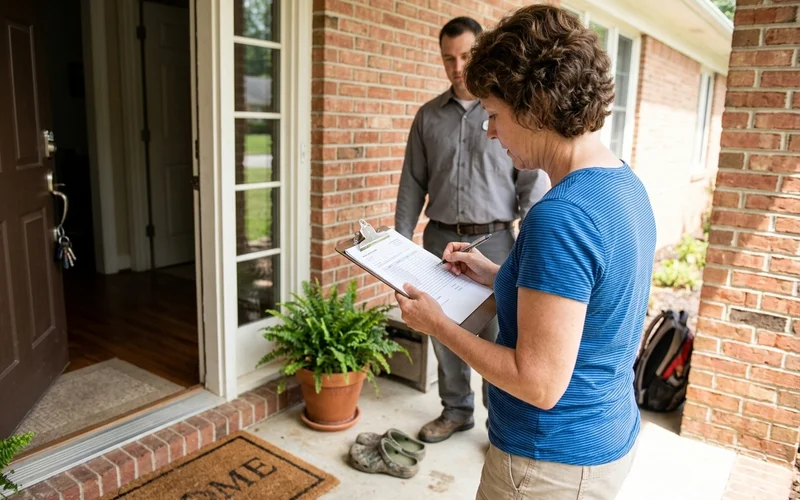
You hold total control over the next step. Approve the quoted repair, request a replacement quote as well, or simply decline.
We never charge a referral fee from you either way.
Step 5: The Repair
The repair phase begins immediately after you sign the estimate. Most common AC failures involve standard electrical parts stocked directly on the service truck.
We track common repair timelines to give you a realistic expectation.
| Repair type | Usually |
|---|---|
| Capacitor, contactor, fuse, float switch | Fixed on the first visit |
| Drain line clog | Fixed on the first visit |
| Condenser fan motor | Often first visit, sometimes ordered |
| Refrigerant leak repair | Depends on location; may need a return trip |
| Coil, compressor, control board | Usually ordered, return visit |
Supply houses in Mobile or Pensacola usually stock major parts if they need to be ordered. Ask the contractor about safe temporary cooling measures if a specialized component requires shipping.
Step 6: Testing and Wrap-Up
We expect the contractor to run the system through a complete cooling cycle to verify the fix. This testing phase ensures the equipment effectively pulls humidity and heat from the house.
A proper cycle should produce a 15 to 20-degree temperature drop between the return and supply vents. You handle the final payment directly with the independent contractor for the approved work.
Being a Good Host Helps the Visit
Preparing your property before the emergency hvac visit makes the entire process faster. A clear workspace allows the technician to focus entirely on diagnosing the equipment.
We suggest following these simple steps to help the appointment go smoothly:
- Clear access to the outdoor unit, the indoor unit and the attic hatch.
- Turn on outdoor lights if the appointment happens after dark.
- Put pets away in a separate room, especially since doors will stay open frequently.
- Have the model and serial number handy, from the data plate on the outdoor unit.
- Know your history: write down the installation date, past repairs, and current warranty status.
- Stay reachable. Ensure your phone ringer is loud if you must step away from the property to approve an estimate.
After the Repair
The end of the appointment is the best time to gather preventative maintenance advice. Asking a few final questions helps you protect the lifespan of your cooling system.
We encourage homeowners to cover these specific points before the truck pulls away:
- What underlying issue caused the failure, and can regular maintenance prevent it?
- What are the exact terms for the part and labor warranty?
- Did you notice any other aging components that might fail soon?
- When is the best month to schedule the next routine tune-up?
Filing the final invoice with your permanent home records is a highly recommended practice. Written documentation proves regular maintenance if you ever need to file a factory warranty claim.
Our request is that you call the contractor first if anything about the visit was not right. Please let us know at help@daphnealacrepair.com if you still have concerns so we can factor it into future referrals.
Ready When You Are
Starting the ac repair process requires just one simple action. We are ready when you call (251) 850-5502.
Tell the dispatcher the problem and your town to get started. A licensed contractor will be on the way to restore your comfort.