
You know how quickly a house turns into an oven when the system quits in mid-July. The combination of Gulf Coast heat and rising indoor humidity creates a stressful environment for everyone inside.
Determining exactly how hot is too hot inside house living areas is critical for your family’s safety.
The data shows exactly why a fast response matters.
Our 24/7 emergency AC repair line connects you with a licensed contractor the moment you decide you need help. Let’s look at the actual data behind indoor temperature thresholds and explore practical ways to respond while you wait.
Heat Isn’t the Only Problem
Rising temperatures only tell half the story when your cooling system fails. High humidity stops sweat from evaporating naturally, which spikes the heat index and feeds mold growth on your walls. The Occupational Safety and Health Administration (OSHA) updated their indoor heat safety guidelines in 2026 to focus heavily on the Wet Bulb Globe Temperature (WBGT).
According to federal health agencies, standard indoor temperature readings often underestimate the danger of a hot environment, making heat and humidity combinations a safer benchmark for families.
A standard thermometer reading of 82 degrees feels drastically different at the 75 percent relative humidity we commonly see in Daphne and Fairhope. We recommend monitoring your indoor humidity as closely as the temperature. A simple digital hygrometer gives you the exact moisture percentage in the room. High humidity forces your cardiovascular system to work much harder to cool itself down.
Indoor Temperature Thresholds
An indoor temperature above 85 degrees sustained is where heat illness risks rise sharply. Homes typically warm up by one to two degrees per hour once the cooling stops on a 90-degree day. We often see second-story bedrooms climb past safe limits long before the main floor does.
| Indoor Temperature | Heat Index (at 70% Humidity) | What it means |
|---|---|---|
| Under 80°F | Feels like 80-83°F | Uncomfortable but generally safe for healthy people |
| 80 to 85°F | Feels like 84-93°F | Watch vulnerable people and pets, keep fluids up |
| 85 to 90°F sustained | Feels like 93-105°F | Heat-illness risk rises, especially overnight |
| Above 90°F | Feels like 105°F+ | Move vulnerable people somewhere cool, call now |
Temperature alone never tells the whole story. The heat index combines the ambient temperature with relative humidity to show how hard your body is working.
An 84-degree room at 70 percent humidity stresses your cardiovascular system just like a much hotter dry room would. We highly recommend treating the heat index as your true baseline for safety decisions.
Who Is Most at Risk
Certain age groups and medical conditions dramatically lower a person’s tolerance to indoor heat. Older adults, infants, and people on specific prescription medications face the highest risk of rapid heat exhaustion.
The Centers for Disease Control and Prevention (CDC) warns that many common drugs actively alter your body’s ability to regulate core temperature.
- Older adults, who may not feel thirst or heat as quickly.
- Infants and young children, who heat up faster due to a smaller body mass.
- People on prescription medications, specifically beta blockers which reduce sweating, or diuretics that cause fluid loss and electrolyte imbalance.
- People with heart, lung or kidney conditions, who experience extra strain on their cardiovascular system.
- Pregnant women.
- Pets, especially older dogs, heavy-coated breeds and short-nosed breeds like bulldogs and pugs.
Watch for the early signs of heat exhaustion. Heavy sweating, dizziness, a throbbing headache, nausea, weakness, and cool clammy skin mean you need to cool down immediately.
Heat stroke is an emergency that requires calling 911. Symptoms include confusion, hot dry skin, and fainting. We urge you to take these symptoms seriously and leave the house if they appear.
Humidity and Mold
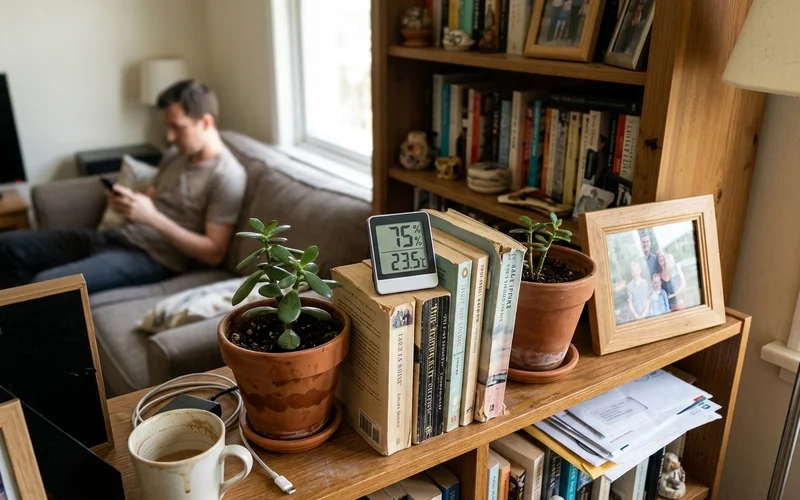
Preventing mold after ac failure requires controlling the moisture in your air immediately. Healthy indoor humidity sits securely between 30 and 50 percent, according to the Environmental Protection Agency (EPA).
Without an air conditioner running, a Gulf Coast home easily passes 65 to 70 percent relative humidity within a single day. At those elevated levels, your house becomes a breeding ground for common household fungi like Aspergillus.
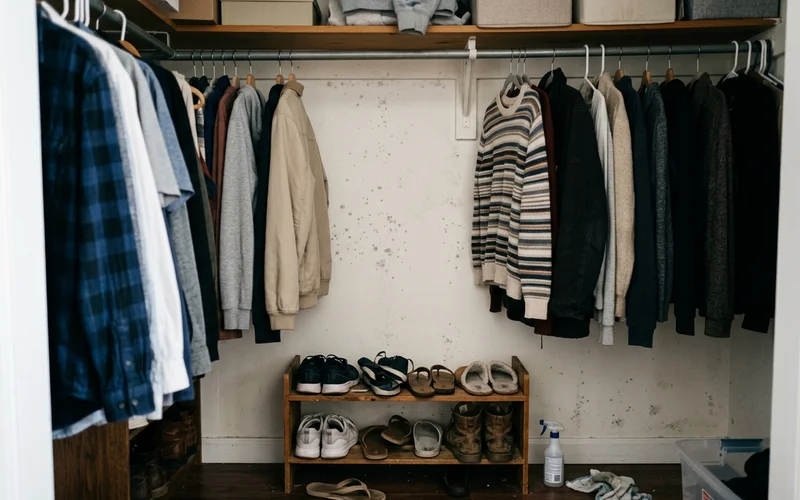
- Mold can start on porous materials like drywall paper, carpet backing, fabric and wood within 24 to 48 hours.
- Closets, bathrooms and spaces behind furniture go first because stagnant air traps the moisture.
- Musty smells often show up before visible growth appears on your walls.
- Wood floors and solid doors can swell and warp from the ambient moisture.
A short power outage rarely causes lasting damage. A failure that lasts several days in July creates the perfect 80-degree environment for spores to multiply. Our recommendation is to run a standalone dehumidifier if you have one available. This single appliance helps pull moisture from the air before it settles on your drywall.
What to Do Right Now
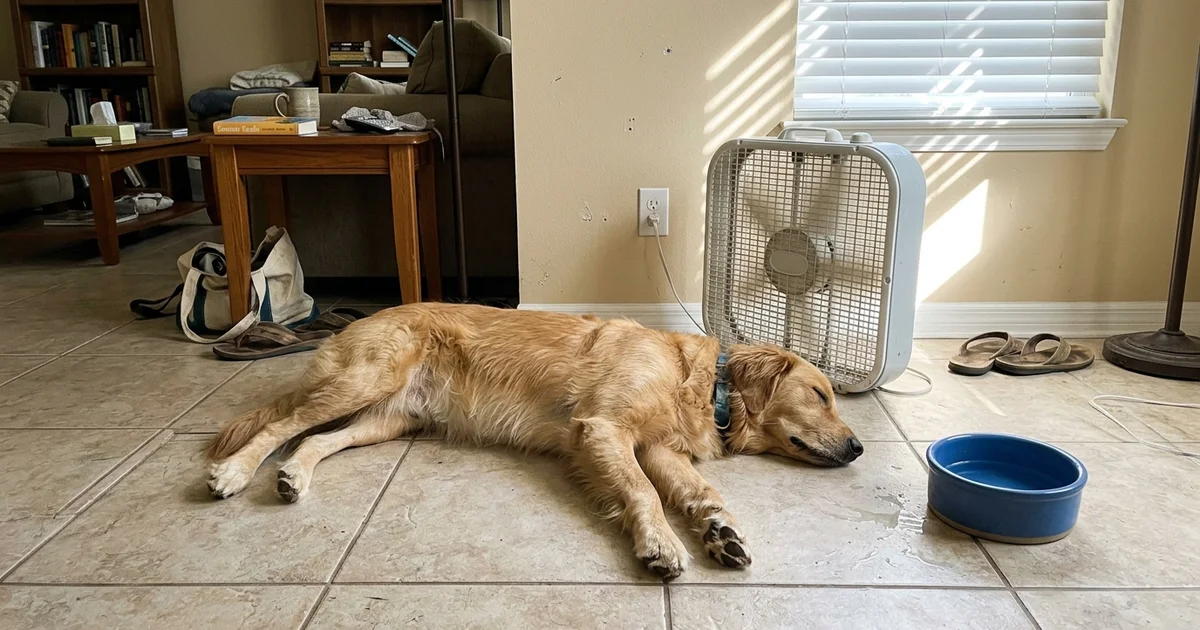
Your immediate priority is keeping the air moving and blocking incoming sunlight. Running fans and closing blinds helps mitigate the worst of the temperature spike while you wait for a repair.
- Close blinds and curtains on the sunny side.
- Run fans to keep air moving, including in closets with the doors open.
- Keep everyone hydrated, and check on vulnerable people often.
- Give pets water, shade and a tile floor to lie on.
- Avoid cooking indoors and running the dryer.
- If you have a portable dehumidifier, run it in the main living area to keep the relative humidity below 60 percent.
We always suggest placing a bowl of ice directly in front of a box fan. This simple trick creates a makeshift evaporative cooler that offers a focused breeze of chilled air. It will not lower the temperature of the entire room, but it provides instant relief to the person sitting near it.
Cooling Tips That Actually Help
Blocking solar heat and cooling your body directly are the most effective ways to stay safe. Fans and damp cloths make a massive difference in how your body perceives the heat while you wait. The U.S. Department of Energy notes that window heat gain accounts for roughly 25 to 30 percent of all residential cooling loads.
- Block the sun. Close blinds and curtains on south-facing and west-facing windows by late morning. Sun shining through glass is the single largest heat source in a house without air conditioning.
- Move air across skin. Fans do not cool a room, but they cool people by helping sweat evaporate. Point them exactly where people sit and sleep.
- Cool the body directly. Place damp cloths on your neck and wrists, take cool showers, and drink lukewarm water to lower your core temperature safely.
- Limit indoor heat. Skip the oven, the clothes dryer, and the dishwasher’s heat-dry cycle. Turn off large electronics and incandescent lights you are not actively using.
- Open windows only when it is cooler outside. Outdoor air on the Gulf Coast is often both hot and wet in the afternoon, which actively makes the indoor environment worse. Late night and early morning hours offer the only real relief.
We know it feels tempting to open every window for a cross breeze. Opening windows during peak afternoon hours just invites 80 percent humidity right into your living room.
After the AC Is Fixed
Bringing a hot house back to a comfortable temperature takes time. Once your local HVAC contractor finishes the repair, you must be patient while the unit extracts the accumulated humidity.
A standard residential air conditioner removes heat at a rate of roughly one to two degrees per hour, depending on the outdoor temperature and your home’s insulation.
Run the system with the fan switch set to Auto. If you own a portable dehumidifier, run it alongside the central unit to speed up the moisture removal process. We advise checking closets, bathrooms, and soft furniture for musty smells over the next few days. Cleaning the indoor air filter immediately after the repair helps capture any mold spores that circulated during the outage.
If you spot mold on hard surfaces, clean it promptly with a household cleaner. Larger contaminated areas or visible mold on porous drywall usually require a professional remediation service.
When to Leave, When to Call
Leave the house for a cool, air-conditioned location if anyone vulnerable shows heat symptoms or the indoor temperature stays in the high 80s. You should call for emergency repair service right away in those situations. For guidance on the gray areas, see when to call now versus waiting for regular business hours.
The phone at (251) 850-5502 is answered 24/7. Tell the dispatcher who is in the home and your exact town.
We will connect you with a licensed, insured contractor immediately. Same-day service is available across most of the Eastern Shore, and the initial estimate is free. Knowing how hot is too hot inside house environments helps you make the right call at the right time.