
Hurricane Season on the Eastern Shore
For homeowners in Daphne, Fairhope, Spanish Fort, Malbis, and Loxley, checking off a hurricane prep ac unit list is a necessary part of coastal living.
We know that outdoor condenser units often take the brunt of these storms, facing high winds, flying debris, and severe power surges.
You probably already secure your patio furniture, but preparing your cooling system is equally crucial. In fact, NOAA’s updated 2026 forecast still predicts up to 13 named storms this season, so staying ahead of the weather remains essential.
We highly advise getting a regular AC tune-up before summer hits to ensure your system is resilient. This proactive approach keeps a passing storm from turning into an expensive compressor replacement.
Let’s look at the exact steps you should take before, during, and after a storm to protect your investment.
Before the Season: Hurricane Prep Steps for Your AC Unit
The best way to protect ac from hurricane forces is to secure it physically and electrically before the first watch is issued.
We recommend addressing these specific areas well before a storm hits:
- Get a spring tune-up: Weak components fail under stress, so swap them out early.
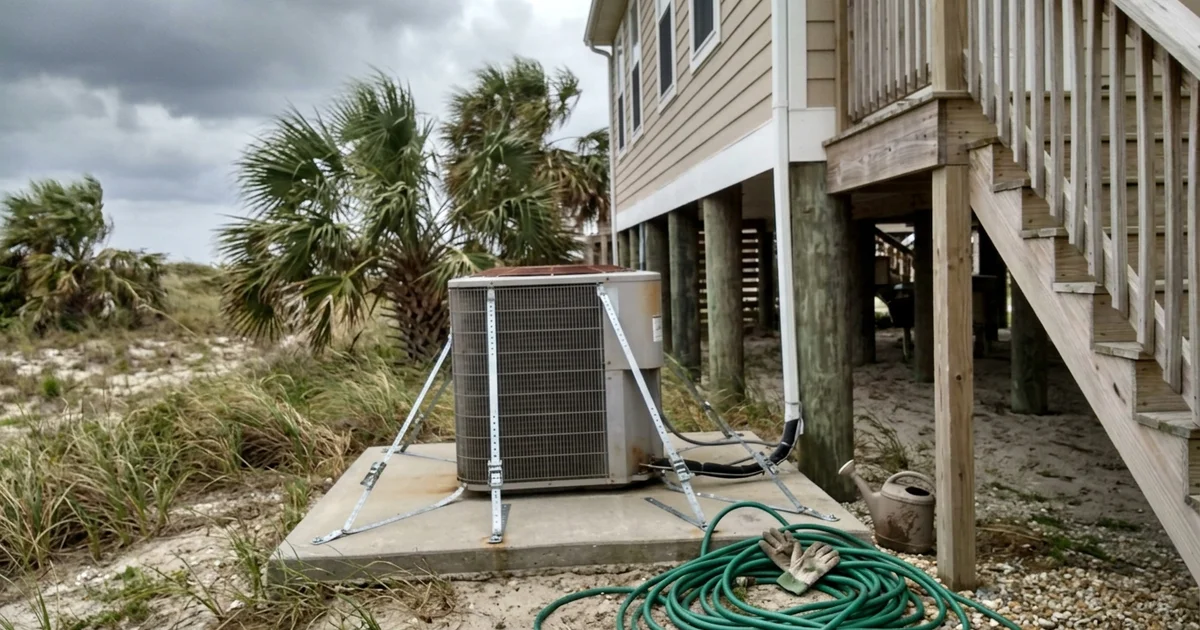
- Check the pad and straps: Baldwin County is designated as Wind Zone II, meaning coastal codes require specific hurricane tie-downs. Make sure the unit is securely strapped to a solid, level concrete pad.
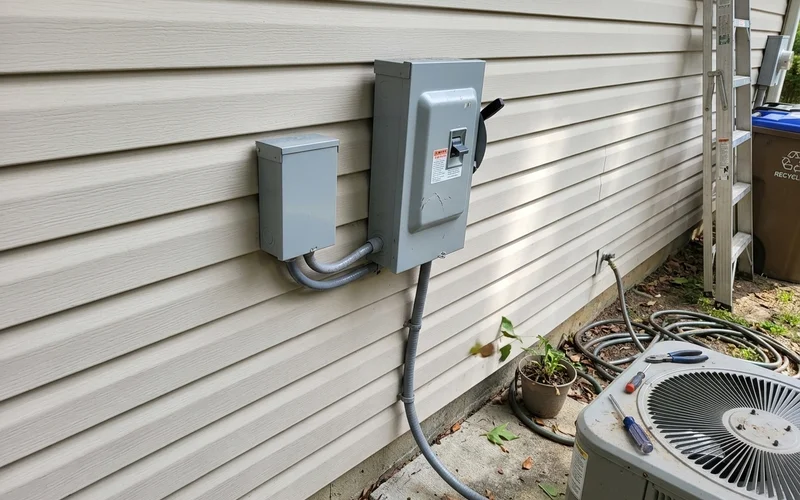
- Ask about a surge protector: Lightning and grid fluctuations fry control boards instantly. A whole-system HVAC surge protector mounted at the outdoor disconnect blocks these catastrophic voltage spikes.
- Trim trees: Cut back heavy limbs that hang directly over the condenser.
- Photograph the unit: Snap a clear picture of the equipment and its data plate for your insurance records.
When a Storm Is Coming
When the weather turns severe, your immediate goal is to safely power down the cooling system to prevent electrical damage.
We suggest following these exact steps as the outer bands approach:
- Pre-cool the house: Drop your thermostat setting by 3 to 4 degrees while the power grid is still stable.
- Clear the yard: Remove anything that could become a projectile, such as patio chairs, planters, grills, and toys.
- Turn the AC off: Shut the system down at the thermostat the moment the storm arrives or power flickers begin.
- Turn off the AC breaker: Flip the physical switch in your electrical panel if you expect a direct hit, flooding, or extended outages.
- Don’t wrap the unit in plastic: Waterproof tarps trap moisture inside the cabinet, which accelerates rust on electrical components. Running a covered unit will also overheat and destroy the compressor.
After the Storm: Inspect Before You Restart
Walk out and physically inspect the equipment before you flip any switches back on.
| What you see | What to do |
|---|---|
| Unit looks normal, yard dry | Wait for stable grid power, then restart |
| Branches or debris on or around it | Power off at breaker, clear by hand, check fins |
| Unit sat in water | Keep it off at the breaker, call for an inspection |
| Unit tilted or off its pad | Keep it off, call; refrigerant lines may be ruptured |
| Bent fins or dented cabinet | Restart carefully, schedule a performance check |
| Hissing or oily spots on lines | Keep it off, as this indicates a refrigerant leak |
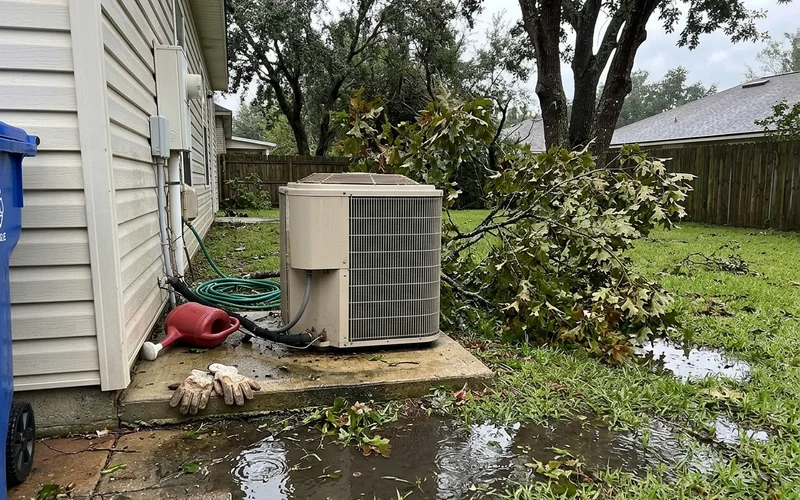
Salt water from a coastal storm surge is incredibly damaging to standard heating and cooling equipment. The airborne salt and standing water cause severe galvanic corrosion on standard copper and aluminum coils.
We always remind homeowners that this corrosion keeps destroying metal parts long after the yard dries out. Any system that sat in surge water requires an immediate professional inspection from a local HVAC contractor.
The Safe Restart
Dealing with your ac after hurricane conditions pass requires patience. Wait until your neighborhood’s power has been completely stable for at least 15 to 30 minutes before repowering the system, and reset the AC breaker if you flipped it off during the storm.
We advise setting the thermostat to Cool and giving it exactly five minutes to engage. Most modern systems feature a built-in time delay to protect the compressor from short-cycling.
Listen closely for a smooth, normal operation cycle. Turn the system off immediately if you hear any of these warning signs:
- Loud humming or buzzing from the condenser cabinet.
- Metal grinding noises from the fan motor.
- Repeated clicking without the system starting.
Our comprehensive guide on an AC not working after a storm walks through step-by-step troubleshooting.
Second Homes During Hurricane Season
Protecting an empty property in Point Clear, Fairhope, or Montrose requires automated monitoring and a reliable local contact.
We recommend taking these specific precautions if you plan to be away from the Eastern Shore:
- Set a plan with a neighbor or property manager: Ask them to shut off the AC before a storm and physically check the unit afterward.
- Set the thermostat strategically: Hold the house around 78 to 80°F with active humidity control, rather than turning the system off entirely.
- Consider a smart thermostat: Devices like an Ecobee or Google Nest send automatic smartphone alerts for temperature spikes, high humidity, or power loss.
- Keep contact information handy: Leave our phone number on the counter so your helper can easily call the local HVAC contractor for an inspection after a major weather event.
Insurance and Records
Proper documentation speeds up the claims process if your property takes a hit. Before the season officially begins, take time-stamped photos of the unit, its data plate, and the surrounding yard.
We suggest keeping your original installation date and maintenance service records in a secure cloud folder. This ensures you can access them from anywhere if an evacuation order is issued.
If a severe storm damages the system, having these specific documents ready helps your adjuster process the claim faster. The paperwork also helps the licensed contractors we connect you with accurately diagnose what changed during the storm.
Pro Tip: After a major event, always ask your local HVAC contractor to explicitly document any storm or surge damage in writing on the repair estimate.
When to Get a Professional Check
Wrapping up your hurricane prep ac unit strategy means knowing exactly who to call when things go wrong. Call for service immediately if the condenser flooded, took heavy debris damage, shifted off its pad, smells like burnt plastic, or repeatedly trips the breaker.
After big Gulf Coast storms, local contractor demand spikes dramatically.
We will quickly connect you with a licensed, insured contractor serving your specific Eastern Shore town. Every repair begins with a free estimate, giving you clear answers before any work starts.
Dial (251) 850-5502 to get help fast.