
If you are wondering how often flush ac drain line pipes require maintenance, that 30-day mark is the true dividing line between a smooth summer and a flooded floor.
We provide guidance to help you handle the heavy cooling demands across the Eastern Shore. Moving up to 20 gallons of water daily creates a perfect breeding ground for biofilm.
Our focus is making sure you have the exact steps to clear the pipe and prevent unexpected shutdowns.
Why Drain Lines Clog So Often Here
AC drain lines clog frequently in Gulf Coast humidity because a typical system pulls 5 to 20 gallons of water daily from the indoor air. This constant flow of warm, dust-filled water creates the perfect environment for algae and slime to thrive.
We suggest checking this pipe regularly during the hottest months. Your cooling system pulls moisture out of the air and sends it down a condensate drain line, which is usually a white PVC tube that runs outside or connects directly to your home plumbing.
Slime quickly builds up inside that wet, dark space.
When biological growth blocks the line, you face three common outcomes:
- Water backs up into the indoor drip pan.
- The safety float switch triggers and shuts the AC off completely.
- The pan overflows and damages your drywall or floors.
Regular flushing prevents these frustrating shutdowns. It remains one of the simplest and most important parts of routine AC maintenance, and it belongs on every pre-summer AC checklist.
How Often to Flush the AC Drain Line
You should flush your AC drain line every 30 days during the peak cooling season. If your home has a history of clogs or frequent float switch trips, increase this schedule to every two to three weeks from April through October.
We outline a strict schedule below to handle the heavy humidity in Daphne and surrounding towns. A quick monthly flush stops thick biofilm before it forms.
During the winter months, you can reduce this frequency.
| Situation | Suggested frequency | Why it matters |
|---|---|---|
| Typical home, cooling season | Monthly | Prevents heavy biofilm buildup during peak operation. |
| History of clogs or float switch trips | Every 2 to 3 weeks in summer | Keeps lines clear when moving 20 gallons of water daily. |
| Attic air handler over living space | Monthly, plus a secondary pan check | Protects ceilings and drywall from overflow damage. |
| Off-season (winter) | Every couple of months | Flushes out stagnant water if the heat pump runs occasionally. |
The Vinegar Method
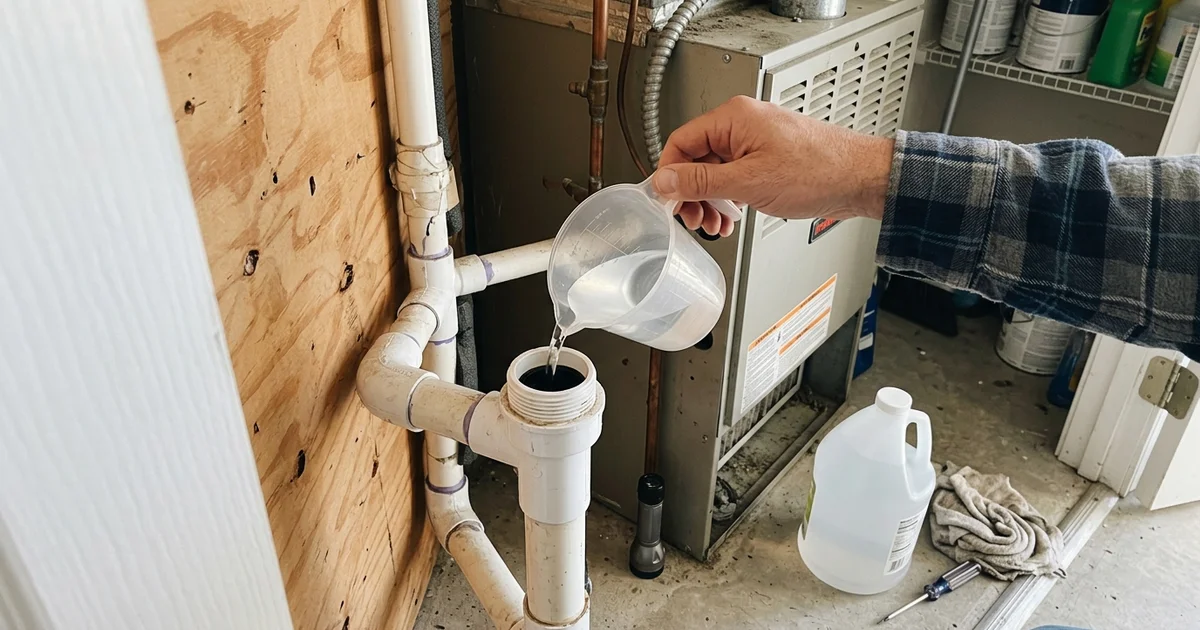
To clean ac drain line vinegar solutions are highly effective and safe for your plumbing. Pour one cup of distilled white vinegar into the access pipe and let it sit for 30 minutes.
This mild acid safely breaks down algae without degrading your PVC pipes or harming the environment. We strongly suggest avoiding bleach, which can slowly destroy plastic and metal fittings over time.
Follow these exact steps for a successful flush:
- Turn the AC off at the thermostat to stop the blower and prevent suction.
- Find the cleanout. Look for a T-shaped PVC fitting with a cap near your indoor unit.
- Remove the cap and pour in one cup of distilled white vinegar.
- Wait 30 minutes to let the acidity break down the internal slime.
- Follow with a cup or two of water to flush the loosened debris through the pipe.
- Replace the cap and turn your cooling system back on.
- Check outside to confirm water is steadily dripping from the end of the line.
Some newer HVAC setups feature a clear cleanout cap to make visual inspection easy.
Clearing a Clog From Outside
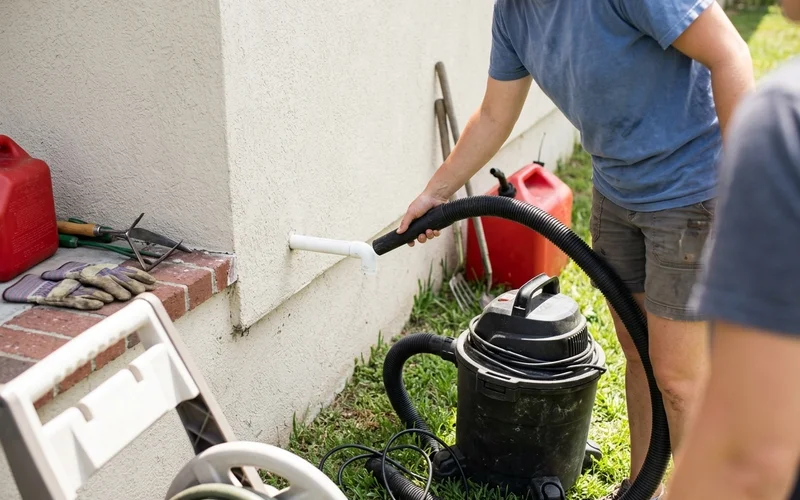
If the line is already completely blocked, a wet-dry shop vacuum can safely pull the clog out from the outdoor exit pipe. This suction method dislodges thick algae without pushing it back into your fragile indoor drain pan. We recommend using a standard 4-gallon wet-dry vacuum for this specific task, as the process takes only a few minutes and requires minimal equipment.
Find the end of the PVC pipe near your outdoor condenser. Hold the vacuum hose tight against the pipe opening, wrap the gap with a damp rag to create a strong air seal, and run the motor for a minute or two.
Signs of Algae Buildup
The most obvious sign of an ac drain line algae clog is a pool of water gathering around your indoor unit. Catching a restriction early saves you from inconvenient emergency service calls.
Our goal is to help you spot these issues before they cause property damage. Watch for these specific warning signs during the humid summer months:
- Water pooling in the indoor unit’s drip pan.
- The AC shutting off on its own due to a float switch trip.
- Strange gurgling or bubbling noises coming from the drain line.
- A musty, dirty smell near the air handler.
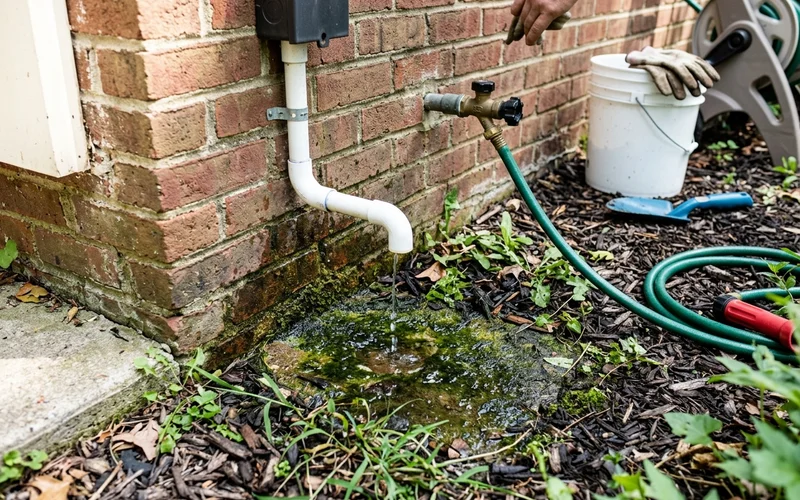
- Green or black slime visible at the outdoor end of the line.
- Unexplained moisture soaking the floor around the indoor unit. See our guide on an AC leaking water inside.
Drain Line Tablets and Treatments
Drain line tablets are slow-dissolving biocides that control biological growth between your monthly vinegar flushes. Many homeowners use these treatments to handle the intense Gulf Coast moisture.
We point homeowners to EPA-registered products like Nu-Calgon Pan-Treat tablets for a steady release of cleaning agents. They offer excellent backup protection for homes that experience chronic clogs.
You must use these treatments correctly to see the benefits:
- Only use EPA-registered products formulated specifically for AC drain pans.
- Never substitute with toilet bowl or swimming pool chlorine tablets.
- Follow the manufacturer’s exact directions for placement near the coil.
- Tablets are a supplement, not a replacement for a clean filter and regular liquid flushes.
Why Some Lines Clog More Than Others
If your line clogs constantly, poor installation might be the true culprit rather than the weather. The 2021 International Residential Code requires a minimum pipe slope of 1/8 inch per foot, and lines laid too flat will always pool water.
We want you to recognize when basic mechanical flaws are causing endless summer shutdowns. If your line clogs far more often than your neighbor’s system, look for these common installation errors:
- Too little slope. Water stagnates in flat sections and accelerates biological growth.
- No trap, or a trap that dries out. A missing trap pulls unconditioned air and dust directly into the wet pipe.
- Excessively long runs. Lines with too many elbow fittings slow the water flow down drastically.
- A dirty coil or filter. Debris bypasses a neglected air filter and washes straight into the pan.
A licensed contractor can re-slope a sagging line, install a proper P-trap, and add an easy-access cleanout. This is a modest job that permanently ends years of frustrating summer shutdowns.
When to Call a Contractor
You should call a professional if your line clogs again within a few weeks of flushing, or if the indoor pan is visibly rusted or cracked. A contractor has the specialized tools to clear deep blockages and permanently correct poor drainage slopes, so do not ignore the problem if water has already reached your ceilings or floors.
We always prioritize safety, especially if there is no float switch on an attic unit or if you cannot find the cleanout pipe. The licensed contractors we connect you with can flush the line fully, check its slope, and add a safety switch if needed.
Knowing exactly how often flush ac drain line systems need attention prevents most of these emergency calls. Call (251) 850-5502 and we will connect you with a local professional serving your Eastern Shore town.