

Why Spring Prep Pays Off Here
We consistently notice that waiting for the heat to arrive causes major breakdowns. Completing a comprehensive pre summer ac checklist early puts you ahead of the curve.
Our dedicated line receives hundreds of no-cooling calls the moment that first real heatwave hits. Data shows that Eastern Shore spring temperatures regularly hit 85 to 90 degrees Fahrenheit by early May, instantly straining unprepared equipment.
We highly recommend scheduling your spring ac tune up in February or March.
When you are ready to get ac ready for summer, you can book an AC tune-up through our line.
The Homeowner Pre-Summer AC Checklist
Our experience shows that a few simple weekend tasks prevent major mid-summer failures. A proactive approach saves money and keeps your system running efficiently.
We created this step-by-step guide to help you tackle the basics before the severe heat begins. Review the following critical items before calling a professional.
Managing Airflow and Filters
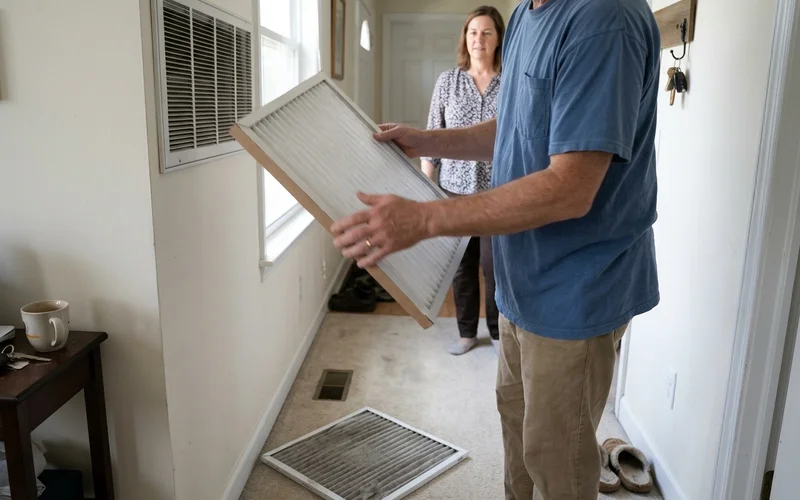
Our top recommendation is to start by replacing the air filter. Check the size printed on the old one to ensure a proper fit.
We usually suggest a MERV 8 pleated filter for most standard homes. Upgrading to a MERV 11 to 13 filter captures much more local pollen and fine dust if you suffer from spring allergies.
Our general advice is to inspect this filter monthly during heavy pollen seasons.
Clearing the Outdoor Unit
Proper clearance around the outdoor condenser significantly improves cooling performance. Our next task involves pulling back pine straw, vines, leaves, and shrubs to create two feet of clear space on all sides.
Ensure nothing is resting on top of the fan grate. We also advise gently rinsing the outdoor coil.
Rinse the outdoor coil gently with a garden hose while the power is off to remove debris. Our coastal location means this simple step also washes away a winter’s worth of corrosive salt spray.
Never use a pressure washer, as the intense force easily bends the delicate aluminum fins.
Examining the Thermostat and Drain Line
Our next step involves testing the thermostat before you actually need it. Replace the batteries, switch the system to Cool, and set the temperature a few degrees below the current room reading.
We suggest a quick walk through the house to confirm performance while making sure the unit starts within a few minutes. Open supply vents, clear furniture off return grilles, and check that each room gets adequate airflow.
Our preferred routine requires verifying that the outdoor fan spins, warm air blows out the top, and cool air comes from the vents within 10 minutes. Listen closely for any strange new noises.
Our favorite preventative tip is clearing the condensate pipe. Find the cleanout port near the indoor unit and pour in one-quarter cup of distilled white vinegar.
We recommend letting the vinegar sit for about 30 minutes before flushing the line with water. This acidic soak kills algae and prevents backups.
Our final check outside ensures the drain line remains unclogged and visible above any mulch. The provided guide on drain line flushing shows exactly how to perform this task.
| Task | You | Contractor |
|---|---|---|
| Filter change | Yes | Checks size and rating |
| Clear debris | Yes | |
| Rinse coil | Yes, gently | Deep chemical clean |
| Drain line | Vinegar flush | Full flush, trap and pan check |
| Thermostat | Batteries and test | Calibration and wiring |
| Refrigerant | No | Pressure and superheat check |
| Electrical parts | No | Capacitor, contactor, wiring |
What the Contractor Checks
Our focus now shifts to the complex components that require a licensed professional. A thorough spring tune-up usually covers a deep coil cleaning, refrigerant check, drain flush, and pan inspection.
We verify that a complete visit includes capacitor testing, contactor testing, blower checks, and thermostat calibration. Professional metering equipment detects failing components before they actually stop the system.
Our network of professionals will flag worn parts during this inspection. The licensed contractors we connect you with will always provide a free estimate before beginning any repair work.
Book Before the Rush
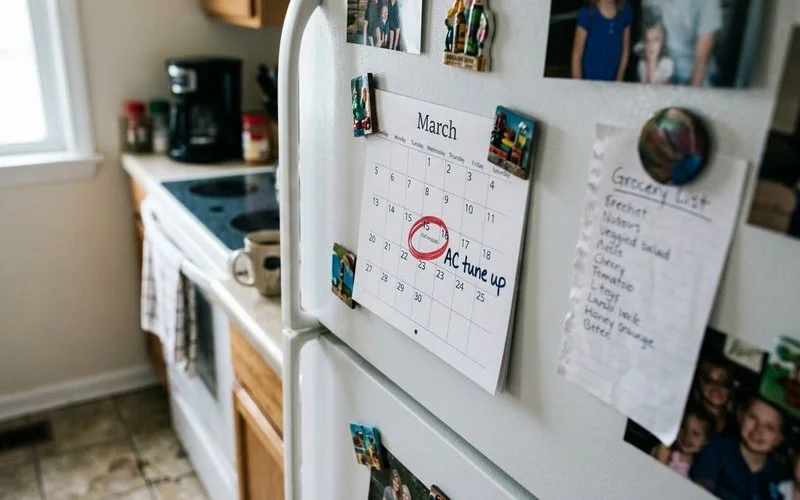
Our advice is to aim for a scheduled visit in February, March, or early April. Wait times jump significantly once the daily high temperature reaches 85 degrees.
We encourage heat pump owners to pair this spring appointment with a fall visit before winter. Heat pumps run year-round and require twice as much maintenance to stay reliable.
Don’t Forget the Attic
We recommend taking a quick look if your air handler is located in the attic. Spring is a good time to perform this inspection before it gets dangerously hot up there in July.
Our priority is catching small leaks before they damage your ceiling.
- Check the secondary drain pan under the unit for standing water or rust.
- Look at the float switch, commonly branded as a Safe-T-Switch, to make sure it is in place and ready to shut the system down if the main line clogs.
- Look for disconnected or crushed ducts, especially near the attic entrance where people walk or store boxes.
- Check insulation around the ducts and the air handler itself.
- Look for signs of pests, such as droppings or chewed insulation materials.
Only go up into the attic if conditions are completely secure. Our strict safety warning is to ensure you have good footing and bright lighting while never stepping between the ceiling joists.
Plan for Storm Season Too
Hurricane season starts June 1, right as the local cooling season completely ramps up. Our coastal preparation strategy must include severe weather readiness.
Check that the outdoor unit is securely anchored to its concrete pad with proper straps. We strongly suggest asking your local HVAC contractor about a Type 2 or Type 3 HVAC surge protector.
These devices handle surges up to 100 kiloamps, absorbing massive electrical spikes before they reach the expensive compressor. Our final storm tip is to clearly note where your electrical breaker and disconnect box are located so you can shut the system off quickly when severe weather approaches.
Second Homes and Travel
You should discuss property check-ins with your local contractor if you leave the Eastern Shore for part of the year. We recommend setting the thermostat to hold the house around 78 to 80 degrees Fahrenheit.
The Environmental Protection Agency states that indoor humidity must stay below 60 percent to prevent mold from growing within 48 hours. Our main concern for vacant homes is proactive moisture control.
Finishing your pre summer ac checklist early guarantees your system continues removing that humidity so you do not come back to a musty house.
We will gladly help you set up this important maintenance. Dial (251) 850-5502 to schedule your visit.
Our service connects you with a licensed, insured contractor serving your specific Eastern Shore town.