
Start With the Simple Stuff
A completely dead cooling system is stressful on a sweltering July afternoon on the Eastern Shore.
But when your ac wont turn on, the issue is frequently a basic setting, a tripped breaker, or a safety switch.
We always recommend starting with these quick, safe checks. They take about ten minutes and could save you the cost of a diagnostic visit.
If nothing works, our AC repair in Daphne line connects you with a licensed contractor 24/7. Your local HVAC contractor can quickly identify the true electrical or mechanical failure.
Step 1: The Thermostat
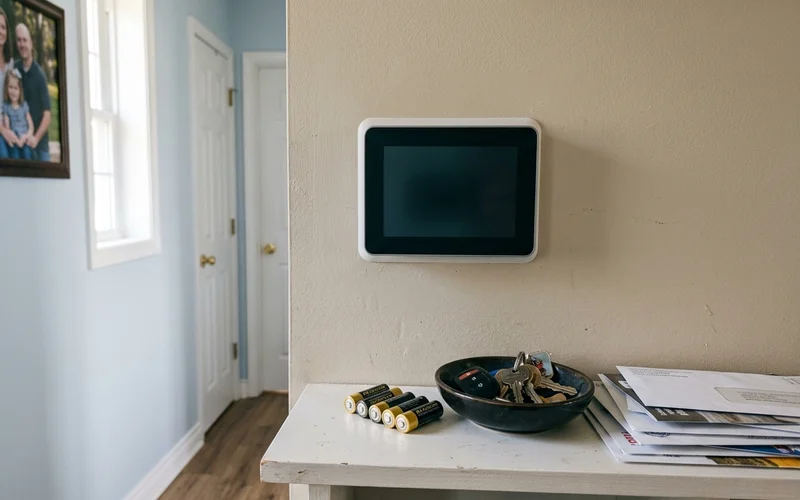
Start by looking closely at the screen. If it is completely blank, replace the batteries immediately. Some wall units require batteries even when wired directly to the wall.
You should ensure the system is set to Cool, with the temperature at least three degrees below the current room temperature. We see many calls where an accidental schedule or “hold” is overriding the manual setting, leaving the ac not responding to thermostat adjustments.
Check for a blinking snowflake icon, a wait message, or a countdown timer. Modern smart thermostats use a built-in compressor protection timer that enforces a three to five minute delay before restarting. This anti-short cycle feature allows refrigerant pressure to settle, preventing the compressor from starting against a heavy load and overheating.
Here are the most common delay messages to look for:
- “Wait” or “Delay”: Standard on many digital models.
- Blinking Snowflake: Common on Honeywell devices.
- Countdown Timer: Frequently seen on Nest or Ecobee screens.
Step 2: The Breakers
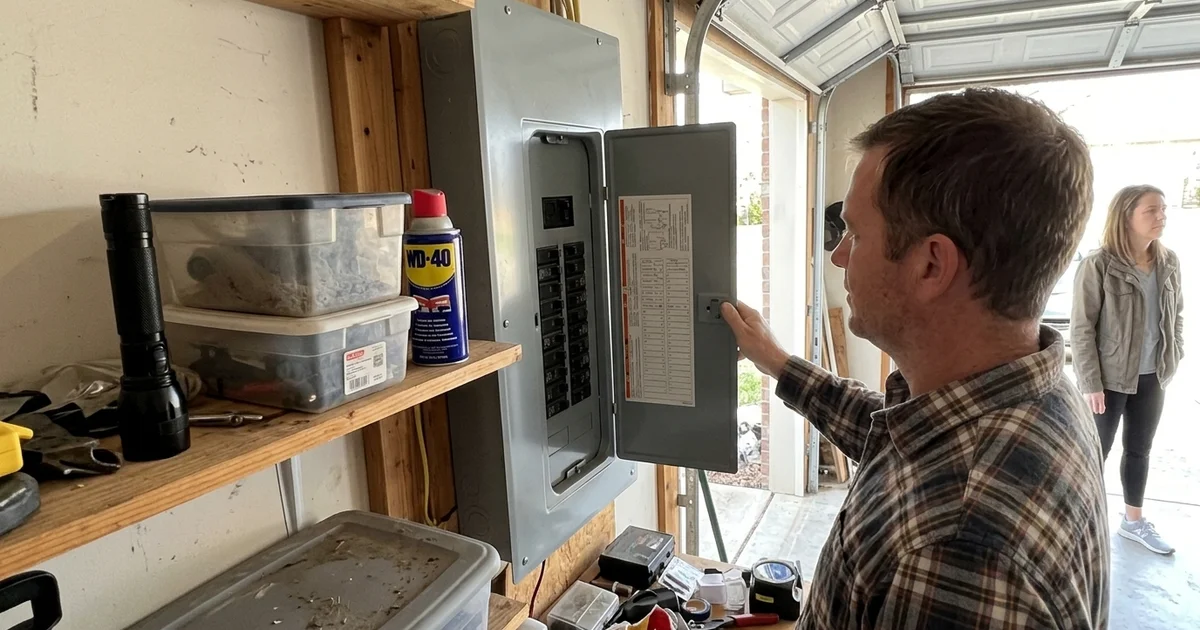
Most central air systems rely on two separate electrical breakers. One controls the indoor air handler or gas furnace, while the other powers the outdoor condenser. A tripped breaker typically rests in a loose, middle position rather than clicking completely to the Off side.
We advise pushing the switch firmly to the Off position, then snapping it back to On. A compressor requires a massive surge of electricity to start, sometimes drawing up to three times its normal running current.
Pro-Tip: If the breaker trips again immediately or within a few minutes, leave it off. That points to a serious electrical fault, like a shorted motor, and requires a licensed contractor to investigate.
Step 3: The Outdoor Disconnect
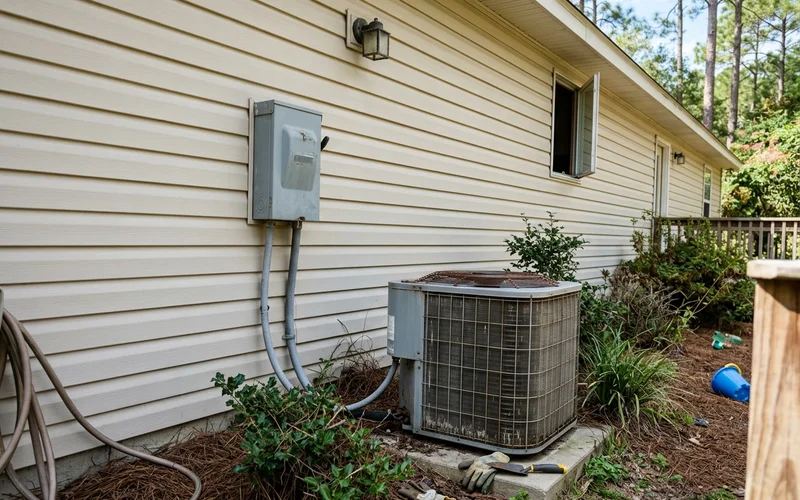
You will find a gray disconnect box mounted on the exterior wall next to the outdoor unit. Inside this metal box is a pull-out block or a switch lever that controls high-voltage power. Make sure the block is fully seated or the lever is pushed securely to the On position.
Landscapers and pressure-washing crews can easily bump this box and cut the power. We also want to point out that many disconnect boxes contain high-voltage cartridge fuses. A local power surge can blow these fuses, leaving the system completely unresponsive.
Common disconnect styles include:
- Pull-Out Blocks: A plastic handle you remove and flip to cut power.
- Switch Levers: A simple up and down mechanical lever.
- Fused Boxes: Enclosures housing 30-amp or 60-amp cartridge fuses.
Step 4: The Float Switch
High humidity along the Gulf Coast causes the average air conditioner to produce 5 to 20 gallons of condensation per day. If the indoor unit has water standing in its drain pan, a safety float switch will trip and cut low-voltage power to the system.
This small switch sits on the edge of the pan or directly in the primary PVC drain line. We consider this the most common reason a system unexpectedly shuts down in humid climates. Clearing the clogged condensate drain usually restores operation immediately.
Our guide on drain and float switch problems explains the exact signs to look for and how to maintain clear lines.
Regular maintenance helps prevent this algae and sludge buildup.
Step 5: The Furnace or Air Handler Door
Indoor air handlers and furnaces contain a standard 120-volt safety limit switch on the blower door. If the metal panel is not firmly seated and latched after a routine filter change, the switch prevents the system from turning on.
Check the alignment of the door and press it firmly into place. We suggest taking a quick look at the diagnostic table below to match your specific symptoms with the most likely cause.
| What you find | What it means |
|---|---|
| Blank thermostat | Batteries, a tripped breaker or a blown low-voltage fuse |
| Breaker trips again | Electrical fault, call a contractor |
| Water in the pan | Float switch trip from a clogged drain |
| Indoor fan runs, outdoor unit silent | Outdoor breaker, disconnect, contactor or capacitor |
| Everything looks fine, nothing happens | Control board, transformer or wiring |
When It’s a Part, Not a Setting
If the power is on everywhere and the ac not turning on remains a mystery, the failure is usually mechanical. Summer thunderstorms frequently cause power surges that destroy sensitive electronics.
The licensed contractors we connect you with handle these specific part failures daily. Several common components are notorious for failing under heavy summer loads.
- Capacitors: These cylindrical parts store energy to jump-start the motors, and they typically last 5 to 10 years in coastal heat before swelling or leaking.
- Contactors: The outdoor switch that controls voltage can suffer from pitted or burnt electrical contacts.
- Transformers: This part steps down the high voltage to 24 volts for the thermostat.
- Control Boards: The main printed circuit board can short out from a lightning strike or voltage spike.
Special Cases Worth Knowing
After a Storm or Outage
A power flicker often causes a voltage spike that destroys a fuse, run capacitor, or control board. Do not attempt to run an outdoor condenser that has sat in floodwater. We recommend a very specific, careful sequence for a system restart. Turn the thermostat off, wait for the grid power to stabilize entirely, verify the electrical panel breakers, and then switch the thermostat back to cooling.
After a Filter Change
Changing a dirty filter is excellent maintenance, but it can accidentally disable the equipment. If the blower quit immediately after your maintenance, the air handler or furnace door is probably unlatched. Our network of contractors frequently answers service calls where simply pushing the door flush restores power. The integrated safety switch cuts all voltage when it senses the panel is loose.
After Thermostat Replacement
Installing a new smart thermostat requires matching specific control wires. A new device might be wired incorrectly, lack the required 24-volt common wire for power, or be programmed for a heat pump instead of a standard AC. You might see the digital screen glowing perfectly while the actual cooling equipment completely ignores the commands.
After Pest Activity
The local ecosystem interacts with outdoor equipment in surprising ways. We always warn homeowners that fire ants are highly attracted to the electrical magnetic fields inside outdoor condenser units. They swarm the mechanical contactor, bridge the electrical connections, and cause the component to short circuit. Rodents also frequently chew through the thin, low-voltage control wiring hidden in attics and crawlspaces.
After Landscaping or Pressure Washing
Yard maintenance crews work quickly and sometimes accidentally damage exterior components. Workers might bump the gray disconnect box, cutting off the main power supply. A string trimmer can easily slice through the thin thermostat wire running along the exterior wall. Pressure washing can force water straight into the sealed electrical compartment, blowing the internal fuses.
What to Tell the Contractor
When you call for help, sharing exactly what you have already inspected saves valuable diagnostic time. For example, state clearly that the thermostat is functional, the breakers are set, the outdoor disconnect is firmly seated, and there is standing water in the indoor pan. We know that those specific details point the technician directly toward a clogged drain line.
Mentioning the exact timeline of the failure also narrows down the possibilities. Tell your local HVAC contractor if the outage happened immediately following a severe thunderstorm, a filter change, or heavy yard work.
Here are the most helpful details to share:
- The exact time the system stopped working.
- Any recent power outages or lightning strikes.
- Whether the thermostat screen is blank or displaying an error code.
- Any unusual noises heard right before the shutdown.
Getting Help
If your troubleshooting does not bring the cold air back, and your ac wont turn on, call (251) 850-5502 for 24/7 emergency AC repair. Tell the dispatcher exactly what you checked during your inspection.
We will quickly connect you with a licensed, insured contractor serving your specific Eastern Shore town. You will receive a clear, free estimate from the technician before any repair work begins.