
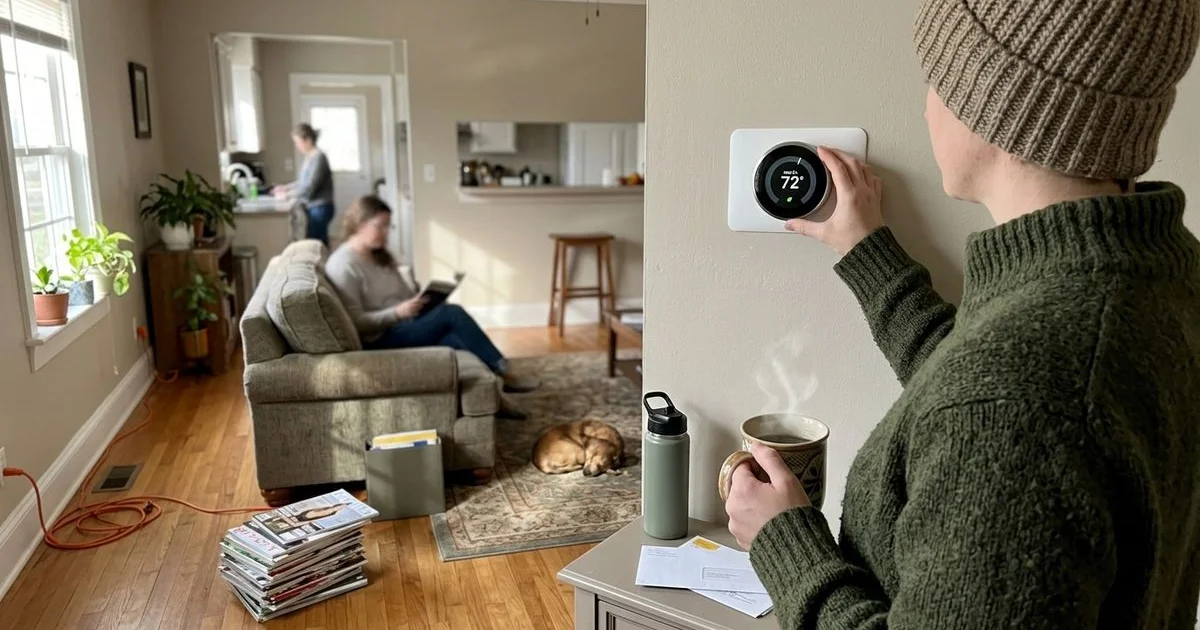
Winter Heat on the Eastern Shore
We know how quickly a Baldwin County cold front can change your plans.
One afternoon you are enjoying a 70-degree breeze in Spanish Fort, and the next morning you are shivering in a 35-degree living room.
A heat pump is the standard setup here because it handles both heating and cooling efficiently.
When you wake up to a heat pump not heating your home, you want immediate answers.
We are going to explain exactly why a heat pump blowing cold air is such a common issue and share the best troubleshooting steps.
If you would rather skip ahead, our heat pump repair in Daphne line connects you directly with a licensed contractor.
First, Is It Really a Problem?
Two completely normal system behaviors often confuse homeowners during a sudden freeze. Before assuming your equipment is broken, check if your system is just doing its job.
We always suggest verifying these two common situations before calling for service.
Heat Pump Air Feels Cooler
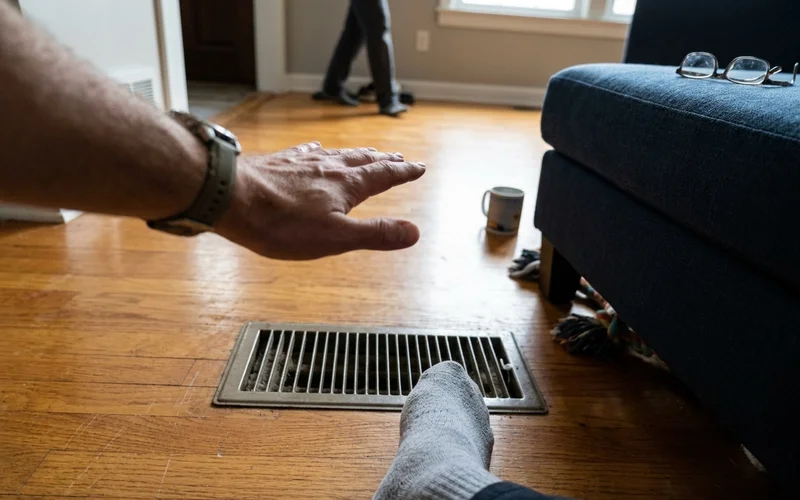
A traditional gas furnace blasts air out of the register at 120 degrees Fahrenheit or hotter. A heat pump operates differently by delivering a steady stream of air right around 90 to 100 degrees.
Normal human body temperature sits at about 98.6 degrees. This means the air from your vents will naturally feel lukewarm or even slightly cool on your bare skin.
Your system is still actively warming the house even if the airflow does not feel hot to the touch.
The Normal Defrost Cycle
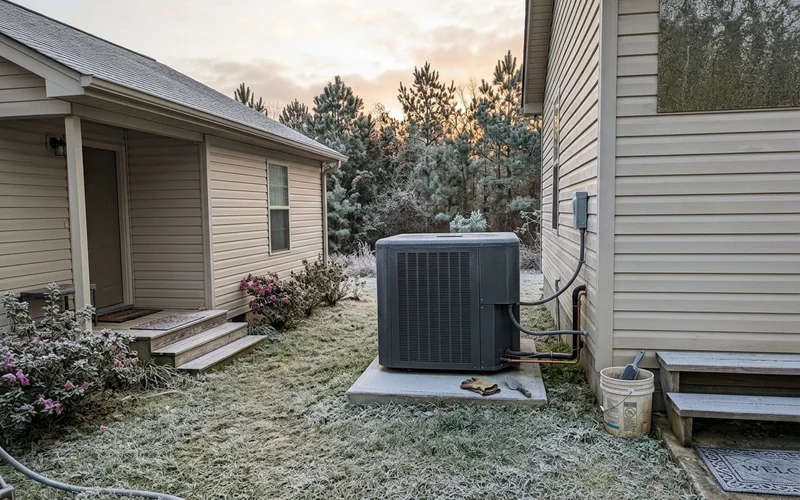
Gulf Coast winters bring high humidity along with the cold. This damp air causes the outdoor copper coil to frost over when temperatures dip near freezing.
The system is designed to temporarily switch into cooling mode to melt this ice buildup. A standard defrost cycle runs for 5 to 15 minutes and can trigger every 30 to 90 minutes depending on moisture levels.
You might feel cool air inside and see steam rising from the outdoor unit while this happens. Our detailed guide covering defrost mode explains this process thoroughly.
Quick Checks
Before scheduling a service call, you can rule out several basic issues on your own. These fast troubleshooting steps resolve a surprising number of heating complaints.
- Verify the thermostat is set to Heat, not Cool or Auto.
- Confirm the setpoint is actually higher than the current room temperature.
- Install fresh batteries in the thermostat, especially if the screen is blank or flashing.
- Inspect your air filter and replace it if it looks dark or clogged with dust.
- Check both circuit breakers to ensure the indoor air handler and outdoor unit have power.
- Look at the outdoor unit to make sure it is not buried under debris or encased in solid ice.
- Wait a full 15 minutes to see if the system is just completing a routine defrost cycle.
Common Causes
When the basic checks do not fix the problem, a mechanical or electrical failure is likely the culprit.
We see a few specific components fail most frequently during Baldwin County cold snaps.
Thermostat and Valve Problems
Wrong thermostat setup. A newly installed smart thermostat, like an Ecobee or Nest, might use an incorrect configuration. Selecting the wrong O or B wire setting forces the unit to cool when it should heat. This programming error is a fast and easy fix for a local contractor.
Stuck reversing valve. This brass valve physically shifts the flow of R-410A refrigerant to switch the system between heating and cooling modes. Mechanical wear or internal contamination can cause the internal solenoid to stick permanently in the cooling position.
A national average replacement cost for a reversing valve runs between $400 and $700. Contractors usually have to braze the new valve in place with a torch, making it a highly specialized repair.
Refrigerant and Defrost Faults
Low refrigerant. A small leak in the copper lines directly cuts your system’s heating capacity. The outdoor coil will rapidly ice over, and the air from the vents will feel noticeably cool to the touch.
Defrost system faults. A failing defrost control board or a broken temperature sensor stops the automatic melting cycle. Ice continues to build until the entire outdoor coil is completely blocked from the outside air.
A solid block of ice suffocates the compressor and stops the heat transfer process completely.
Auxiliary Heat and Electrical Failures
Aux heat strips not working. Electric resistance strips inside the indoor air handler provide a vital boost on the coldest mornings. If these electric elements have burned out, the house will struggle to stay warm during a hard freeze.
The heat pump might function perfectly fine outside, but it lacks the backup power needed to keep the house comfortable.
Outdoor fan or capacitor failure. These parts work identically in both winter and summer months. A bad dual-run capacitor results in a humming outdoor unit with a fan blade that refuses to spin. Without the fan pulling air across the coils, the system cannot absorb ambient heat.
| Symptom | Likely cause |
|---|---|
| Cold air constantly, outdoor unit running | Reversing valve or thermostat O/B setting |
| Cool air a few minutes, then warm | Normal defrost |
| Thick ice that doesn’t clear | Defrost board, sensor or low refrigerant |
| House can’t keep up only on the coldest nights | Aux heat strips |
| Outdoor unit humming, not running | Capacitor or fan motor |
Mistakes to Avoid in a Cold Snap
When the house is freezing, panic often leads to expensive mistakes. Avoid these common errors to protect your equipment and your wallet.
- Cranking the thermostat way up. Pushing the temperature dial 8 or 10 degrees higher all at once immediately triggers the backup electric strips. A standard 10kW electric heat strip can cost around $1.80 per hour to run depending on current utility rates. This is up to six times more expensive than running the heat pump alone. Raise the temperature just 2 degrees at a time to prevent this massive spike.
- Switching to Emergency Heat prematurely. Emergency heat completely disables the outdoor unit and relies entirely on those expensive electric strips. If the heat pump is just running a 10-minute defrost cycle, EM heat will just waste money. Only use this setting if the outdoor unit has completely failed.
- Chipping ice off the coil. Taking a screwdriver or shovel to a frozen unit is incredibly risky. The fragile aluminum fins and copper tubes puncture easily, and a ruined coil can cost well over $1,200 to replace. Let the automatic defrost cycle do its job.
- Covering the outdoor unit. A tarp might seem like a good way to block the cold wind. Heat pumps require massive amounts of continuous airflow to extract ambient heat. Covering the unit suffocates the system and guarantees a breakdown.
- Ignoring a rising bill. A system with a minor refrigerant leak will quietly lean on the backup strips all winter to compensate. This hidden problem can easily double your monthly heating costs before you notice the temperature dropping.
Fall Checks Prevent Winter Calls
The most frustrating winter breakdowns usually start as minor issues during the fall. A weak reversing valve solenoid or a failing defrost sensor might not show symptoms when the weather is mild. Many homeowners do not realize their backup heating strips burned out during the previous winter until the first hard freeze hits.
We recommend scheduling a dedicated maintenance visit in October. A licensed contractor will physically test the heating sequence and measure the microfarads on your capacitor. They will also check the exact refrigerant pressure while the outdoor temperatures are still forgiving. Getting a contractor out to a Montrose or Loxley home is quick in early autumn, but nearly impossible the day after a freeze.
When to Call
You should reach out for professional help if your system blows cold air for more than 15 consecutive minutes. Call a technician if the ice on the outdoor coil refuses to clear or if you hear loud grinding noises.
Refrigerant handling and high-voltage electrical repairs require the training of a licensed professional. Your local HVAC contractor has the tools and expertise to diagnose a heat pump not working safely.
Dial (251) 850-5502 to get started right now. We will quickly connect you with a licensed, insured contractor serving your specific Eastern Shore town. Same-day service is available in most local areas, and the initial estimate is free.