
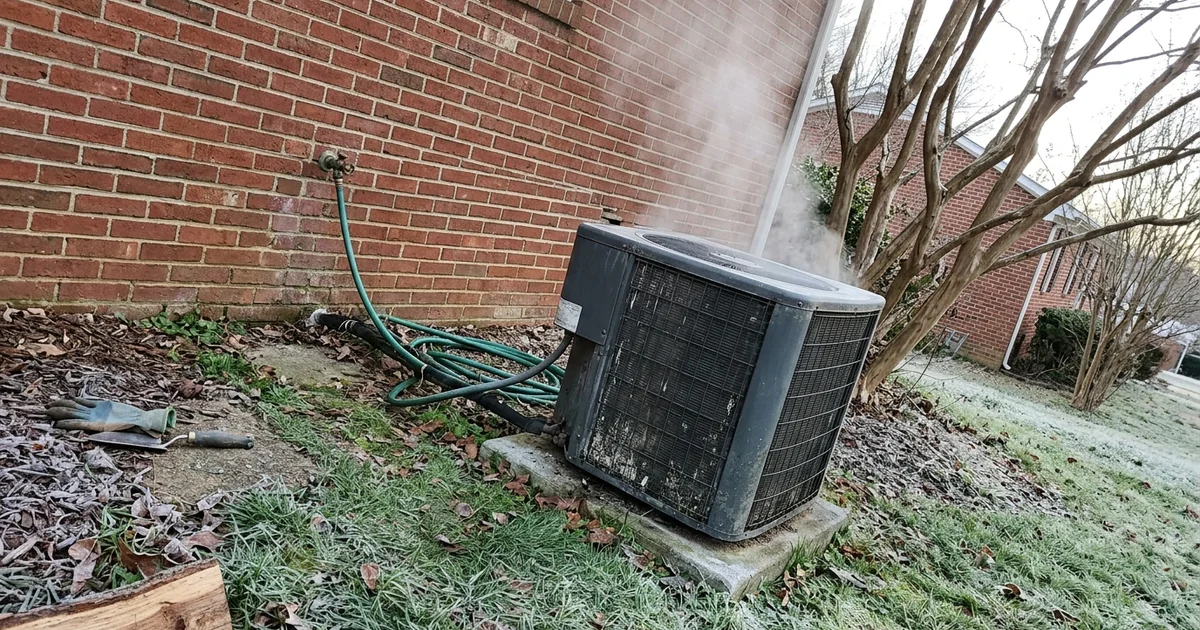
You know how a sudden cold snap on the Gulf Coast usually brings a wave of panicked phone calls about a heat pump steaming. That morning frost is actually a sign the heat pump defrost mode is doing exactly what it was designed to do.
We operate the Daphne AC Repair line to connect Eastern Shore residents with licensed contractors, and this is the most common winter question. The truth is, industry data shows your system coil runs 10 to 20 degrees colder than the ambient air temperature.
This means frost can easily form even when the outside thermometer reads in the low 40s.
What Heat Pump Defrost Mode Does
Heat pump defrost mode is an automatic cycle that temporarily switches your unit into cooling mode to melt accumulated frost off the outdoor coil. Hot refrigerant flows outside, quickly clearing the ice so the system can return to efficient heating.
Our priority is to give you clear, actionable answers. When your system runs in heating mode, it follows a simple process:
- Pulls warmth from the outside air to heat your home.
- Collects condensation naturally on the cold outdoor coils.
- Freezes the moisture into a thin layer of frost when temperatures drop.
We see many homeowners get nervous when their unit suddenly changes its tune. This frost acts like a thick blanket, blocking airflow and causing heating efficiency to drop.
Understanding this saves a lot of worried calls, though if something looks wrong, our heat pump repair line is there. Our local directory connects you to pros who can check the reversing valve if it stops working. The valve shifts with a noticeable swoosh, directing hot gas outside to clear the fins.
What’s Normal During Defrost
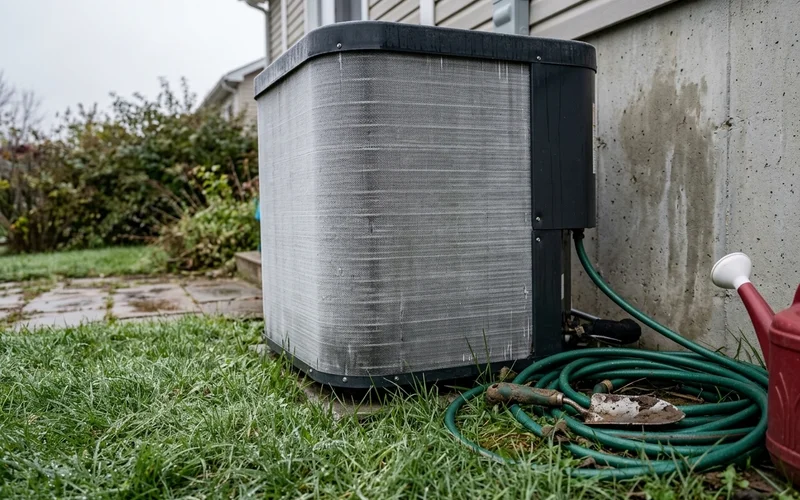
Normal operation during a defrost cycle includes brief periods of steam, unusual whooshing sounds, and the outdoor fan stopping completely. According to major manufacturers, these cycles typically last between 3 and 10 minutes before regular heating resumes.
Our recommended local HVAC contractors answer questions about these symptoms every winter. The system is executing a highly specific sequence to protect itself from freezing over. Here is exactly what you should expect to see and hear:
- Steam or vapor rising from the outdoor unit as the hot refrigerant melts the ice.
- A whoosh or hiss when the reversing valve switches the refrigerant flow.
- The outdoor fan stopping for a few minutes to prevent blowing cold air that would refreeze the meltwater.
- Water dripping from the unit as frost melts and drains away.
- Slightly cooler air from the vents, often offset by aux heat strips coming on.
- Aux heat indicator on the thermostat during defrost to show the backup heat is working.
We always suggest waiting ten minutes before worrying. A normal cycle usually lasts just a few minutes. The process may repeat every 30 to 90 minutes in the right weather conditions.
How the System Knows When to Defrost
The system knows when to defrost using a control board that reads temperatures from a sensor clamped directly to the outdoor coil tubing. When the coil temperature drops below a specific freezing point, the board triggers the cycle.
Our network of licensed contractors frequently replaces these boards when they fail. There are two main types of control systems used today. Older units use a time and temperature board that runs on a strict schedule.
| Defrost Board Type | How It Works | Cycle Length |
|---|---|---|
| Time and Temperature | Runs on a strict 30, 60, or 90-minute timer if coil is cold | Often longer, less efficient |
| Demand Defrost | Uses smart sensors to detect actual frost buildup | 3 to 5 minutes, highly efficient |
We often hear that these older boards trigger a cycle every 30, 60, or 90 minutes, even if there is very little frost. Newer systems from brands like Trane and American Standard use a technology called demand defrost. Demand defrost relies on smart sensors to only activate when a significant layer of ice is detected.
Our goal is to help you understand your equipment better so you know when an upgrade makes sense. Because demand defrost only runs when absolutely necessary, engineering specs show the cycles are much shorter, usually just 3 to 5 minutes. This smarter technology reduces wear on the compressor and lowers your winter energy bills.
Signs Defrost Isn’t Working
The clearest sign that defrost is not working is when thick, heavy ice encases the entire outdoor coil and does not clear away after several hours. If the ice builds up past a quarter-inch thick, the system requires professional attention.
We compiled this checklist to help you identify a true malfunction. Normal frost is light, white, and melts quickly. Problematic ice is solid, clear, and continues to grow.
| Normal Operation | Malfunctioning System |
|---|---|
| Thin, even white frost that clears regularly | Thick, solid ice covering the whole coil |
| Steam rising for a few minutes | Ice that grows thicker over several hours |
| Outdoor fan stops briefly | Fan never stops, or never restarts at all |
| Occasional aux heat usage | Aux or Emergency heat running constantly |
| Ice clears completely on its own | Ice forming on the top panel and fan blades |
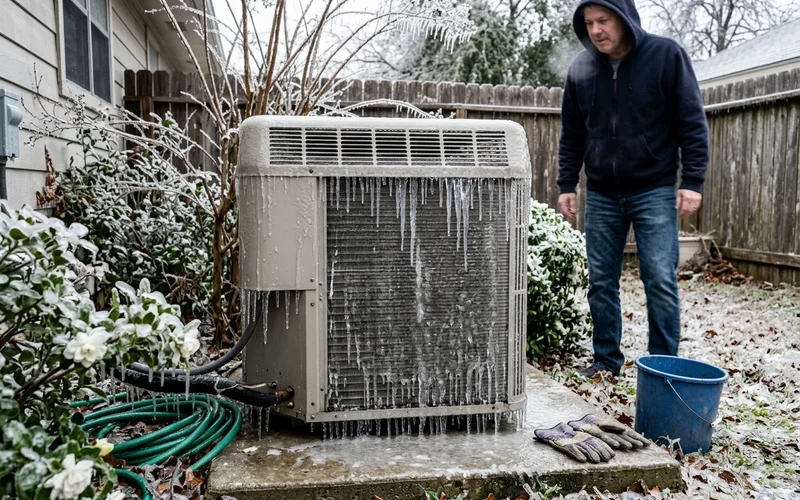
We suggest checking the unit after a freezing rainstorm, which the Eastern Shore gets now and then. Severe weather can temporarily overwhelm a completely normal system. However, a heat pump continuously encased in ice is experiencing a mechanical failure.
We know these unexpected repairs can be stressful for a budget. Common causes include a bad sensor, low refrigerant, or a stuck reversing valve. A failed defrost board is another frequent culprit, and national data shows replacing it typically costs between $200 and $650.
Why Coastal Weather Triggers More Defrost
Coastal weather triggers more defrost cycles because the high moisture content in the air freezes onto the coils much faster than dry air. Defrost frequency depends just as heavily on ambient humidity as it does on the actual air temperature.
We remind callers that a dry 25-degree morning up north requires far fewer cycles than a damp 36-degree morning on Mobile Bay. Climate data from the National Weather Service shows that the average winter morning humidity around Mobile Alabama regularly hits 85 to 86 percent at 6 AM.
Fog, drizzle, and high humidity near freezing put a massive amount of moisture on the outdoor coil very fast.
That heavy moisture turns into a thick layer of frost on a cold coil very quickly. We often hear from Eastern Shore homeowners who observe several defrost cycles an hour on raw, foggy winter mornings. Once the afternoon arrives and the air dries out, those same systems might not defrost again for the rest of the day. Frequent defrosting in damp, drizzly weather is a perfectly normal response to the local climate.
Help Your Heat Pump Defrost Properly
You can help your unit defrost properly by keeping the area around the outdoor equipment clear of debris and ensuring meltwater can drain away easily. Regular maintenance allows the system to breathe, which prevents excessive ice buildup.
Our network of HVAC professionals highly recommends preparing the exterior unit before winter arrives. Good airflow is the secret to a fast, efficient defrost cycle. There are several simple steps a homeowner can take right now:
- Keep the unit raised off the ground so meltwater drains away instead of refreezing around the base.
- Maintain a 24-inch clearance around the entire unit, trimming back winter shrubs and bushes.
- Fix gutters that drip onto the unit, as falling water will quickly turn into an ice block.
- Clear leaves and pine straw from the coil and base in late fall.
- Keep a clean coil. Dirt and coastal salt on the fins hold moisture and make frost build much faster.
- Have the defrost system checked during a fall tune-up, including the sensor, board, and reversing valve.
We strongly encourage you to mention any unusual behavior to your local HVAC contractor. If the system spends more time in defrost than usual, or the house cools off significantly during each cycle, a professional needs to investigate. Aux heat strips should keep the air warm during the melt phase, and if they fail, that is a separate, urgent repair.
What to Do About Heavy Ice
When dealing with a heat pump iced over, the most critical step is to turn the system off and switch to emergency heat to prevent compressor damage. You must never attempt to forcefully remove the ice with tools or hot water.
Our directory connects you with licensed contractors who fix the root cause instead of just treating the symptom. Picking at the ice with a screwdriver or scraper will easily puncture the soft metal fins. Replacing a damaged evaporator or condenser coil is an expensive mistake, with 2026 home service data showing it averages $1,350 or more across the US.
- Never chip, scrape, or pour hot water on the frozen coil.
- Check that overhead gutters are not actively dripping onto the unit.
- Verify the unit is not sitting in a puddle of water that constantly refreezes.
- Turn the heat pump off and switch the thermostat to emergency heat if the ice does not clear within a few hours.
- Call a licensed contractor to diagnose the mechanical failure safely.
We provide additional resources if your system is struggling, so check our guide on a heat pump not heating which covers other common causes. Leaving a broken unit running will eventually destroy the compressor. Fast action protects your equipment and keeps your family warm.
Dealing with a heat pump iced over can be frustrating, especially on a chilly Eastern Shore morning. Calling an expert is the safest way to restore your comfort and protect your investment.
We operate this service to connect you with local experts who can get your system running smoothly again. Call (251) 850-5502 to reach a licensed, insured contractor serving your Eastern Shore town. You will receive a free estimate before any repair begins.