
Why Gulf Coast Homes Struggle With Moisture
We talk to homeowners across Daphne and Fairhope who share the exact same frustration during the shoulder seasons.
The AC simply stops cooling enough to pull the heavy moisture out of the air. Outdoor humidity along the Gulf Coast frequently hits 88 percent on summer mornings, and mild days compound the problem. Our experience shows that systems short-cycle on spring and fall afternoons, shutting off before properly drying the space.
A whole-home unit acts as the primary tool in dehumidifier installation and advanced humidity control. Let’s look at the data behind residential moisture problems and walk through the exact solutions the licensed contractors we connect you with recommend.
Signs You Might Need One
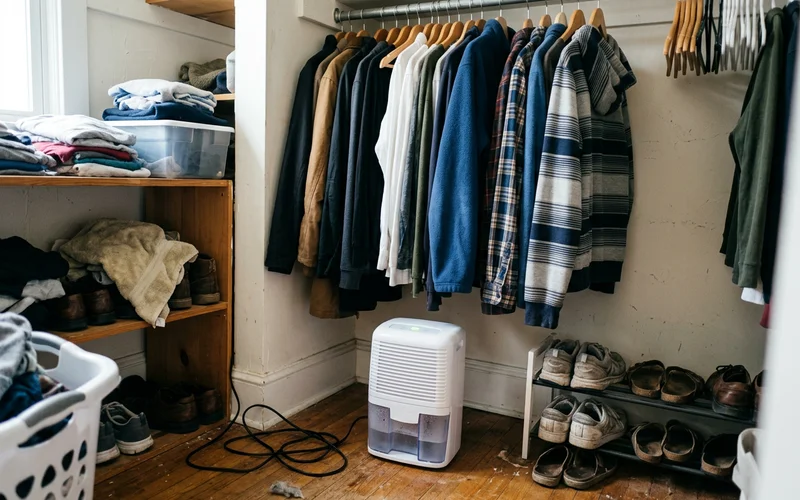
We often see clear warning signs long before comfort becomes unbearable. The EPA warns that indoor humidity above 60 percent creates an ideal breeding ground for mold and dust mites. You might notice several specific indicators inside your home.
- Indoor humidity regularly sitting above 55 to 60 percent on a digital hygrometer.
- A musty smell, especially inside closed closets, bathrooms, or guest bedrooms.
- Condensation forming on the inside of window glass or dripping from AC vents.
- Mold or mildew appearing on bathroom grout, window sills, closet walls, or leather shoes.
- Clammy air and damp-feeling bedding, even when the thermostat says it is cool.
- Hardwood floors or interior doors swelling, rubbing, and sticking in their frames.
Before you buy new equipment, rule out the completely free fixes. Try setting the thermostat fan to Auto, running exhaust fans during showers, and having a local HVAC contractor check for correct airflow. Our detailed guide on fixing a house humid with AC on covers these basic steps.
How a Whole-Home Dehumidifier Works
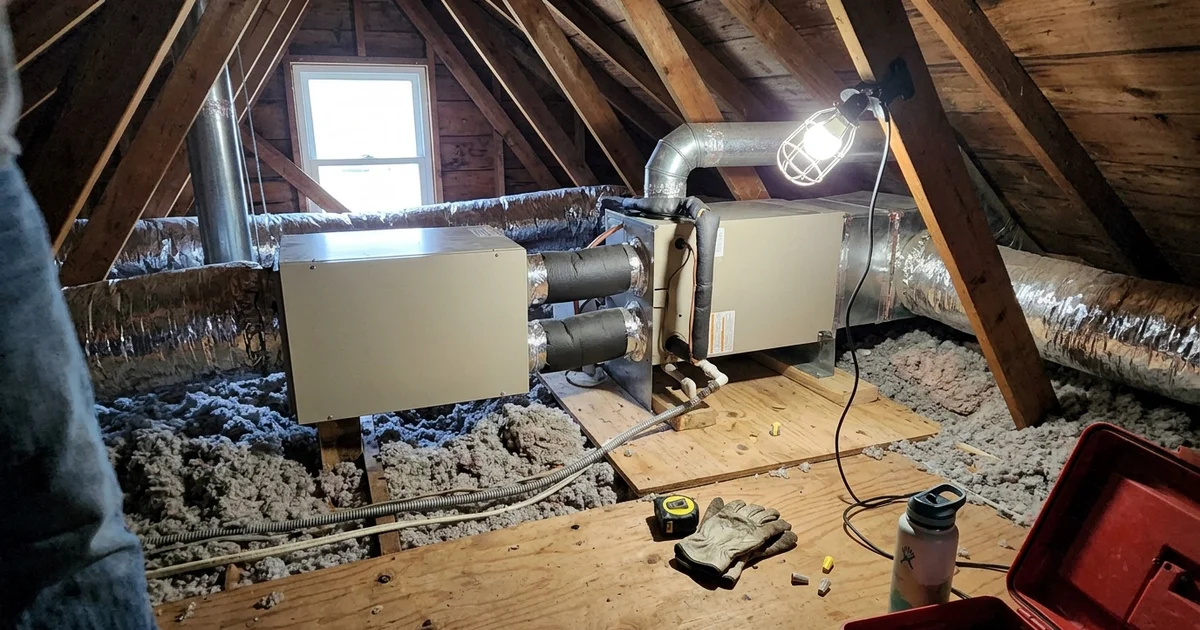
A whole home dehumidifier installs directly into your existing forced-air system, usually up in the attic, inside a utility closet, or in the garage. It actively pulls in humid air from the return ducts, condenses the moisture over a cold coil, and pushes dry air back into your living space. The collected water automatically drains straight into the existing condensate line.
We recommend trusted units like the AprilAire E100 Pro for direct integration with residential ductwork. These American-made systems process air for the entire house at once, utilizing heavy-duty filters to capture allergens.
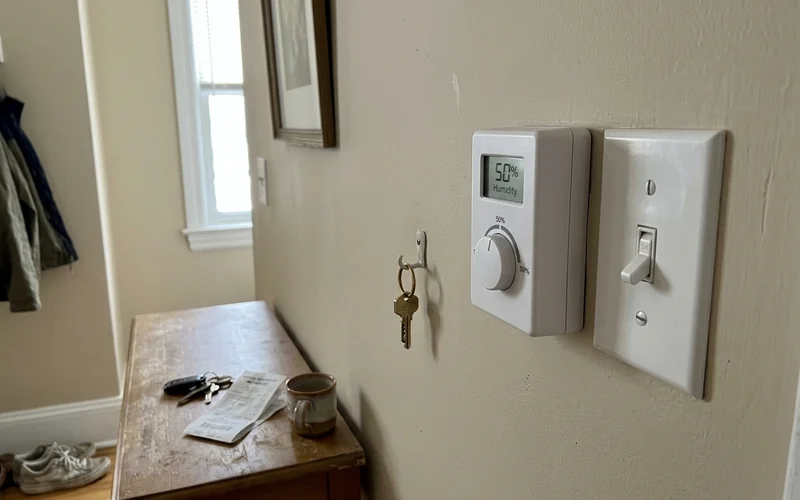
A digital dehumidistat controls the operation, and this sensor often comes built right into a modern smart thermostat. You simply set a target, usually around 45 to 50 percent according to ASHRAE comfort standards, and the system manages the rest.
Portable vs Whole-Home
Comparing a portable vs whole home dehumidifier comes down to coverage area and operating efficiency. A standalone unit works fine for an isolated space, but it dumps waste heat back into the room.
We know that a central unit provides a much higher Integrated Energy Factor. High-efficiency models achieve an IEF of 2.35 liters per kilowatt-hour, meaning they remove far more water using significantly less electricity.
| Feature | Portable Dehumidifier | Whole-Home Dehumidifier |
|---|---|---|
| Coverage Area | One closed room (approx. 500 sq ft) | Entire house via ductwork |
| Noise Level | Loud compressor inside the room | Hidden away with HVAC equipment |
| Water Draining | Must manually empty a heavy bucket | Drains completely automatically |
| Heat Output | Dumps warm air back into the room | Dissipates heat outside or in ducts |
| Upfront Cost | $250 to $400 on average | $1,500 to $2,800 installed |
| Best Used For | A single damp closet or guest room | Consistent whole-house humidity |
The whole house dehumidifier cost makes it a larger upfront investment. The long-term energy savings and automated convenience make it the better choice for Gulf Coast climates.
Questions to Ask the Contractor
You need accurate answers before approving an installation estimate. The licensed contractors we connect you with should perform a thorough assessment of your property rather than just guessing.
We suggest asking these specific questions during the consultation. Getting direct answers ensures the proposed equipment actually fits your structural needs.
- What is my exact indoor humidity right now, and what is causing the spike?
- Would fixing leaky air ducts or adjusting blower settings solve the issue first?
- What specific pint capacity do you recommend based on my square footage?
- Will you install an integrated brand like AprilAire, or a standalone brand like Santa Fe?
- Where exactly will the unit go, and how will it route to the condensate drain?
- Can the new system be monitored directly from my current smart thermostat?
- What is the total installed whole house dehumidifier cost, including labor and parts?
Sizing and Placement
Contractors rate whole-home dehumidifiers by how many pints of water they can safely remove from the air per day. Most single-family homes in Spanish Fort, Loxley, and Malbis require a unit in the range of 70 to 130 pints per day.
We always remind homeowners that bigger is not automatically better. The local HVAC contractor considers several critical variables to properly size the equipment.
- Square footage and ceiling height. Larger volumes of air demand a higher pint capacity.
- How leaky the envelope is. Older homes constantly let in humid outdoor Gulf Coast air.
- Crawlspace or concrete slab. Raised homes on the Eastern Shore often pull moisture up through the floorboards.
- Where the unit can physically drain. It needs a clear gravity path or a dedicated pump to reach the condensate line.
- Existing ductwork layout. The machine can connect to the main return, the supply, or operate on an independent return loop.
Proper placement in an attic or utility closet minimizes noise while maximizing airflow efficiency.
Maintenance
These built-in systems require surprisingly little attention throughout the year. Most professional-grade units feature a dense MERV-8 filter that stops dust from coating the internal coils. We advise homeowners to check this replaceable filter every three to six months to prevent the compressor from overworking during peak summer heat.
The dedicated drain line also needs to be kept completely clear of algae, exactly the same as your primary AC drain. A licensed professional easily handles this routine flush during your yearly springtime AC tune-up.
Pairing With Other Fixes
A dehumidifier performs best when working alongside solid HVAC basics. The thermostat fan should stay set to Auto, the ductwork must be tightly sealed, and the primary air conditioner must be correctly sized.
High humidity often stems directly from compromised ductwork. If your house stays sticky because large duct leaks pull in unconditioned attic air, sealing those gaps first changes the entire equation.
Stopping the air leaks might shrink the size of the dehumidifier you actually need. In some mild cases, aggressive duct sealing removes the need for supplemental dehumidification entirely.
Next Step
Call (251) 850-5502.
A licensed, insured contractor can accurately measure your indoor humidity, check your current system, and give you a free estimate on the fix that fits.
We connect you with local experts who understand Eastern Shore moisture problems. Getting a whole home dehumidifier installed starts with one simple phone call.