
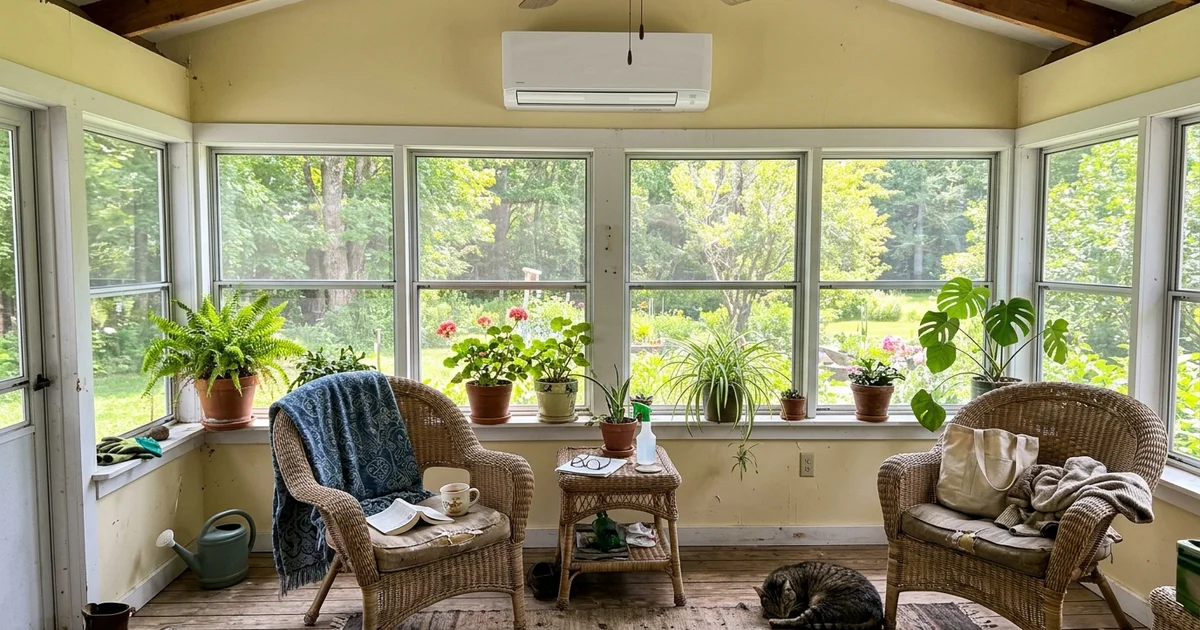
The Room Your Central AC Can’t Reach
Every Eastern Shore home seems to have that one stubborn room that completely ignores the thermostat. Our service connects homeowners dealing with this exact layout challenge across Daphne, Fairhope, and Spanish Fort.
A typical glass-enclosed space easily hits 90°F by mid-afternoon, making a dedicated mini split for sunroom applications highly necessary.
That massive heat gain explains why extending your central ductwork usually fails. Your main air conditioner simply cannot handle the extra load of a Florida room or a poorly insulated garage.
A dedicated ductless system solves this problem immediately.
Our mini-split installation in Daphne line connects you with a licensed local contractor for a free, no-obligation estimate. This guide breaks down where these systems make sense, how the latest 2026 efficiency numbers impact your choice, and what budgeting looks like today.
Where Mini-Splits Make the Most Sense
Ductless systems provide the highest value in isolated spaces with massive heat gain or poor insulation. Our matching service receives the highest volume of requests for five specific Eastern Shore room layouts. They solve temperature imbalances without forcing your primary central air conditioner to work overtime.
- Sunrooms and Florida rooms: Walls of glass invite massive afternoon solar heat gain. A central system sized for the rest of the house will simply freeze your bedrooms while trying to cool a 90-degree glass room.
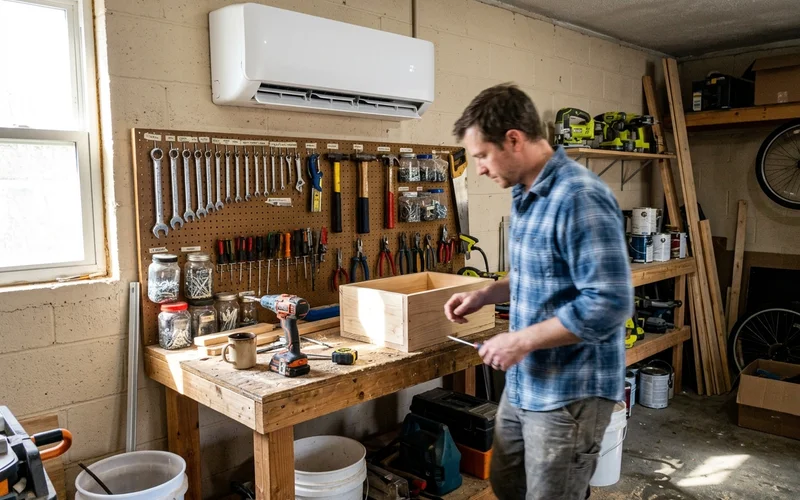
- Garages and workshops: Most standard garages lack proper insulation and remain completely cut off from central ductwork. Installing a mini split for garage use gives you a climate-controlled workspace that operates at a whisper-quiet 19 decibels, similar to the popular Daikin Aurora series.
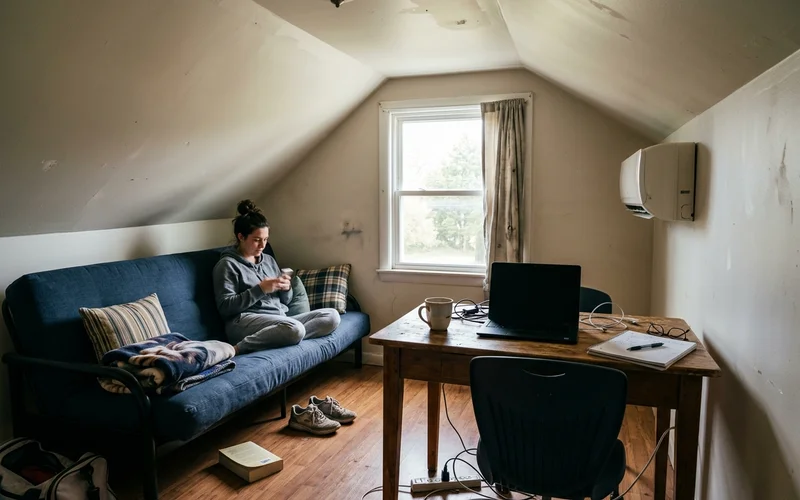
- Bonus rooms over garages: Long duct runs through a baking 120-degree attic usually deliver weak, lukewarm air. A dedicated wall-mounted head fixes this airflow drop-off instantly.
- Additions: Tying a brand new space into your existing 15-year-old ductwork often starves the rest of the home of proper airflow. A dedicated ductless ac for addition projects bypasses this mechanical problem entirely.
- Older homes without ductwork: Historic cottages in Montrose or carriage houses in Fairhope rarely have wall cavities large enough for modern ducts. Ductless technology preserves the historic architecture while delivering current 2026 cooling efficiency.
Sizing a Mini-Split for a Sunroom
Calculating capacity for a sunroom requires measuring solar heat gain, not just floor space. We know that standard square footage math fails miserably when dealing with Gulf Coast sun exposure. A professional HVAC contractor uses a Manual J load calculation to account for several critical variables.
- Total glass area and its compass direction, as west-facing windows absorb severe afternoon heat.
- Window glazing quality, such as single versus double pane, and any UV tinting.
- Roofing materials above the room, like insulated panels or uninsulated metal.
- Natural shade from mature oak trees or roof overhangs.
- The exact thermal connection between the sunroom and the main house.
Our local climate makes west-facing glass extremely challenging. That intense afternoon sun can easily double the cooling load compared to a standard bedroom. Undersizing the unit leaves the room miserable in July.
Oversizing the equipment causes it to short-cycle, which fails to remove humidity and leaves the room feeling clammy.
| Space | Typical Challenge | Sizing Note |
|---|---|---|
| Glass sunroom | Intense afternoon solar heat gain | Needs significantly more BTU capacity than floor area suggests |
| Garage | Poor wall insulation and large drafty doors | Upgrading weatherstripping first lowers the required equipment size |
| Bonus room | Attic heat radiating from three sides | Sizing must account for hot roof decking and uninsulated knee-walls |
| Addition | Usually built with modern code insulation | Standard Manual J sizing calculations generally work perfectly |
Single-Zone vs Multi-Zone
A single-zone system uses one outdoor compressor paired with one indoor air handler, while a multi-zone setup connects several indoor heads to a single outdoor unit. The single-zone approach remains the simplest and most energy-efficient choice for isolated spaces. You will often see 2026 single-zone models surpassing the regional 14.3 SEER2 minimum efficiency ratings by a wide margin.
Many homeowners assume a multi-zone system is always better for home additions. Consider these two basic configuration rules before making a choice.
- Single-zone units deliver maximum efficiency and complete redundancy for standalone rooms.
- Multi-zone units save exterior space but link the comfort of multiple rooms to one shared compressor.
Relying on one compressor means that if the outdoor unit fails, every connected room instantly loses cooling. Two separate single-zone systems often make more mechanical sense for rooms located on opposite ends of a house. This strategy provides critical redundancy during peak Alabama summers. Your local HVAC contractor can map out the most reliable layout for your specific floor plan.
Placement Tips for Indoor Heads
Optimal indoor unit placement dictates how evenly the cooled air reaches across the room. Where the contractor mounts the head matters just as much as the SEER2 rating printed on the box. Our guidance always prioritizes clear airflow pathways over hiding the unit in a corner.
- High on a wall facing the longest stretch of the room pushes air furthest and prevents hot spots.
- Away from direct sunlight ensures the internal thermostat sensor reads the true ambient temperature accurately.
- Positioned away from beds or desks prevents the high-velocity blower from creating uncomfortable, chilly drafts on your neck.
- Located near an exterior wall keeps the expensive copper line set short and makes gravity condensate drainage much simpler.
- Mounted away from garage doors prevents the filters from sucking up sawdust and heavy debris from a workbench.
Proper placement also reduces installation labor costs. The licensed contractors we connect you with will look for the most direct path to the outdoor compressor. Keeping the refrigerant lines under 15 feet saves money and maximizes cooling efficiency.
Maintenance Is Easy but Important
Routine maintenance prevents mold growth and keeps the system operating at peak SEER2 efficiency. Ductless units process massive amounts of Gulf Coast humidity, making proper drainage and airflow critical. Our coastal environment requires a bit more vigilance than drier climates.
A neglected system will quickly develop musty odors and lose its ability to cool. You must stay on top of these basic upkeep tasks to protect your investment.
- Rinse the washable indoor filters every two to three weeks during peak summer operation.
- Keep the outdoor condenser clear of overgrown shrubs, fallen leaves, and corrosive salt spray from Mobile Bay.
- Book a professional deep cleaning every one to two years to address the indoor coils and blower wheel.
- Monitor the condensate drain line regularly to catch clogs before they overflow and cause drywall damage.
High humidity provides the perfect breeding ground for organic growth inside the compact blower wheel. Your local HVAC contractor has specialized bib kits to pressure wash these internal components safely without splashing your drywall. Scheduling this service annually prevents foul smells from ruining your comfort.
Budgeting
A professional mini-split installation on the Eastern Shore typically runs between $3,500 and $5,500 for a standard single-zone setup in 2026. The final price depends heavily on the system’s cooling capacity, the total number of zones, and the complexity of the electrical work.
Our mini-split cost guide explains general Alabama pricing ranges and specific regional cost drivers in detail.
Upgrading to a premium high-efficiency model or extending copper line sets across an attic will push that total higher. Electrical panel upgrades also factor into the final bill if your older home lacks a dedicated 240-volt circuit.
Call (251) 850-5502 for a free estimate from a licensed, insured contractor who installs ductless systems on the Eastern Shore.
We make it simple to get accurate, flat-rate pricing for your specific cooling needs. A dedicated mini split for sunroom comfort will transform how you use your home year-round.