
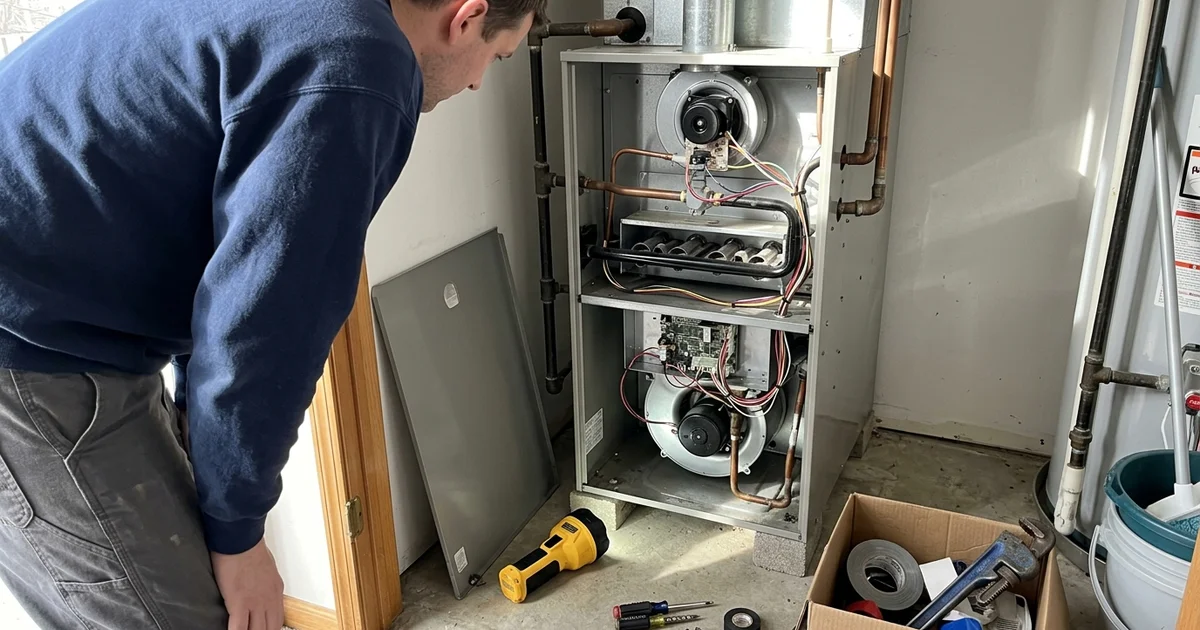
When the Heat Won’t Come On
Our Eastern Shore winters are short, but the cold snaps command immediate attention.
You know how quickly a furnace can fail after sitting idle in a humid garage all summer. Those months of inactivity create the perfect environment for corrosion and dust to sabotage the system. We designed this resource to explain why a furnace won’t ignite and how you should respond.
According to 2026 HVAC maintenance reports, the vast majority of ignition failures come down to a few fragile components or simple safety lockouts. For professional help right away, the furnace repair in Daphne line connects you with a licensed contractor. Let’s look at the basic checks you should perform, the exact sequence of a heating cycle, and the common parts that fail.
If you smell gas
Leave the house now. Don’t flip switches or light anything. Call your gas utility or 911 from outside.
Safe Checks First
The safest first step when your furnace fails is to check the thermostat, air filter, and power switches. We recommend verifying these standard items before assuming a major breakdown.
- Thermostat settings: Set the device to Heat, push the setpoint above room temperature, and install fresh batteries.
- Air filter condition: A clogged MERV 8 or higher filter restricts airflow, causing the system to overheat and enter a safety lockout.
- Power switches: Check the main furnace breaker and the light-switch-style service switch near the unit.
- Door panel security: The lower panel must be fully closed, or an internal safety switch will keep the power off.
- Gas supply: If your gas stove lights, fuel is reaching the property. If nothing works, call the gas utility.
- Diagnostic error lights: Look through the small viewing window on the lower panel for a blinking LED.
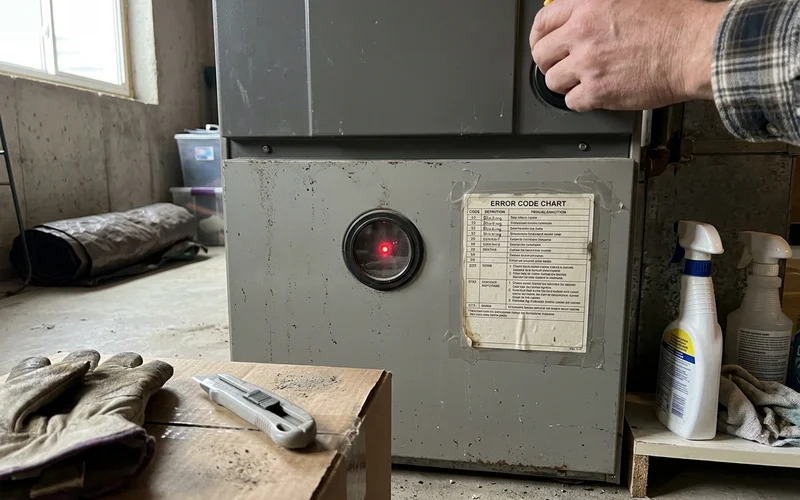
Count the blinks and note the sequence. Our network of local HVAC contractors relies on those error codes to diagnose issues faster.
How Ignition Works
When your thermostat calls for heat, the system follows a strict order of operations starting with the draft inducer. Understanding this internal sequence helps you pinpoint exactly where the heating process stops.
- Draft Inducer: The inducer motor starts first to clear residual gases out of the heat exchanger.
- Pressure Switch: We want you to know that a pressure switch then verifies this proper venting.
- Igniter: The hot surface igniter receives electricity and begins to glow orange.
- Gas Valve: The valve opens to release fuel, allowing the burners to ignite.
- Flame Sensor: A thin metal rod confirms that a strong fire is actually present.
Our understanding of this sequence makes troubleshooting much easier. If any step fails, the control board halts the process and enters a safety lockout after a few tries.
Common Causes
The most frequent causes of ignition failure are cracked igniters, dirty flame sensors, and blocked pressure switches. We have organized these issues below by what you actually hear and see at the furnace.
| Symptom You Observe | Most Likely Cause |
|---|---|
| System clicks, hums, but never glows | Pressure switch, inducer motor, or control board |
| Igniter stays dark and cold | Cracked hot surface igniter or control issue |
| Igniter glows orange, but no fire | Faulty gas valve or interrupted gas supply |
| Burners light, then die in 3 seconds | Dirty or failed flame sensor |
| Furnace runs for minutes, then dies | Overheating triggered by a dirty air filter |
Identifying the symptom narrows down the broken part quickly. Our list below explains the exact mechanics behind these specific failures.
Hot Surface Igniter Failures
A cracked hot surface igniter is the primary reason a furnace hums but never glows. The hot surface igniter acts like a massive spark plug for your heating system.
Modern silicon carbide igniters reach temperatures over 2,500 degrees Fahrenheit in a matter of seconds. This extreme thermal stress eventually causes the fragile ceramic component to crack.
We highlight this as a highly predictable point of failure. A standard hot surface igniter typically lasts between 3 to 7 years in US homes.
If you hear the inducer motor hum but never see a bright orange glow, the furnace igniter or the control board has likely failed.
The Three-Second Flame Sensor Lockout
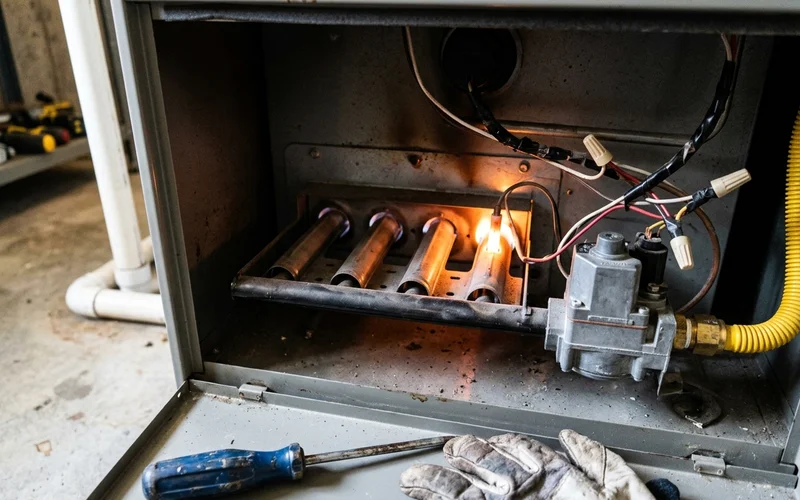
When a furnace lights and dies three seconds later, a dirty flame sensor is almost always the cause. A furnace that lights and immediately shuts off is usually protecting you.
The flame sensor measures a tiny electrical current, typically between 4 to 6 DC microamps, running through the fire. If the rod cannot read that current, the system shuts the gas valve in exactly 3 to 4 seconds.
We know that this rapid shutdown prevents raw gas from pooling inside your home.
A microscopic layer of carbon or oxidation builds up on the rod over time. Furnaces sitting idle through a humid Gulf Coast summer are especially prone to this coating, which requires professional cleaning.
Pressure Switch and Inducer Blocks
The ignition sequence cannot even start if a failing inducer motor or blocked vent trips the pressure switch. The pressure switch monitors the draft inducer motor to ensure harmful combustion gases can safely exit the house.
Blocked vent pipes, a cracked vacuum hose, or a failing motor will trip this safety switch. We advise homeowners to check their exterior vent pipes for obvious obstructions like leaves or insect nests.
A failing inducer motor will often make a loud clicking or humming noise without actually spinning up. When this happens, the system remains locked out for your safety.
Why Idle Furnaces Fail on the First Cold Night
Furnaces fail on the first cold night because a long summer rest in a humid environment causes metal components to corrode and sensors to collect dust. Properties in Daphne, Fairhope, Spanish Fort, Montrose, Malbis, and Loxley share this unique climate challenge.
A gas furnace might sit completely unused from March all the way to December. We recognize that this long rest in a humid attic or garage causes very predictable problems.
- Flame sensors: They develop a film of corrosion and dust that blocks electrical conductivity.
- Igniters: Older components that survived the previous winter will often crack on their first high-heat cycle.
- Condensate lines: High-efficiency furnace traps dry out or grow algae, which trips the pressure switches.
- Vent pipes: Exterior pipes collect windblown debris, bird nests, or insect activity over the summer.
- Air filters: Homeowners frequently forget to replace the filter until the very first heat call.
A quick test run in the fall catches these issues early.
We suggest setting the thermostat to Heat on a mild October day to verify operation. If the unit refuses to light, you have plenty of time to schedule a repair before the freezing temperatures arrive.
High-Efficiency Furnace Quirks
High-efficiency furnaces frequently fail to light because algae or debris clogs their PVC condensate drain lines. These heating systems require a slightly different diagnostic approach.
If that specific drain line clogs with algae or debris, a pressure switch will result in the furnace not lighting. We always tell homeowners to look at the condensate system when these specific models fail.
The blinking error codes on high-efficiency units frequently point to venting or drainage problems rather than a bad igniter. Always mention your PVC vent type and the exact blink code when calling for assistance so your contractor brings the right parts.
Why Gas Work Stays With a Pro
You should always hire a pro for gas furnace repairs because combustion components directly dictate whether deadly gases vent safely outside your home. Attempting to repair a gas heating system yourself introduces serious risks.
Safety First: A licensed HVAC contractor evaluates the entire mechanical system, not just the single part that broke.
The gas valves, burner assemblies, and heat exchangers directly dictate whether deadly combustion gases vent safely outside. We take your family’s safety incredibly seriously, which is why we highly recommend reading our guide to gas furnace safety for carbon monoxide warning signs.
Call (251) 850-5502 to reach a licensed, insured contractor serving your specific Eastern Shore town. You will receive a clear explanation of the problem before any repair work begins, because our primary goal is getting your home warm again safely.